
Legendary Social Network MySpace Plans a Strategic Comeback

The iconic social media platform MySpace is preparing for a potential revival as its current owners, Viant Technology co-founders Tim and Chris Vanderhook, express renewed interest in bringing the brand back to the digital forefront. Revealed during a documentary directed by Tommy Avalone, the brothers confirmed they are waiting for the opportune moment to relaunch the platform they acquired in 2011. As original pioneers of the social networking era, the founders remain committed to their vision, stating they would continue to experiment with the brand even if initial efforts face challenges, marking a significant development for the legacy site.
- Viant Technology co-founders Tim and Chris Vanderhook are actively exploring plans to revive the MySpace platform.
- The founders previously suffered financial losses exceeding 150 million dollars during earlier attempts to modernize the site.
- Market analysts suggest the platform could find a niche by catering to users seeking alternatives to algorithm-heavy mainstream networks.
Modern Social Media Landscapes Challenge Legacy Platforms
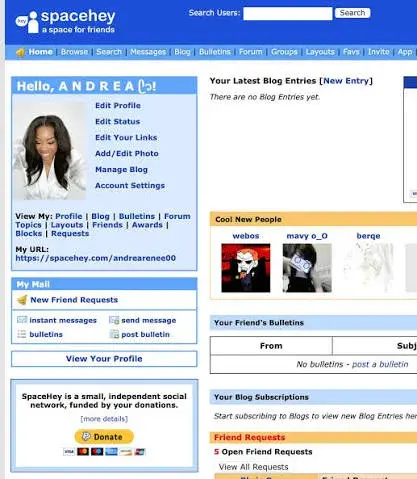
Entering the current social media market presents a formidable challenge for MySpace, as the digital ecosystem is now dominated by giants like Instagram, TikTok, and YouTube. Unlike the early 2000s, when MySpace reigned supreme with over 115 million monthly visitors, today’s landscape demands high-speed mobile functionality and sophisticated content discovery tools. The platform’s famous customizable profile pages, which once defined the early internet experience, must now compete with the seamless user interfaces of contemporary competitors.
The potential return of the network highlights a growing user fatigue toward strictly algorithm-driven social feeds.
Previous attempts by the Vanderhook brothers to reconstruct the site resulted in substantial financial setbacks, yet they remain undeterred by past failures. Industry experts, such as Forrester analyst Kate Winick, suggest that while current interest is largely fueled by nostalgia, simply relying on legacy aesthetics will likely fail to attract the younger, modern demographic. Consequently, the team must balance the brand’s historic appeal with the functional expectations of today’s tech-savvy users.
Strategic Positioning Determines Long-Term Viability
One of the primary obstacles for MySpace involves meeting the stringent requirements of modern advertisers who demand precise performance data and massive audience reach. Jamie MacEwan, an analyst at Enders, proposes that instead of engaging in a direct, high-stakes battle with industry titans like Facebook, the platform should establish itself as a smaller, more specialized, and ultimately more profitable advertising space. By focusing on a specific, loyal community, the network may carve out a sustainable existence.
Success depends entirely on whether the platform can evolve beyond its status as a nostalgic relic.
Ultimately, the challenge lies in transforming a cultural icon into a functional, modern utility that provides a distinct advantage over existing apps. As the digital world shifts toward more private and community-focused interactions, there may be a genuine opening for a redesigned, user-centric version of the classic site. Whether this iteration can successfully capture the imagination of a new generation remains a subject of intense speculation among industry observers.
Do you believe that a revamped version of MySpace could successfully compete in today’s saturated social media market, or has its time truly passed? Share your thoughts in the comments below.
Your comment has been submitted,
it will be published after approval.