
LineageOS 24 Based on Android 17 Officially Released

The development team behind the popular open-source project LineageOS has officially launched LineageOS 24, bringing the latest Android 17 experience to a wide range of supported devices. Released earlier than industry analysts initially anticipated, this major update follows the core Android 17 public debut from June. The release focuses on enhancing user interface aesthetics through the Material Design 3 Expressive language while simultaneously streamlining the installation process for enthusiasts. As the project approaches its tenth anniversary in December 2026, this version marks a significant milestone in providing modern, secure, and customizable software solutions for the global Android community.
- LineageOS 24 integrates the Android 17 platform with security patches spanning from August 2025 to October 2026.
- The development team transitioned all core applications to the Material Design 3 Expressive visual framework.
- New browser-based WebUSB tools allow users to flash device firmware without installing additional desktop software.
- Legacy devices relying on Linux kernel versions 4.4 and 4.9 are excluded from the current update support cycle.
Core Applications Receive a Visual Overhaul
The most immediate change users will notice in LineageOS 24 is the comprehensive visual refinement of system-integrated applications. By adopting the Material Design 3 Expressive language, the team has successfully created a more fluid and cohesive interface. This update introduces the Canvas application, a powerful tool that enables users to perform essential image edits—such as cropping, color balancing, and applying filters—directly on their devices without needing third-party software. 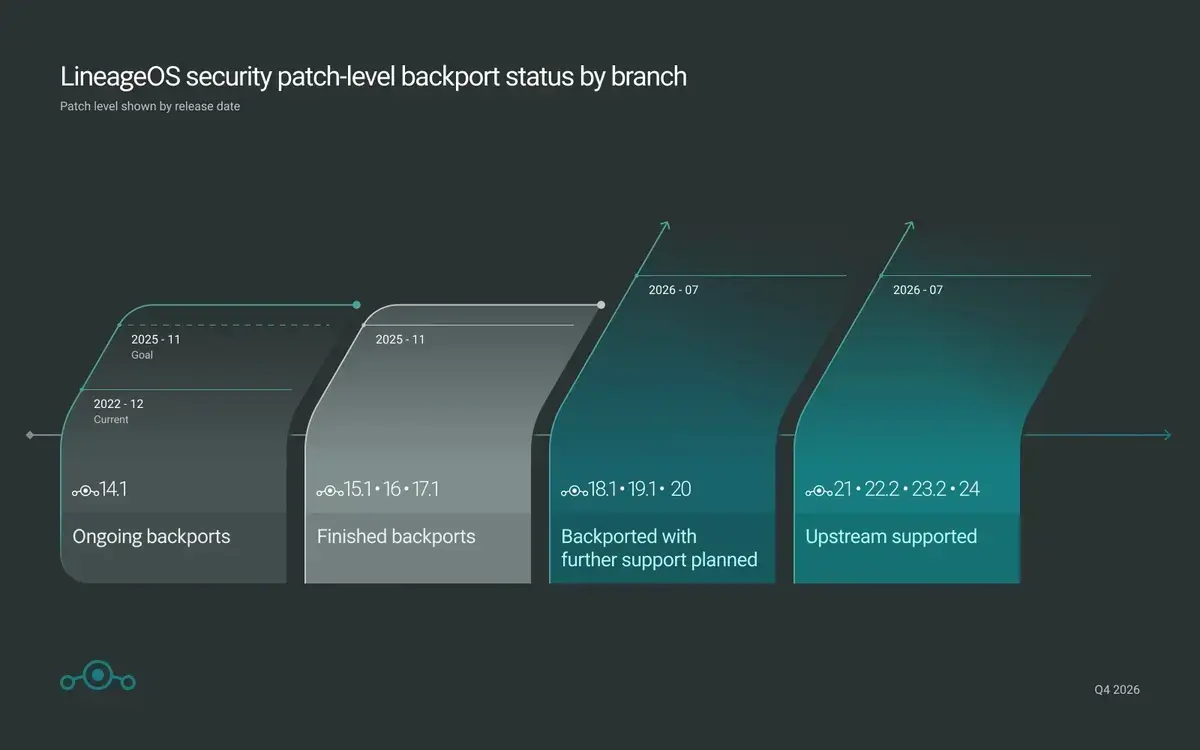
Technical refinements have also reached the update mechanism and multimedia playback. The system updater now utilizes stream-based updates by default, which significantly reduces downtime for users with A/B partition configurations. Furthermore, the Twelve music player has been optimized to handle extensive local libraries with greater efficiency and now offers seamless Jellyfin integration for enhanced media streaming capabilities.
Installation Procedures Become More Accessible
One of the primary barriers for new users entering the custom ROM space has traditionally been the complexity of flashing firmware. LineageOS 24 addresses this challenge by introducing browser-based flashing tools that leverage WebUSB technology. By allowing users to execute protocols like ADB Fastboot, Amlogic Burn, and Samsung Odin directly within a web browser, the project significantly lowers the technical barrier to entry. This shift eliminates the need for users to configure complex desktop environments, making the transition to custom software much more approachable for the average enthusiast.
Maintenance Policies Undergo Significant Restructuring
To ensure the long-term sustainability of the project, the development team has implemented stricter hardware requirements. Devices operating on Linux kernels 4.4 and 4.9 are no longer included in the LineageOS 24 or 23.2 release branches. These devices will continue to receive security maintenance on the LineageOS 22.2 platform. Additionally, the team has expanded its collaborative kernel development for Qualcomm and Amlogic chipsets, a move designed to simplify long-term maintenance cycles and ensure consistent performance across diverse hardware configurations.
The rollout for supported devices will occur in stages over the coming weeks. Users are encouraged to consult the official LineageOS Wiki to check the compatibility status of their specific smartphone model.
We are curious to hear your thoughts on these latest changes. Do you plan to install the Android 17-based LineageOS 24 on your daily driver, or do you prefer to wait for a more stable release? Let us know your opinions on the new design language in the comments section below.
Your comment has been submitted,
it will be published after approval.