

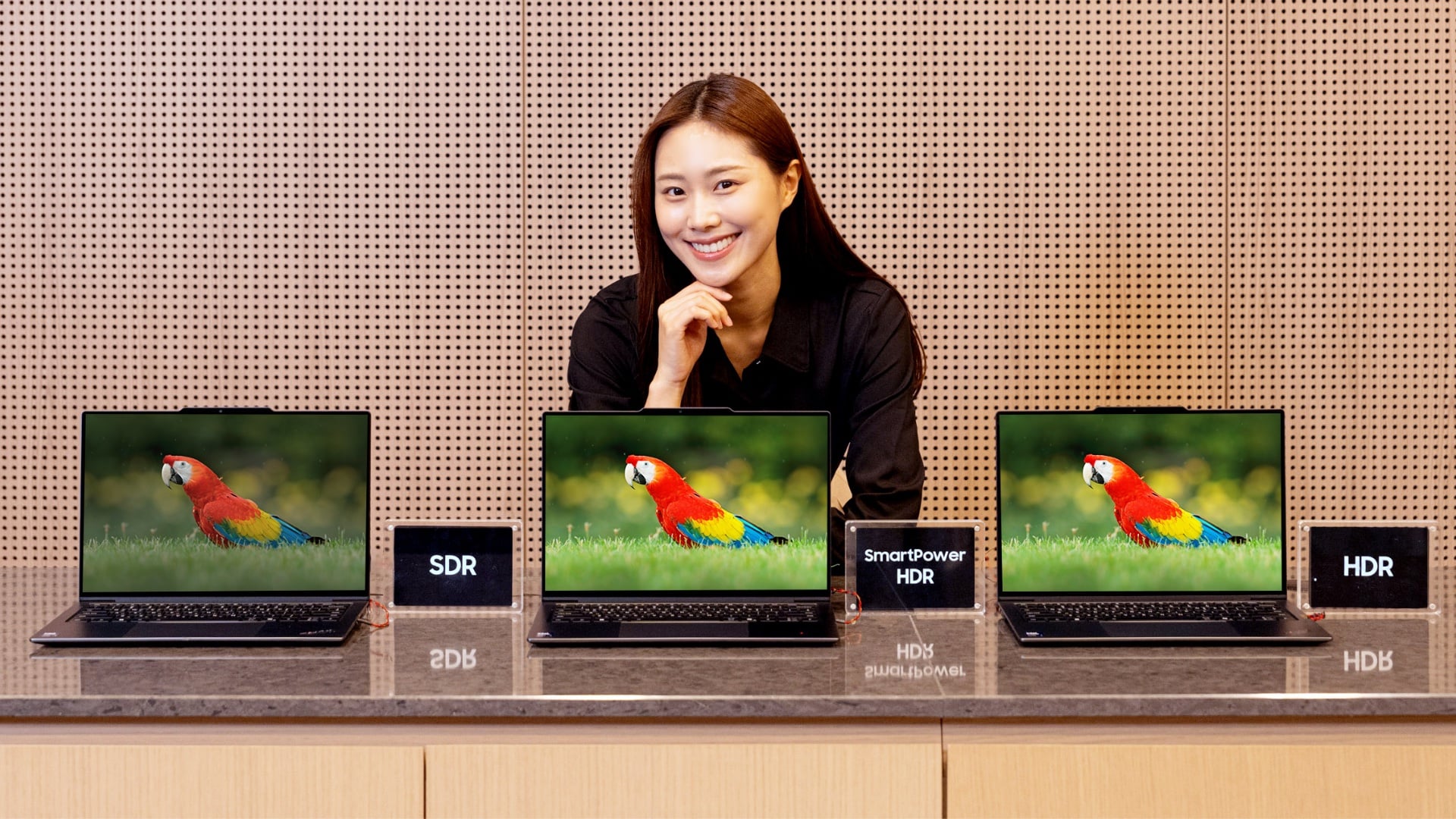
Poor OLED laptop battery life has long been a major drawback for devices with this vibrant screen technology. However, a new partnership between Samsung and Intel is about to change that. The two tech giants have announced a groundbreaking technology called ‘SmartPower HDR’, designed to significantly reduce the power consumption of OLED panels and boost battery performance.
How SmartPower HDR Improves OLED Laptop Battery Life
At the core of this innovative technology is an intelligent system that dynamically manages the screen’s power consumption. According to the companies, SmartPower HDR can reduce the panel’s power usage by up to 17% when displaying HDR content and up to 22% during general use in HDR mode. This allows users to consistently enjoy the superior image quality of HDR without worrying about draining their battery.
Furthermore, traditional HDR technology uses a fixed, often maximum, voltage to power the display. This results in much higher power consumption compared to SDR (Standard Dynamic Range) visuals. SmartPower HDR, on the other hand, instantly analyzes the content on the screen to optimize the voltage, thereby preventing unnecessary power waste.
Which Devices Will Feature This Technology?
This collaboration between Samsung Display and Intel is based on a memorandum of understanding signed in February 2025. The technology’s working principle is quite impressive: the laptop’s processor analyzes the peak brightness of each image frame in real-time. This data is then sent to the panel’s Timing Controller (TCON), where the most suitable driving voltage is calculated to ensure power efficiency.
Considering that the display accounts for roughly half of a laptop’s total power consumption, it’s clear how much such an optimization in panel efficiency can extend battery life. Both companies have stated they will continue working together to further enhance OLED efficiency. However, it has not yet been confirmed whether this new technology will be used in upcoming devices like the Galaxy Book 6 series.
So, what are your thoughts on this new technology from Samsung and Intel? Share your opinions with us in the comments!