
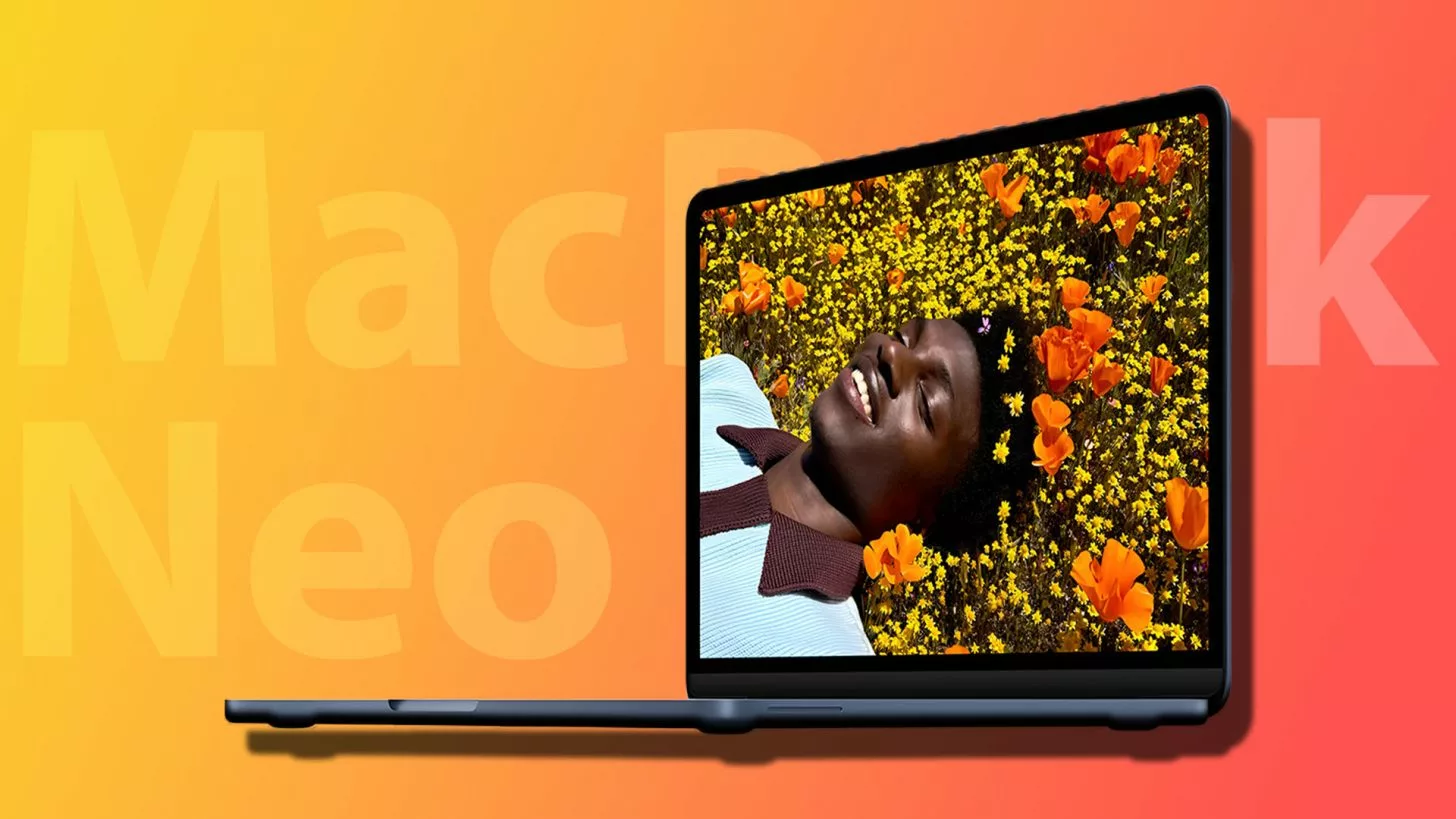
The newest player in Apple’s laptop ecosystem, the MacBook Neo, has provided a practical and surprising answer to the long-standing debate: “Is 8 GB of RAM sufficient for today’s standards?” While many users and tech authorities argue that 8 GB is inadequate for 2026’s software requirements, a recent independent stress test has challenged these assumptions. The base model MacBook Neo successfully managed 60 different applications without crashing, proving the optimization power of Apple’s proprietary architecture once again.
What Happened During the Stress Test?
In this rigorous test conducted by independent tech outlets, the device’s processing and memory management limits were pushed to the edge. The scenario included dozens of open tabs on Safari and Google Chrome, high-resolution media players, office suites, communication tools (Slack, Discord), and photo editing apps—all launched concurrently.
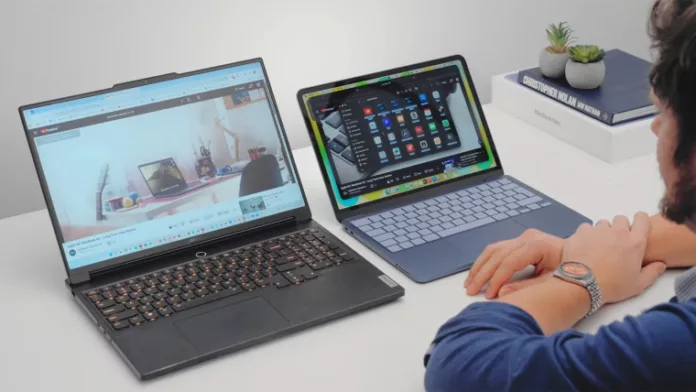
While a computer with traditional architecture and equivalent RAM might experience significant stuttering or a total system lockup, the MacBook Neo showed remarkable resilience. Although there were slight delays during application launches, the system maintained all software in the background and allowed fluid switching between apps without a single crash error.
The Secret Behind the Miracle: Unified Memory (UMA) and Ultra-Fast Swap
How does a modest 8 GB capacity offer such high efficiency in practice? The core technology is Apple’s Unified Memory Architecture (UMA). Unlike traditional PCs where the CPU and GPU use separate memory pools, the chip in the MacBook Neo allows all units to access a single pool with near-zero latency, eliminating data duplication and making RAM usage far more effective.
However, the real hero is macOS’s flawless “Swap” (Virtual Memory) management. When the physical 8 GB RAM fills up, the system instantly offloads inactive background data to the ultra-fast NVMe SSD. Thanks to massive SSD throughput speeds, the user hardly notices this constant data exchange between the RAM and the storage unit.
Is 8 GB RAM Sufficient for Professionals?
While running 60 apps is a significant show of force, expectations must be managed from an editorial perspective. This test demonstrates the MacBook Neo’s reliability for daily tasks, intensive office work, and academic research. However, for professionals handling multi-layered 4K/8K video projects or complex 3D modeling, 8 GB of RAM will eventually lead to a physical bottleneck.
Ultimately, Apple has once again demonstrated that raw numbers on a spec sheet do not always reflect real-world performance. Do you think 8 GB of RAM is enough for your daily workflow, or is 16 GB now the absolute minimum for you? Share your thoughts in the comments!