
Meta Begins Production of Proprietary AI Chips in September


Meta is set to begin the mass production of its proprietary artificial intelligence chips this September, as the technology giant moves to mitigate rising GPU costs and persistent hardware shortages. According to internal documents, the company is finalizing the rollout of its Training and Inference Accelerator (MTIA) program to reduce reliance on external suppliers like Nvidia and AMD. By partnering with Broadcom for chip design and TSMC for manufacturing, Meta aims to secure a more sustainable hardware supply chain. This strategic shift reflects a broader industry trend where tech leaders are taking control of their silicon destiny to power increasingly complex AI models.
- Meta will initiate the mass production of its proprietary MTIA artificial intelligence chips starting in September.
- The company has established partnerships with Broadcom for chip design and TSMC for the manufacturing process.
- This strategic transition aims to lower GPU expenditure and reduce corporate dependence on third-party hardware providers.
- Meta intends to deploy significant computing capacity by 2026 to support its expanding AI infrastructure.
Meta Adopts Modular Chip Architecture for Flexibility
To navigate the rapid evolution of artificial intelligence, Meta is implementing a modular design strategy for its MTIA hardware. The company is leveraging chiplet technology, which allows for greater adaptability and easier upgrades as computational requirements change. 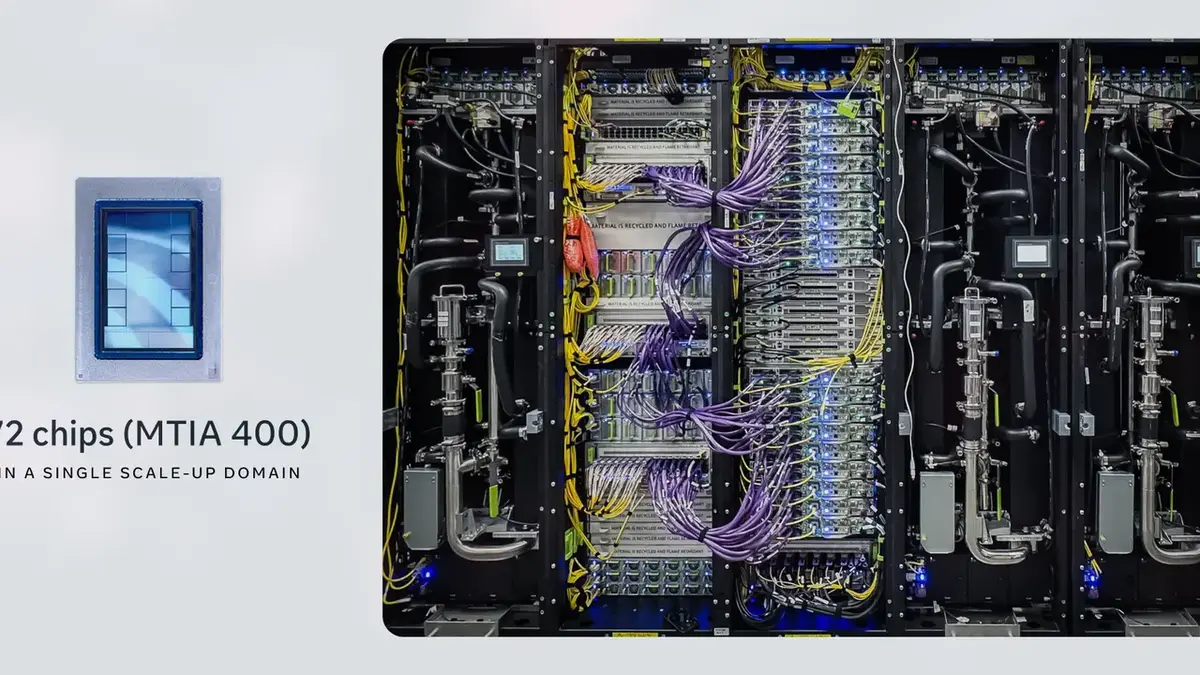 This modular approach ensures that each successive generation of chips can be built upon the successes of its predecessors, providing a scalable foundation for future AI developments.
Meta expects to launch a total of 7 gigawatts of cumulative computing capacity by the end of 2026.
Massive Capital Investments Drive Operational Efficiency
Meta is investing heavily in its physical infrastructure to support the training and execution of its Muse Spark AI models. The company has projected capital expenditures ranging between $125 billion and $145 billion for 2026, with a significant portion of this budget allocated to expanding data center capabilities. By internalizing chip production, the organization hopes to achieve greater operational efficiency and long-term cost savings in a highly competitive market.
Technology Giants Compete for Hardware Sovereignty
The movement toward proprietary hardware is not limited to Meta, as other industry titans including Amazon, Google, and OpenAI are pursuing similar strategies to break away from Nvidia’s market dominance. OpenAI is currently collaborating with Broadcom to develop specialized inference processors, while other firms like Anthropic are exploring custom silicon solutions to maintain their competitive edge. This shift signals a new era in the tech industry, where internal hardware development has become a critical battleground for artificial intelligence supremacy.
Do you believe the pivot toward custom silicon will successfully diminish Nvidia’s influence in the global hardware market, or will these companies continue to rely on industry leaders for their most advanced needs? Share your thoughts in the comments section below.
Your comment has been submitted,
it will be published after approval.