
Meta Bolsters Security Ahead of 2026 FIFA World Cup


With the 2026 FIFA World Cup fast approaching, social media giant Meta is significantly upgrading its security protocols across its platforms, including Facebook, Instagram, and WhatsApp. The company is implementing a comprehensive action plan to protect fans and athletes from fraud, cyberbullying, and hate speech as global interest in the tournament surges. Recognizing that high-profile events often serve as magnets for criminal activity, Meta has deployed specialized security teams and advanced AI-driven proactive systems to combat illegal operations like fake ticket sales, phishing schemes, and travel scams before they impact users.
- Meta has established specialized security units to monitor for fraudulent activities and policy violations during the 2026 FIFA World Cup.
- New automated notifications will alert users when they search for event tickets or join related groups on Facebook.
- The company removed over 2.6 million hate speech posts in late 2025 using proactive AI detection tools.
- Strategic partnerships have been formed with international agencies to improve the identification of phishing websites.
Specialized Teams Monitor Potential Fraudulent Activities
Large sporting events frequently attract cybercriminals who target eager fans through deceptive ticket offers and travel packages. To address these vulnerabilities, Meta has launched a new guidance system within its search engines and community groups. As of now, anyone searching for tournament tickets on Facebook receives instant, verified source alerts.
These notifications do not simply provide warnings; they also guide users toward official reporting tools if they encounter suspicious accounts or advertisements. This collaborative approach, which involves direct user participation, significantly reduces the reach of malicious content.
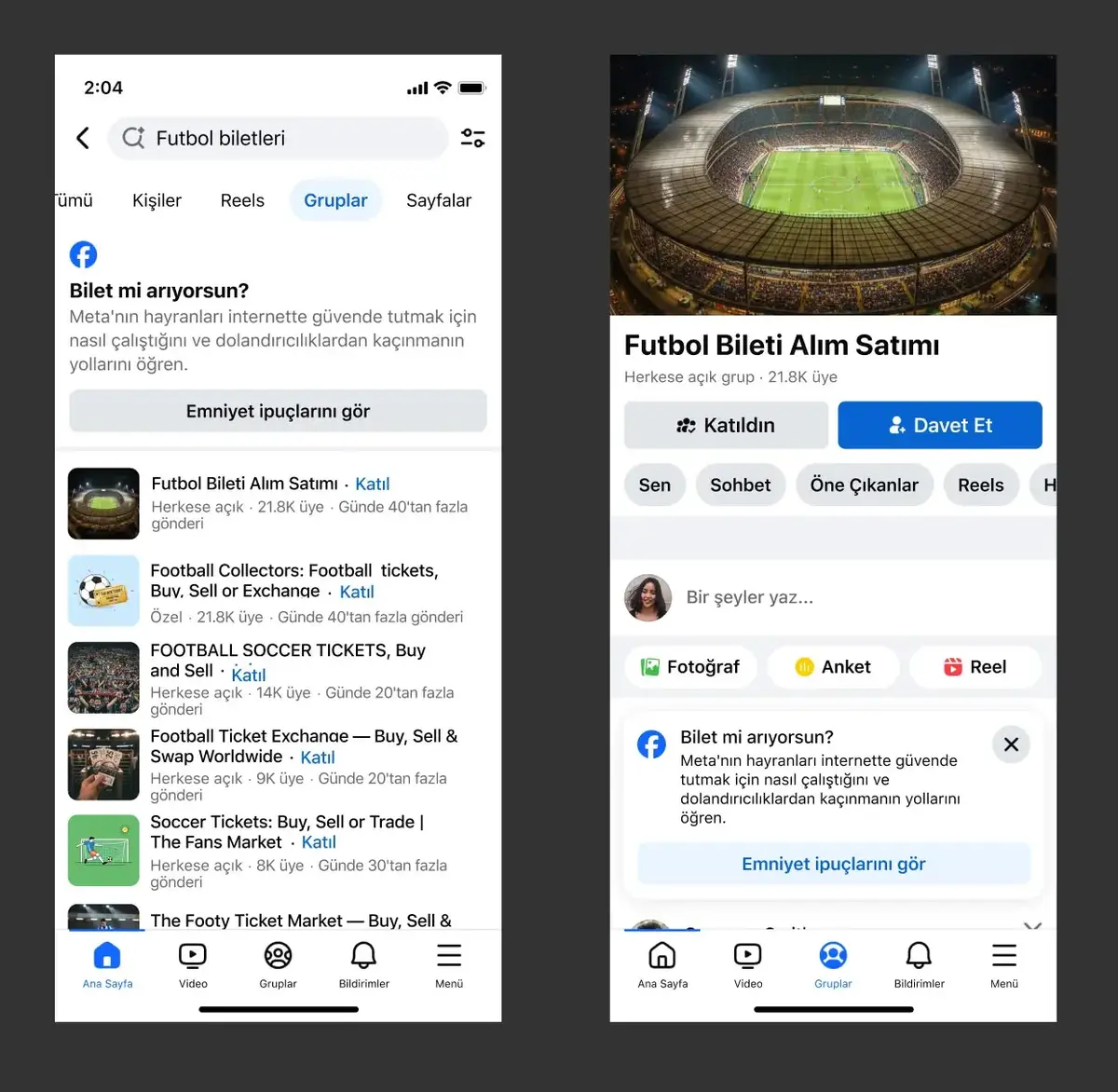
Meta is proactively neutralizing fraudulent networks before they can compromise the safety of global football fans.
Global Organizations Collaborate to Enhance Digital Safety
Meta acknowledges that sophisticated fraud networks require a multifaceted response. Consequently, the company is coordinating its efforts with civil society and government agencies in host nations such as Canada and Mexico. By partnering with entities like the Canadian Anti-Fraud Centre (CAFC) and Mexico’s consumer protection agency (PROFECO), Meta aims to educate fans on how to distinguish legitimate websites from phishing attempts.
Sezen Yeşil, Meta’s Public Policy Director for Turkey and Azerbaijan, noted that scammers constantly refine their deceptive tactics. In response, the company continues to invest in advanced detection tools while maintaining open channels of communication with law enforcement agencies and global stakeholders.
New Measures Protect Users From Cyberbullying
Security efforts extend far beyond financial protection; the company is also targeting racism, harassment, and hate speech directed at players, coaching staff, and supporters. Meta utilizes proactive artificial intelligence to identify and remove harmful content, often before a single user report is filed.
Recent data underscores the effectiveness of these automated systems. During the final quarter of 2025, Meta removed 2.6 million pieces of hate speech from its platforms. Notably, over 74 percent of this content was flagged and deleted by internal systems without any user interaction.
Automated AI systems are identifying and removing 74 percent of hate speech content before it is reported by users.
Moving forward, Meta remains committed to collaborating closely with international sports federations and athletes. The company pledges to update its digital defense mechanisms continuously based on real-time feedback and evolving threats throughout the tournament duration.
How do you feel about the role of AI in protecting your online social experience during global sporting events? Share your thoughts and experiences in the comments section below.
Your comment has been submitted,
it will be published after approval.