

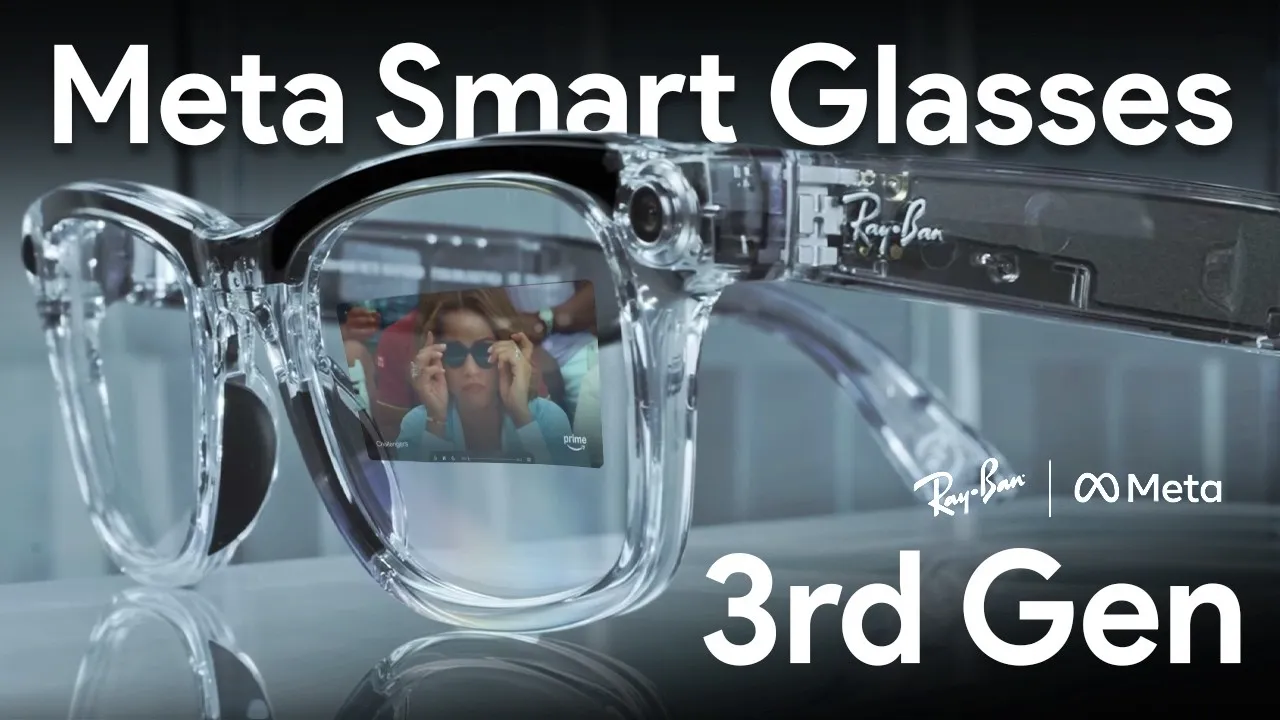
Meta’s next-gen smart glasses might be on the horizon, and early leaks suggest they won’t be going it alone. A new render of the rumored “Hypernova” device has surfaced, pointing to a third-generation Ray-Ban design that sticks to a familiar style while adding a futuristic twist: gesture control.
Meta’s smart glasses leak shows off the Hypernova design
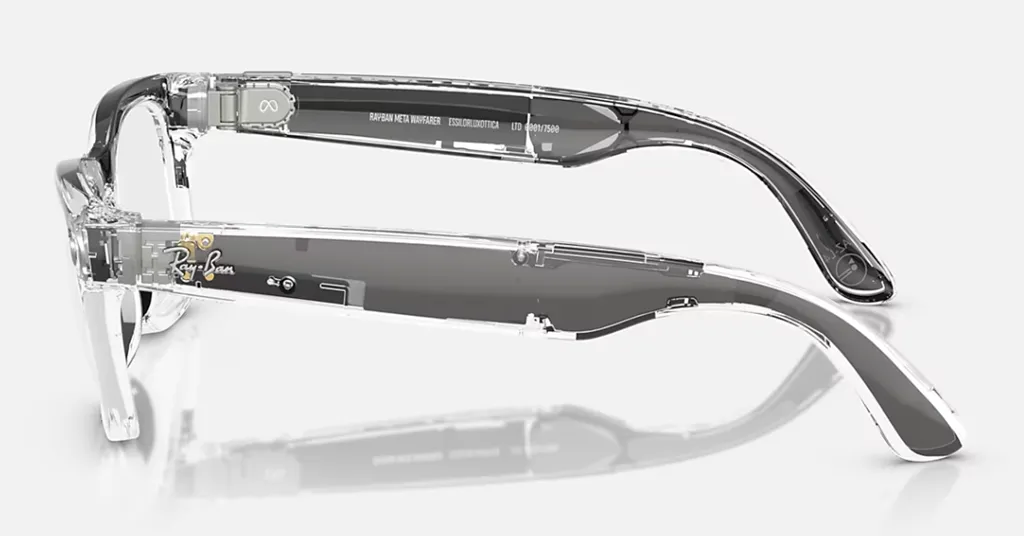
Posted by a well-known tipster, the leaked render shows what appears to be Meta’s upcoming smart glasses, expected to launch as the Ray-Ban Meta 3. Design-wise, they’re nearly indistinguishable from the pair that debuted earlier this year: sleek black frames, bold lines, and an all-around solid build.
While the 2nd Gen Ray-Bans did launch in a few color variants, including a limited translucent frame, the leaked image only shows the classic black design. Still, given the recent limited-edition drop, it’s fair to wonder whether more styles will return for the next-gen release.

Meta is preparing to supply wearable devices for the US military. This move could change the balance in the sector.
Meta pairs Hypernova with the sEMG bracelet
What separates this leak from earlier ones is the addition of Meta’s sEMG (surface electromyography) bracelet, designed to work in tandem with the Hypernova glasses. The bracelet is said to act as an input controller, using nerve signals in the wrist to translate tiny hand movements into digital commands.
If accurate, this combo points to a far more interactive wearable setup. The glasses aren’t just for snapping photos or listening to music; they might serve as part of a broader AR interface powered by subtle gestures.
What we know so far about Meta’s Hypernova
Here’s what’s been suggested about the upcoming smart glasses so far:
- Codename: Hypernova (possibly internal or pre-release name)
- Expected branding: Ray-Ban Meta 3
- Design: Near-identical to 2nd Gen Ray-Bans
- Display: One lens on the base model; rumored dual-lens for a future variant
- Input: sEMG bracelet for gesture-based control
Familiar outside, smarter inside
While the external design doesn’t scream innovation, the leaked render hints at deeper changes under the surface. If Meta pairs these glasses with its wrist-based controller, the result could feel less like an accessory and more like a lightweight, gesture-powered HUD. That’s not eyewear. That’s the interface.