
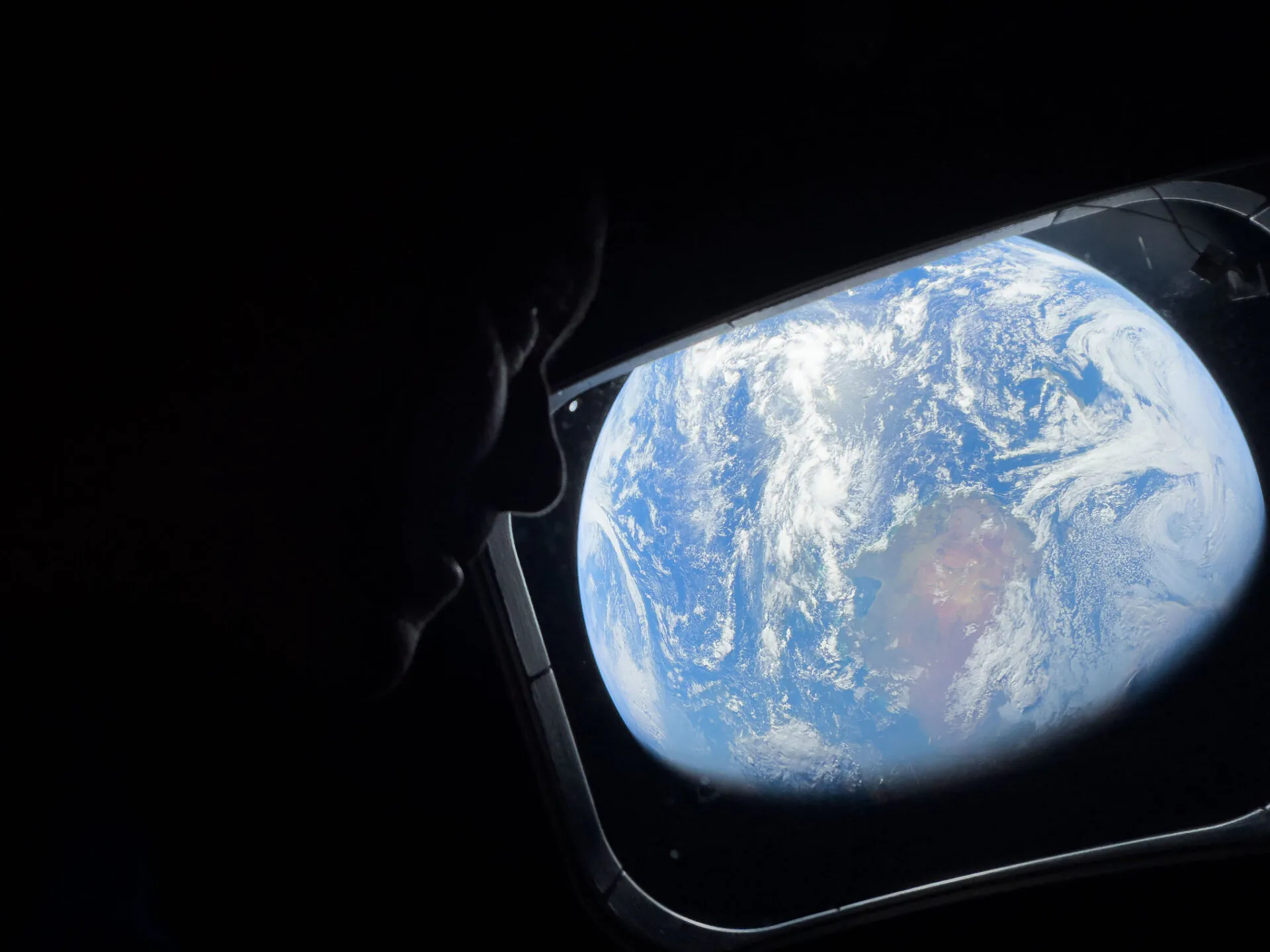
A critical milestone in humanity’s journey back to the Moon, the Artemis II mission is making headlines not just for scientific data, but for a moment that will go down in consumer electronics history. NASA has publicly shared the first deep-space photographs taken by astronauts using iPhone 17 Pro Max units approved for personal use aboard the Orion spacecraft. These images are recorded as the first clear photos taken by a smartphone from such a vast distance from Earth.
A View of Earth from Deep Space: Optical Success of iPhone 17 Pro Max
The images, shared by NASA via Flickr, clearly show astronaut Christina Koch looking back at Earth through the Orion spacecraft’s cabin window. Analysis of the metadata reveals that these striking frames were captured using the 18 MP next-generation front camera of the iPhone 17 Pro Max. Despite the spacecraft’s high velocity and the challenging light reflections inside the cabin, the device’s dynamic range and level of detail surprised the tech community.
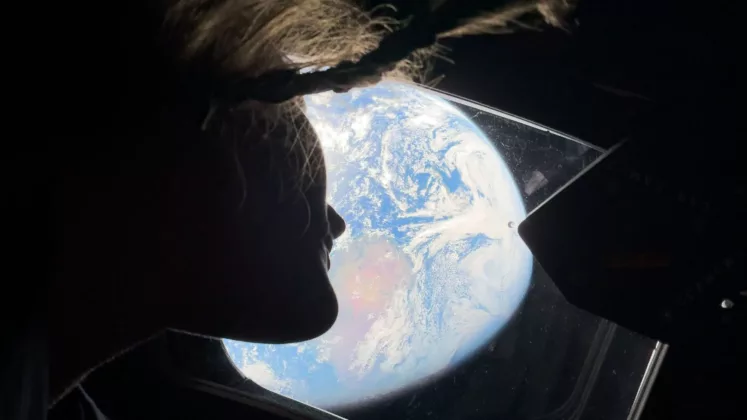
Apple’s A19 Pro chipset and revamped Image Signal Processor (ISP), introduced in September 2025, played a key role in processing these photos. NASA engineers noted that the device underwent rigorous testing for space radiation and thermal management under microgravity, ultimately finding the “Ceramic Shield 2” technology sufficient for spaceflight safety.
Why the iPhone 17 Pro Max? NASA’s Approval Process
Including a smartphone in a manned space mission is no simple feat. Before clearing the iPhone 17 Pro Max for flight, NASA conducted months of testing on battery stability, heat dissipation, and glass fragility. The device’s titanium and aluminum alloy chassis was selected as the ideal candidate for daily astronaut documentation due to its lightweight durability.
While professional gear like the Nikon D5 and Z9 continue to be used for primary scientific recording, the iPhone 17 Pro Max is utilized for capturing personal moments and “space selfies.” This is seen as concrete proof of how close consumer-grade devices have come to professional standards.
Future Tech: A19 Pro and Advanced Sensor Structure
With its triple 48 MP rear camera setup and 4x optical zoom, the iPhone 17 Pro Max was already considered a leader on Earth. However, the Artemis II mission has proven the efficiency of its low-light performance and new anti-reflective screen coating. The display, reaching 3,000 nits of peak brightness, allowed astronauts to clearly preview their shots even in windows flooded with direct sunlight.