
512 GB/s data transfer rate! Date announced for PCI Express 7.0!


The Peripheral Component Interconnect Express (PCI Express) standard, developed by Intel Corporation, is an industry standard high-speed data pathway found in almost all desktop computers. It is used in many components such as graphics cards, sound cards, and network cards. The long-awaited new version of the PCI Express technology, version 7.0, has been given a release date.
PCI Express 7.0 is coming in 2025
PCI Express 7.0 was first introduced in 2022. However, the development process has been ongoing. The 0.3 version of the specification was released in mid-2023, and now it has been upgraded to the PCI-SIG 0.5 version. The full version is expected to be released in 2025.
This is a good thing, as PCIe 5.0 is still increasingly being adopted in the consumer market, and the focus should now be on PCIe 6.0. Each new version doubles the bandwidth of the previous one. PCIe 7.0 aims for 128 gigatransfers per second. Depending on the configuration, this could mean 512 GB/s with x16 connection or 32 GB/s with x1 connection.
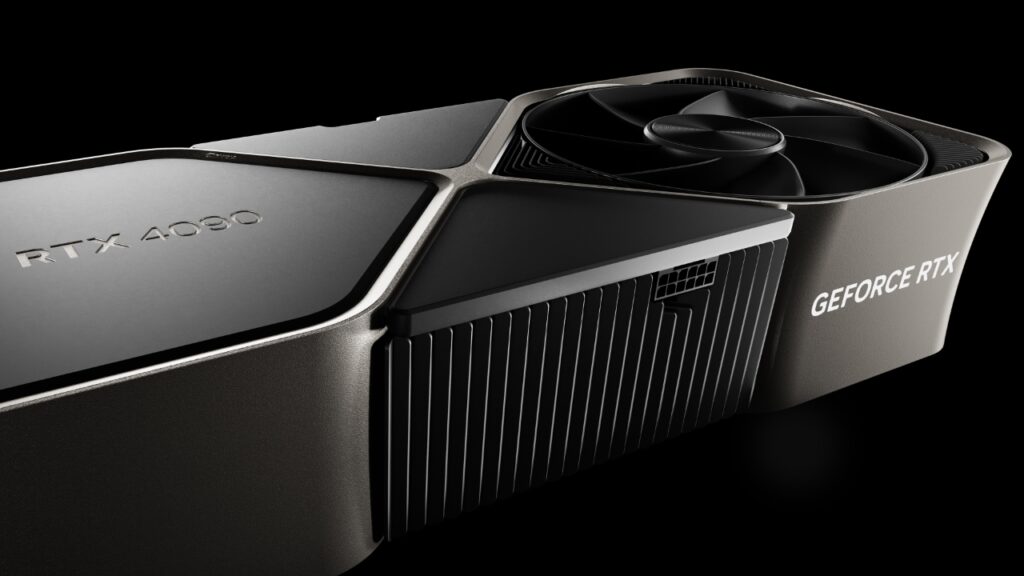
Essentially, in each new generation, you can halve the number of lanes to maintain the same speed or double the speed with the same number of lanes. Even the Nvidia RTX 4090 uses a PCIe 4.0 slot. The same goes for the AMD Radeon RX 7900 XTX. As we mentioned, the transition to 5.0 is still ongoing, and we are likely to see this in next-gen cards.
Samsung sets its sights high! NVIDIA competitor AI chip
A PCIe 4.0 x16 connection manages only 64 GB/s transfer speeds; PCIe 7.0 will be able to achieve this with just 2 lanes. This will result in a significant leap in data transfer speeds. Of course, it will take quite some time before we see PCIe 7.0 hardware in consumer products.
Initially, it will appear in servers for applications requiring large amounts of data transfer. PCI-SIG expects the new standard to be used in 800G Ethernet, AI/Machine Learning devices, cloud servers, and even quantum computers.
We can outline the goals of PCI Express 7.0 as follows:
- Providing speeds of up to 128 GT/s raw bit rate and up to 512 GB/s bidirectionally through x16 configurations.
- Utilizing PAM4 (4-level Pulse Amplitude Modulation) signaling.
- Focusing on channel parameters and accessibility.
- Offering targets with low latency and high reliability.
- Improving power efficiency.
- Maintaining backward compatibility with all previous generations of PCIe technology.
Your comment has been submitted,
it will be published after approval.