


French car manufacturer Peugeot is taking its sharp and avant-garde design philosophy a step further. The brand plans to equip the next-generation Peugeot 208 with a Steer-by-Wire (fully electronic) steering system featuring an angular design instead of the traditional round steering wheel.
Peugeot is coming with a new steering wheel
Developers offered the opportunity to test this system on a 2008 prototype in a public test drive. The initial test drive showed that while the technology proved its functionality, a learning curve is still needed.
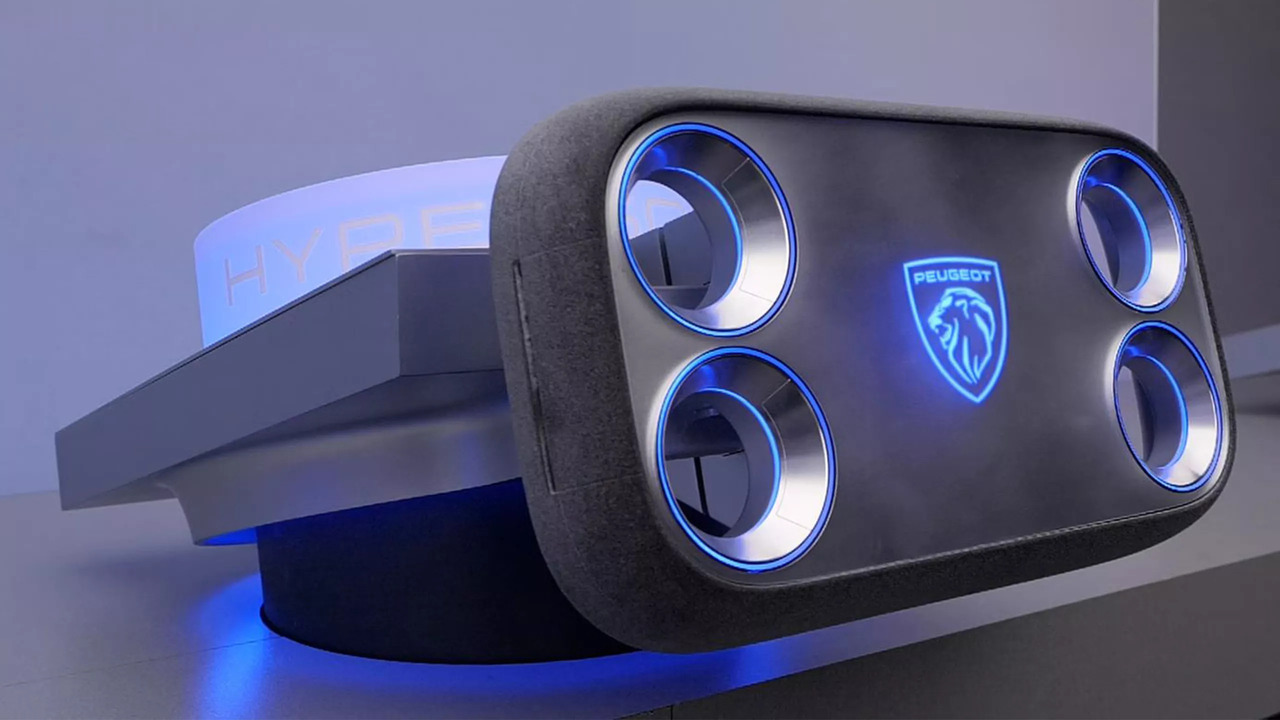
This angular steering wheel, which Peugeot calls Hypersquare, resembles a horizontal tray with four large circular holes. These circular openings are designed for easy finger access to essential functions such as climate control, volume control, and driver assistance systems.
A flat digital display is located in the center of the steering wheel, while just above it is a circular screen called Halo Cluster displaying speed and infotainment data in a 360-degree layout.
The concept is based on the Steer-by-Wire steering system, which largely eliminates mechanical components. Commands from the steering wheel are electronically transmitted to actuators on the front axle.
For safety, two actuators are used on the front axle; so if one fails, the other immediately takes over, ensuring the vehicle remains under control. This system also prevents traditional electromechanical steering from falling into a heavy mechanical backup mode.
During the test drive, the driving position was adjusted to be low, as in other Peugeot models, with the driver looking over the steering wheel at the cockpit. Although its angular shape might seem unusual at first, it was noted that the steering wheel was well-gripped and that thumbs fit comfortably into the recesses where the buttons are located.
Experts particularly emphasize that the Steer-by-Wire system requires getting used to due to its speed sensitivity. At low speeds, the steering reacts much more directly than the wheel rotation ratio. This causes the driver to steer the vehicle too close to curbs during initial tests. Technicians note that at slow speeds, the steering ratio is approximately three times more direct than in traditional systems.