

Android 16 QPR2, Google’s second major quarterly update to the Android 16 operating system, brought a host of new features as well as an unexpected performance boost for Pixel 10 owners. Google hasn’t made an official statement on this, but user reports and controlled tests reveal significant improvements, particularly in graphics performance.
Pixel 10 series receives update
Detailed benchmark tests show that the Pixel 10 Pro XL model generally runs faster than when it was first released, thanks to software updates. However, much of this speed-up occurred in the months before the Android 16 QPR2 update. With the final December 2025 update, QPR2, the performance of the Tensor G5 processor is marginally improved even further.
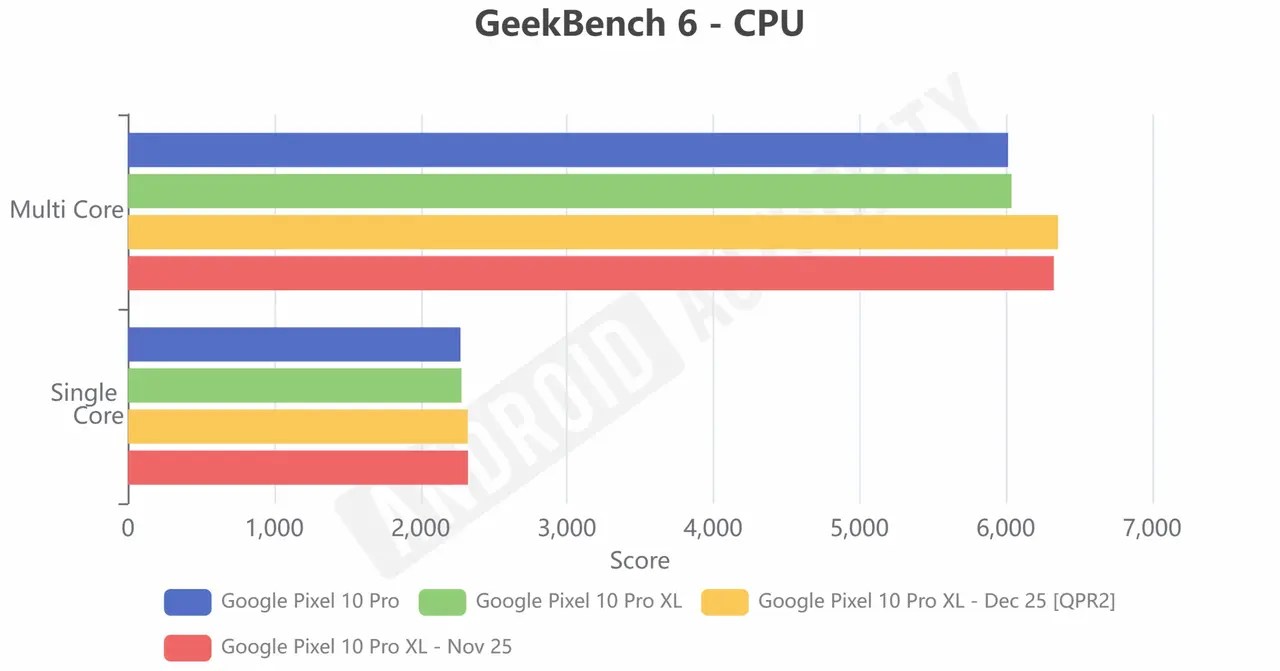
On the Central Processing Unit (CPU) side, single-core performance in GeekBench 6 tests has increased by approximately 2 percent since its release. Multi-core scores have increased by an average of 5 percent. While these increases don’t make a huge difference in peak performance, they indicate that the phone’s average performance has become more consistent.
The most noticeable increase is seen in the PCMark Work 3.0 test, which mimics real-life usage scenarios. In this test, the device achieves a significant performance increase of 19.6 percent compared to the previous version.
This result means that Google has addressed performance issues within Android 16, allowing the Pixel 10’s Tensor G5 processor to utilize its potential more consistently. Users report that this results in smoother performance for everyday applications and a generally faster response time for the phone.
Improvements are also present on the Graphics Processing Unit (GPU) side. In 3DMark stress tests, peak performance increases by approximately 5 percent in the Wild Life test using the Vulkan API, and by 7 percent in the Wild Life Extreme test.
This modest 6 percent increase on average doesn’t take the phone’s overall gaming performance to the next level, but it ensures more stable frame rates and reduces stuttering in more demanding applications and emulators.