
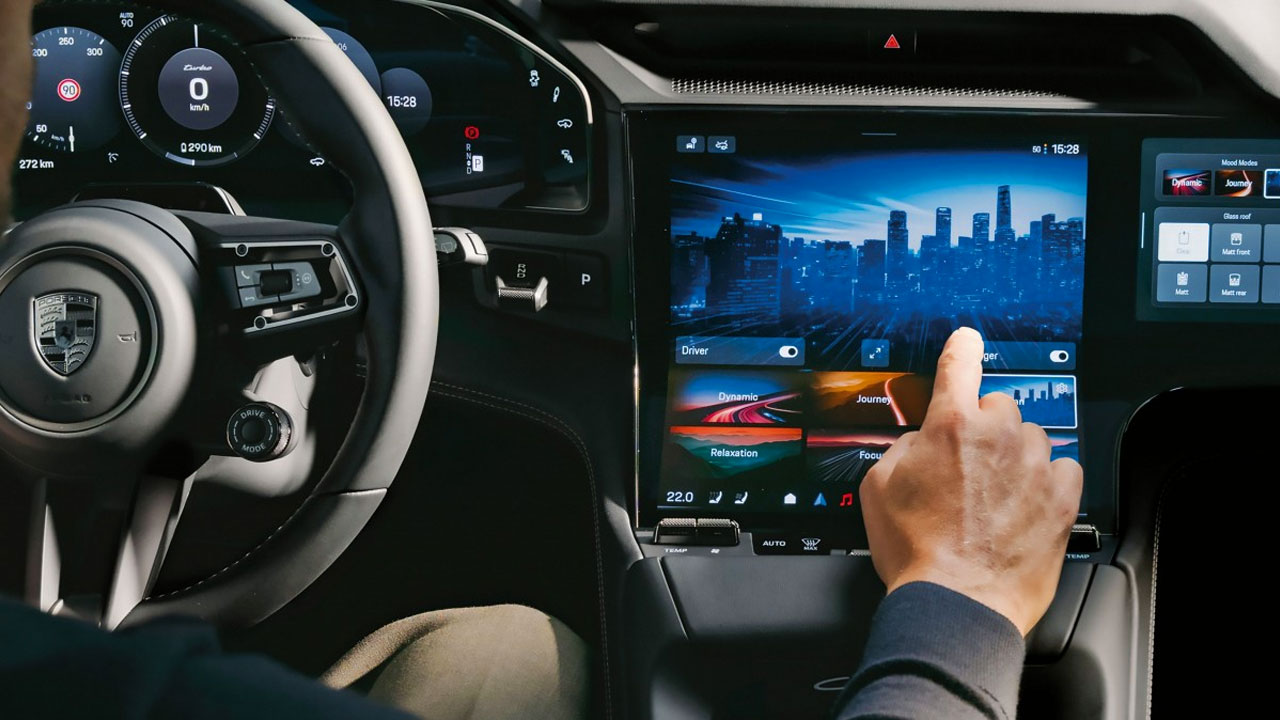
Porsche has always been a driver-focused brand, but with the all-new Cayenne Electric, this philosophy is moving from the analog world to a digital dimension. The German automotive giant has unveiled a completely redesigned interior concept equipped with a new digital interaction system it calls “Driver Experience.”
A Single Solution for Global Needs: The “Experience Zone”
This change, which goes beyond simply adding a few new screens, is the most concrete evidence that software may soon become more important than horsepower in modern electric vehicles. Porsche’s reason for this comprehensive change is quite simple: the expectations of drivers in different parts of the world are completely different. European users prefer a sporty driving experience without distractions, while passengers stuck in traffic in crowded metropolises in Asia want to spend their time in the car with entertainment and personalized features.
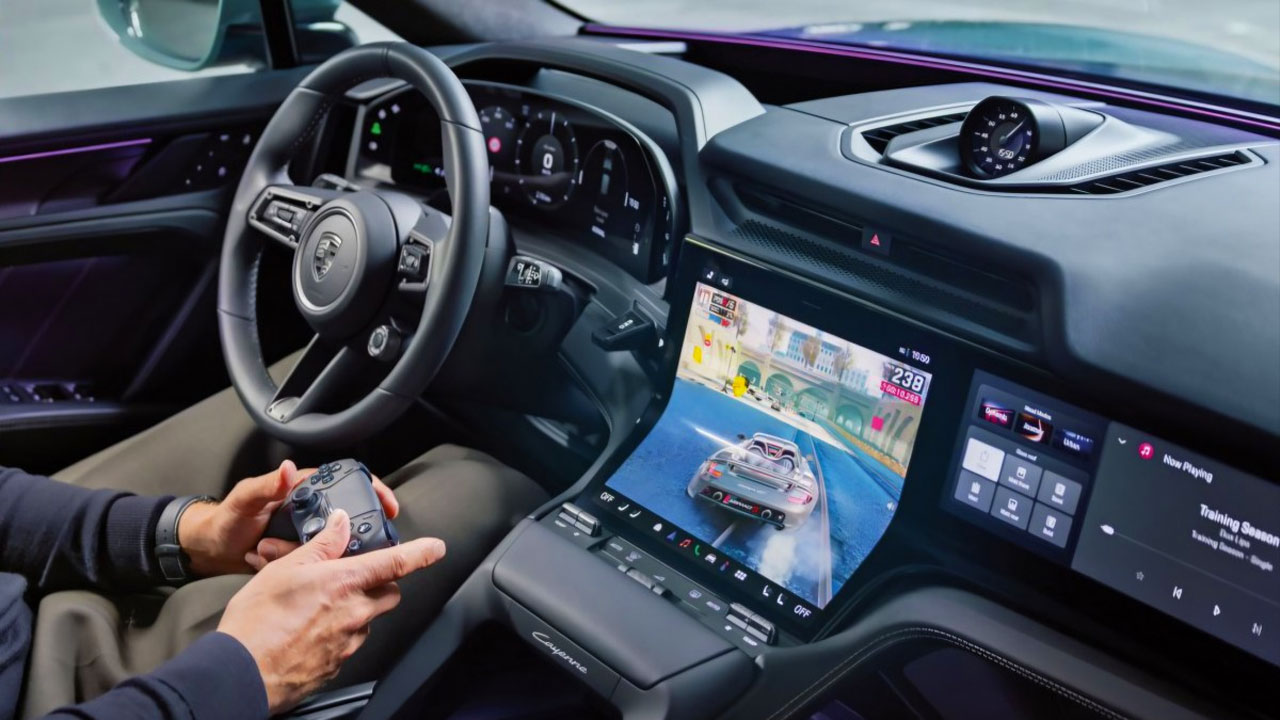
Porsche’s solution was to transform the cabin into an “experience zone.” “With Porsche Digital Interaction, we are creating a seamless and personalized driving experience by connecting intelligent software and advanced hardware,” summarizes the company’s goals, according to Sajjad Khan, Member of the Car-IT Management Board.
The most striking feature of the new concept is the digital cockpit, which replaces the traditional instrument layout with up to four screens:
- Driver Display: A 14.25-inch curved OLED panel is located directly in front of the driver. For those who love nostalgia, there is also a “Signature Display” mode that mimics the round gauges of old air-cooled models.
- Flow Display: Seamlessly integrated into the dashboard and center console, this curved screen forms the main input unit. To facilitate control during dynamic driving, Porsche has also added a new wrist rest that provides a stable point for analog and digital buttons.
- Passenger Display: The optionally available 14.9-inch screen offers video streaming and application control for the co-pilot. Augmented Reality (AR): The optional AR head-up display covers a full 87 inches and projects navigation information 10 meters in front of the vehicle, as if it were projected onto the road.
On the software side, the new voice assistant Porsche Voice Pilot acts not like a simple machine that only takes commands, but like a real conversational partner using high-performance wide language models (LLM). Khan notes that the system understands not only what you say, but also what you mean. For example, it can answer complex and interconnected questions in one go, such as “What is the best restaurant in New York, what dish would you recommend, and where can I park nearby?”
The Cayenne Electric can download new functions via OTA (over-the-air update), just like smartphones. With the “Themes” app, the interior ambient lighting, screen colors, and instrument panel designs can be changed with a single touch according to five different schemes. Furthermore, thanks to the digital key feature, you can unlock the vehicle with your smartwatch and share this authorization with seven different people.
With the digital world so dominant, Porsche has chosen to retain physical buttons (analog and capacitive) for the functions most frequently used by drivers: radio, telephone, and climate control. Located on the steering wheel and console, these buttons minimize distractions while driving.
With the Cayenne Electric, Porsche aims to prove its commitment to integrating technology while keeping the driver focused. How the traditional Porsche spirit will be reflected in the digital world remains to be seen when we see the vehicle on the road.