
Serious Performance Issues Plague Snapdragon 8 Elite Extreme Gen 6


Samsung has identified critical performance flaws in Qualcomm’s upcoming 2nm processor, the Snapdragon 8 Elite Extreme Gen 6, during internal testing phases. As the industry anticipates this flagship chipset, reports suggest that the silicon is struggling with significant thermal management and stability issues, resulting in noticeable performance degradation under sustained workloads. Samsung, a key partner and client, has reportedly signaled that it may pivot to its own Exynos 2700 architecture if these hardware shortcomings are not resolved promptly. This development introduces potential volatility into the premium smartphone market and places immense pressure on Qualcomm to rectify design inefficiencies before mass production commences.
- Internal Samsung testing revealed severe thermal throttling and stability concerns within the Snapdragon 8 Elite Extreme Gen 6 chipset.
- Samsung indicated that it might switch to the proprietary Exynos 2700 processor if Qualcomm fails to address these hardware deficiencies.
- Analysts suggest the lack of transparent technical data from Samsung may indicate a strategic effort to promote the company’s internal chipset division.
- Qualcomm’s aggressive pursuit of high clock speeds is reportedly causing excessive power consumption and heat output issues.
Technical Flaws Challenge the New Packaging Technology
Despite the implementation of advanced “Offset PoP” packaging technology designed to improve heat dissipation and sustained performance, the Snapdragon 8 Elite Extreme Gen 6 is failing to meet performance benchmarks in Samsung’s labs. The core issue appears to be related to thermal throttling, where the processor automatically reduces its clock speed to prevent overheating during high-intensity tasks. This behavior undermines the competitive advantage of a 2nm architecture, which should ideally provide better efficiency rather than higher heat generation.
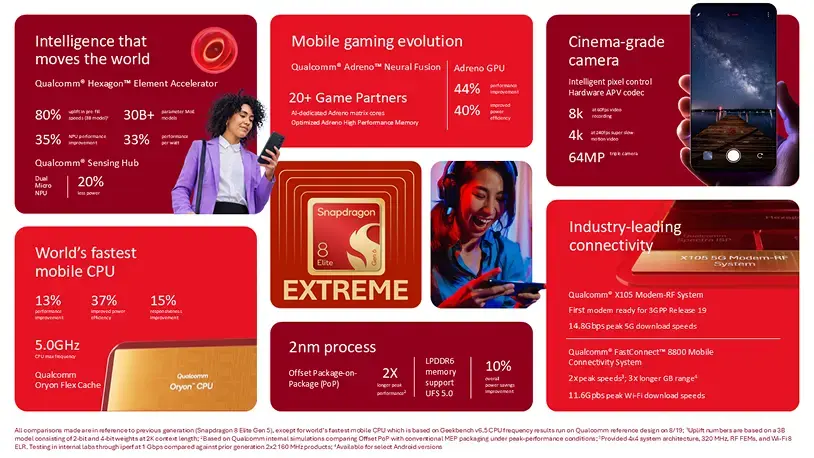
Samsung has officially communicated these findings to Qualcomm, setting a strict internal deadline for resolution later this month. For Qualcomm, the stakes could not be higher; losing a major customer like Samsung would not only impact revenue but could also damage the company’s reputation as the primary provider for high-end Android devices. The industry is currently watching to see if Qualcomm can optimize its power management firmware or if a physical hardware revision is required.
Speculation Surrounds the Potential Exynos 2700 Integration
Market analysts have noted that Samsung’s report lacks concrete benchmarking data, leading some to question the transparency of the claims. There is widespread speculation that these performance concerns might be leveraged as part of a strategic marketing campaign to bolster the reputation of the upcoming Exynos 2700. By highlighting the potential failures of a competitor, Samsung may be attempting to secure a larger supply share for its own silicon, which is rumored to be manufactured using an improved 2nm process known as SF2P.
History shows that Samsung has often attempted to position its Exynos chips as top-tier alternatives, though previous iterations often struggled to match the efficiency of rival offerings in real-world scenarios. If the company successfully integrates the Exynos 2700 into the Galaxy S27 Ultra, it would represent a significant shift in its vertical integration strategy, potentially reducing its long-term dependency on Qualcomm’s roadmap.
Aggressive Clock Speed Strategies Cause Thermal Limitations
The core of the problem may lie in Qualcomm’s design philosophy. By prioritizing high clock speeds to dominate single-core and multi-core benchmarks, the company is pushing its chips to operate at power limits that lead to thermal instability. This approach differs sharply from competitors like Apple, which balance lithography advancements with architectural refinements to maintain thermal headroom. As Android manufacturers push for higher performance, the industry must decide whether to continue chasing raw clock speeds or focus on sustainable, long-term efficiency.
Do you believe these performance issues are a genuine hardware failure or a tactical move by Samsung to promote their own chips? Share your thoughts on the future of mobile processors in the comments below.
Your comment has been submitted,
it will be published after approval.