
Smartphone Sales Data Reveal 2026 Second Quarter Performance


According to the latest report from TrendForce, global smartphone production reached 275 million units in the second quarter of 2026, despite an overall annual decline of 8 percent. During this period, Apple successfully increased its production by 14 percent compared to the previous year, manufacturing 52 million units and securing a 19 percent market share. While Samsung maintains its position as the global market leader with 62 million units produced, the industry shows signs of a strategic rebound. The research firm has revised its total annual production forecast for 2026 upward from 1.05 billion to 1.07 billion units, signaling a stabilization in the sector.
- Apple captured a 19 percent global market share after increasing its quarterly production to 52 million units.
- Samsung continues to lead the global smartphone market with a 23 percent share and 62 million units produced.
- Industry analysts revised the 2026 global production forecast upward to 1.07 billion units due to strategic market adjustments.
- Major manufacturers like Xiaomi and Oppo experienced significant production volume declines compared to the previous year.
Market Dynamics Show a Strategic Shift
The global smartphone landscape in 2026 remains highly competitive as manufacturers navigate fluctuating consumer demand. Although the overall production volume saw a decrease compared to the same quarter last year, the decline was less severe than initial projections suggested. TrendForce analysts indicate that this shift is largely driven by strategic adjustments rather than a fundamental surge in demand. Consumers appear to be replacing their devices sooner than anticipated, prompting producers to scale back previous, more aggressive cuts to their supply chains. 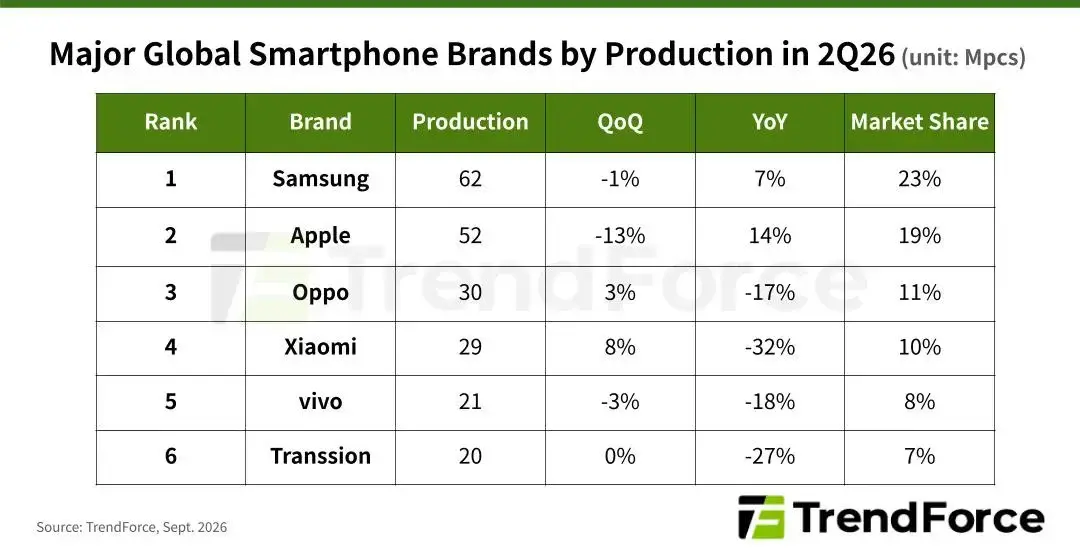
Major Brands Face Varied Outcomes
Samsung remains the dominant force in the industry, holding a 23 percent market share with 62 million units produced during the second quarter, representing a 7 percent growth over the previous year. Apple’s impressive performance, meanwhile, is largely attributed to the effective pricing strategies employed for the iPhone 17 series, which bolstered sales throughout the first three quarters of 2026. This tactical approach allowed the tech giant to maintain momentum while other players struggled.
In contrast, other major players in the market have faced challenges. Oppo occupies the third position with 30 million units, reflecting a 17 percent decline, while Xiaomi follows in fourth place with 29 million units, marking a 32 percent drop from the previous year. Similarly, vivo and Transsion reported production volumes of 21 million and 20 million units, respectively, with double-digit contractions in their output. These figures highlight the significant disparity between the top two manufacturers and the remainder of the competitive landscape.
Future Price Adjustments Might Impact Sales
Looking ahead, the market is bracing for potential changes as anticipation builds for the next iteration of Apple hardware. TrendForce notes that price increases for the upcoming iPhone 18 series appear inevitable, a factor that could influence consumer purchasing behavior in the coming months. As inflationary pressures and component costs continue to affect the electronics sector, manufacturers will likely face a delicate balance between maintaining profit margins and sustaining their current shipment volumes.
As rising hardware costs and evolving consumer habits continue to reshape the mobile industry, we want to hear your perspective. How do you believe potential price hikes on flagship devices will influence your future upgrade decisions?
Your comment has been submitted,
it will be published after approval.