
SpaceX Orbital Data Centers Challenge NVIDIA AI Dominance

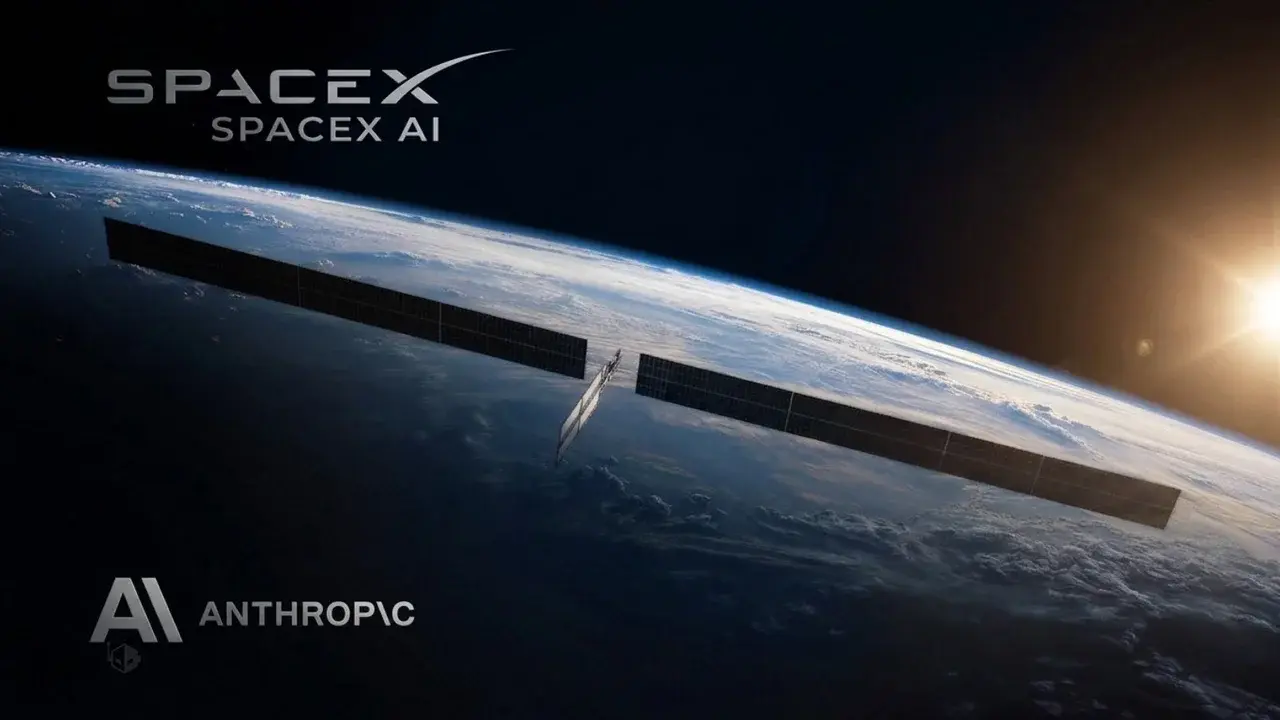
A recent analysis by Morgan Stanley reveals that SpaceX is poised to revolutionize the artificial intelligence industry by deploying a massive orbital satellite constellation by 2031. This ambitious project aims to establish space-based data centers that leverage extreme economies of scale, potentially driving computing costs significantly lower than current terrestrial alternatives. By utilizing advanced satellite hardware, SpaceX expects the annual cost of orbital computing to drop to approximately $6.50 per watt, effectively rivaling the $6.80 per watt cost associated with NVIDIA Blackwell GPU-powered terrestrial data centers. This shift marks a pivotal moment in the global expansion of space-based AI infrastructure.
- SpaceX projects orbital computing costs will reach $6.50 per watt annually by 2031.
- The company has requested FCC authorization to launch one million satellites into orbit.
- New regulatory mechanisms are being implemented to accelerate the approval process for next-generation satellite constellations.
- Orbital data centers benefit from vacuum-based radiative cooling and constant access to solar energy.
SpaceX Develops Specialized AI1 Satellite Technology
At the heart of this initiative is the AI1 satellite, a model specifically engineered for high-performance artificial intelligence workloads. These units are designed to support peak computing loads reaching 150kW. To ensure operational stability, the satellites incorporate sophisticated features such as liquid cooling radiators, integrated meteor shields, and modular computing cores. These components are supported by deployable solar arrays that maximize energy intake in the vacuum of space.
Production of this hardware will take place at the Gigasat facility in Texas, underscoring the company’s commitment to scaling its orbital economy. SpaceX views this satellite network as a foundational step toward becoming a Kardashev Type II civilization, capable of harnessing vast amounts of energy for complex data operations.
The transition to space-based infrastructure allows for operational flexibility that terrestrial data centers struggle to achieve due to land and power limitations.
Future Projections Show Significant Cost Reductions
Financial forecasts suggest that the cost of space-based computing will continue its downward trajectory well into the next decade. Analysts estimate that by 2040, the annual cost per watt could plummet to as low as $1.70. This economic efficiency suggests that an orbital data center with 1GW of capacity could operate for approximately $1.7 billion per year. In contrast, maintaining a comparable facility on Earth currently requires an investment of roughly $100 billion, highlighting the massive financial disparity between ground and space operations.
Regulatory Frameworks Support Rapid Deployment
To facilitate this rapid infrastructure growth, the Federal Communications Commission (FCC) has introduced a streamlined licensing process known as the “Delete, Delete, Delete” mechanism. This regulatory change is designed to bypass traditional bureaucratic bottlenecks, allowing SpaceX to deploy its massive satellite constellations more efficiently. As the space economy evolves, these regulatory adjustments remain critical for maintaining competitive momentum against traditional terrestrial hardware providers.
As SpaceX pushes the boundaries of orbital computing, the shift toward space-based AI infrastructure raises significant questions about the future of global data management; we invite you to share your thoughts on whether you believe this technology will successfully replace traditional terrestrial data centers in the coming decade.
Your comment has been submitted,
it will be published after approval.