
SpaceX Requests FCC Approval to Boost Starship Signal Power

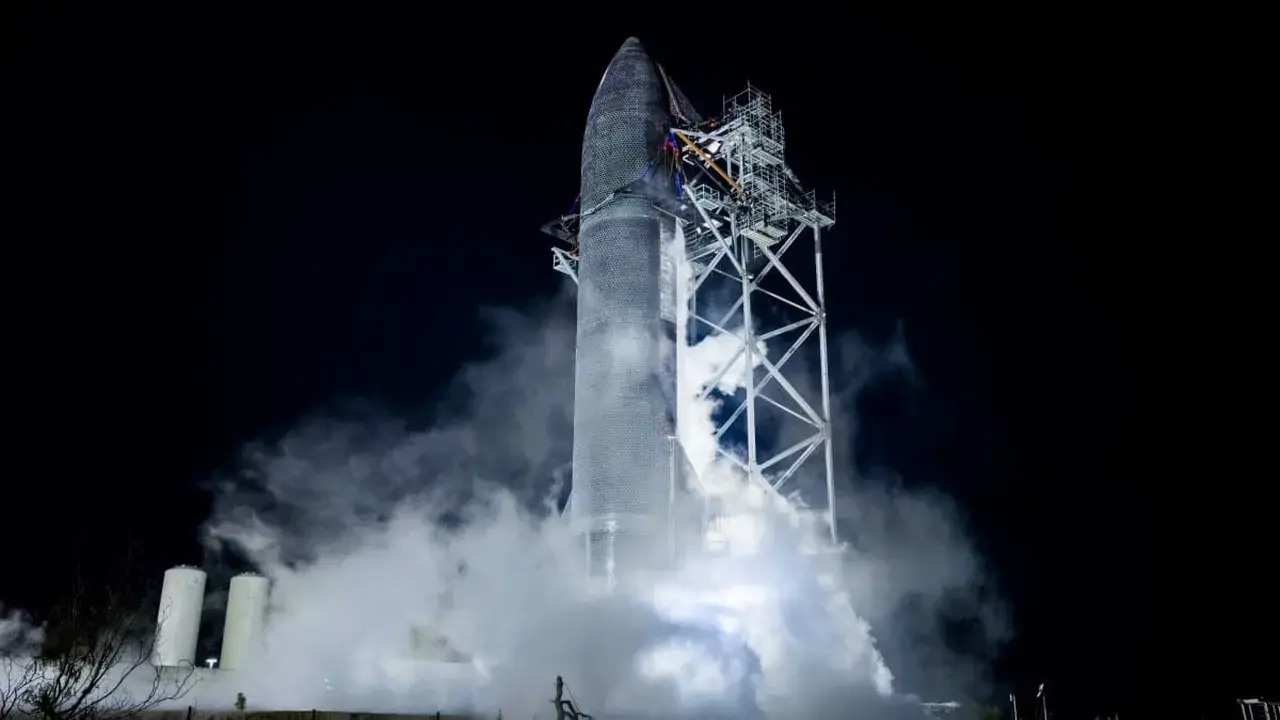
SpaceX has officially submitted an application to the U.S. Federal Communications Commission (FCC) to enhance the communication systems of its Starship spacecraft for the upcoming Orbital Return Demo mission. The aerospace company is seeking a Special Temporary Authority (STA) to operate at increased radio signal power levels during testing at its Starbase facility in Texas. This authorization, requested for the period between July 29 and December 28, 2026, aims to ensure robust data telemetry during the vehicle’s critical transition from orbit back to Earth’s atmosphere. Maintaining a stable connection is vital for the safety and success of the mission as the craft navigates the high-intensity flight phases of atmospheric reentry.
- SpaceX seeks FCC permission to increase signal power for Starship reentry communication tests at Starbase.
- The request targets the 2056 MHz and 2062 MHz frequency bands for vital telemetry and flight control data.
- The proposed operations are scheduled to take place between July 29 and December 28, 2026.
- Engineers aim to utilize 100 Watt transmission power to achieve an Effective Radiated Power of approximately 1 kW.
Communication Infrastructure Undergoes Significant Upgrades
Future Starship missions require precise management of the spacecraft’s departure from orbit and its subsequent atmospheric entry. During these maneuvers, the link between the vehicle and ground stations serves as the primary lifeline for mission controllers. 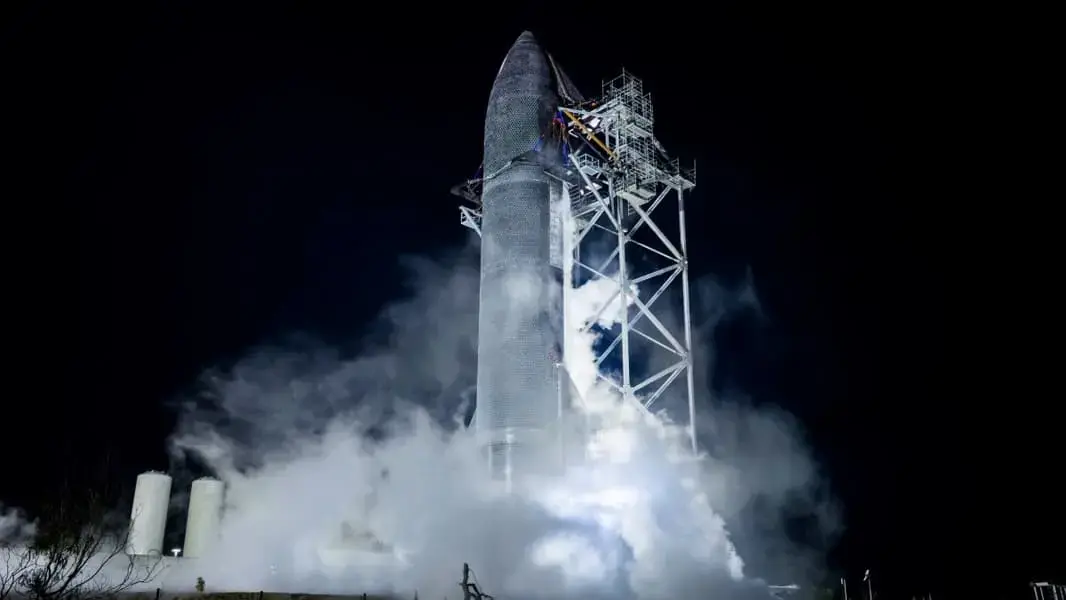 According to technical documentation filed with the FCC, SpaceX plans to integrate M2 Antenna Systems FGFD-1-SC-2-N units alongside specialized radio modules. These components are specifically engineered to maintain seamless data transmission even under the extreme thermal and mechanical pressures encountered at high altitudes.
High-power radio signals serve as the critical defense against data dropouts during the volatile Starship atmospheric reentry phase.
Technical Specifications Meet Rigorous Flight Demands
The application outlines specific technical parameters, including the deployment of radio modules capable of 100 Watt transmission power. This configuration is expected to produce an Effective Radiated Power (ERP) of approximately 1 kW, ensuring that signal integrity remains intact even through the dense ionized layers of the atmosphere. 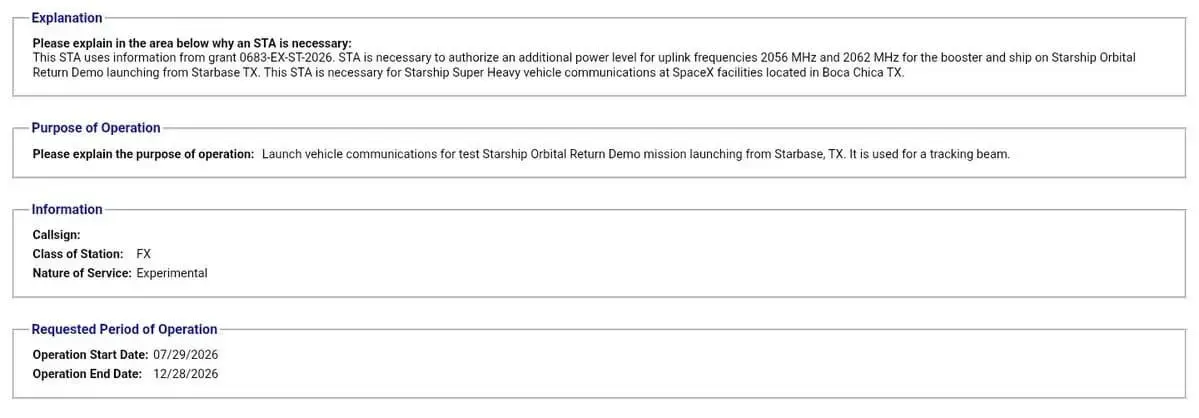 By utilizing 4M05G1D emission parameters, SpaceX intends to support both real-time vehicle tracking and a precise tracking beam. This technical architecture allows ground crews to maintain continuous contact with the spacecraft, even when flight conditions shift rapidly during the descent.
Regulatory Approval Processes Continue for SpaceX
The FCC is currently reviewing the temporary authorization request as part of the broader evaluation of SpaceX’s evolving space transportation program. Industry experts note that enhancing signal power is becoming a standard engineering procedure for managing the flight dynamics of super-heavy, reusable systems like Starship. The data provided by the company confirms that all necessary engineering preparations have been finalized to ensure communication channels remain open during the most hazardous segments of the flight path.
How do you view these technical communication upgrades for the Starship program? Do you believe that strengthening data security during the reentry phase is the most critical factor for the mission’s ultimate success? Share your thoughts and technical insights in the comments section below.
Your comment has been submitted,
it will be published after approval.