
SpaceX Starship Reaches Earth Orbit for First Time in History

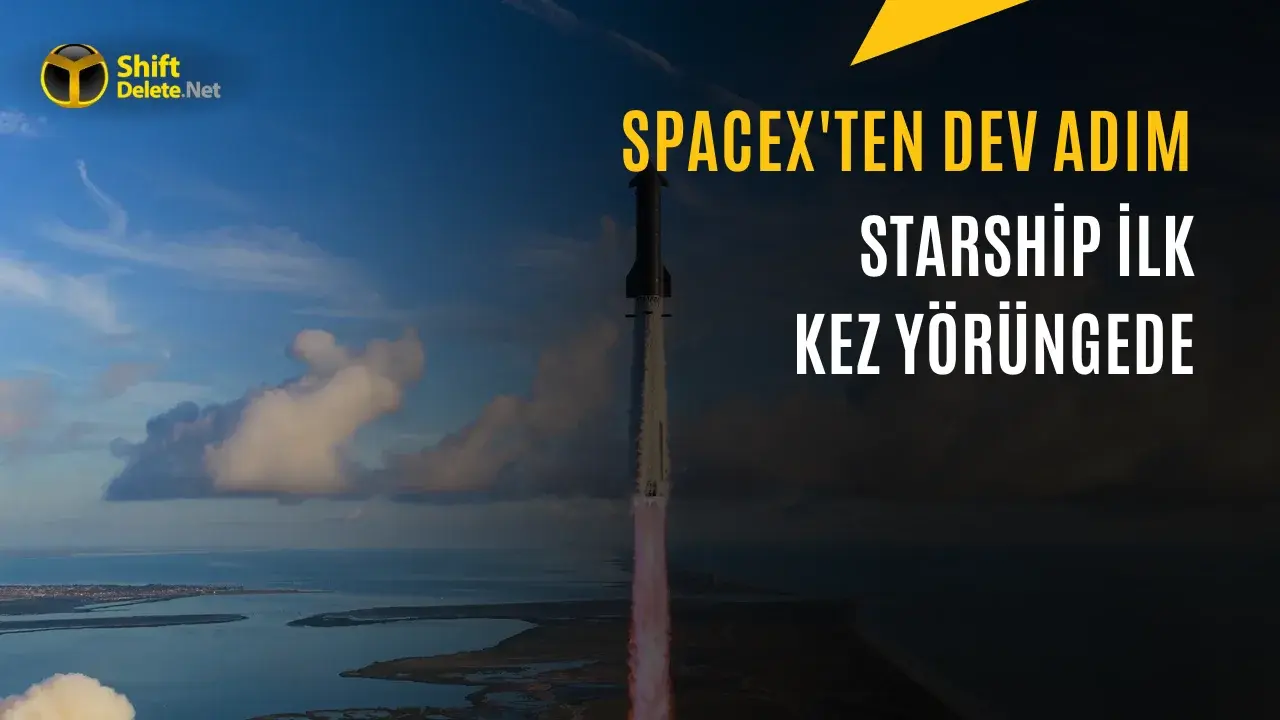
SpaceX has officially entered a new era in aerospace history as its Starship rocket successfully reached Earth orbit for the first time this past Monday. Launched from the company’s facilities in South Texas, the massive vehicle, widely considered the most powerful rocket ever built, completed its ascent despite experiencing technical challenges during the flight. This landmark achievement represents a critical threshold for SpaceX, moving the organization closer to its long-term objective of facilitating human travel to Mars. The successful orbital insertion confirms the viability of the heavy-lift vehicle, which is designed to eventually support deep-space missions and large-scale satellite deployments.
- The Starship successfully reached Earth orbit despite the failure of one of its six Raptor engines during the ascent phase.
- The mission deployed 26 next-generation V3 Starlink satellites that offer significantly increased network capacity compared to previous versions.
- SpaceX elected to conclude the flight early by splashing the vehicle down in the Pacific Ocean after approximately 1.5 hours in space.
- The company is currently planning a 100 million dollar investment to build a new Starbase facility in Louisiana to expand operational capacity.
Technical Challenges are Overcome During Flight
Shortly after the stage separation, telemetry indicated that one of the six Raptor engines responsible for providing power had malfunctioned. Despite this technical setback, the vehicle maintained its structural and directional integrity, demonstrating the redundancy designed into the Starship system. The successful orbital insertion serves as a testament to the engineering resilience of the platform, as it effectively reached its target trajectory without compromising the mission objectives.
Once in stable orbit, the vehicle successfully deployed 26 next-generation V3 Starlink satellites. SpaceX confirmed that communication was established with all deployed units. These V3 satellites are expected to begin providing internet services within the coming weeks. According to technical specifications provided by the company, the capacity delivered by this single Starship launch is equivalent to the total throughput previously provided by 20 separate Falcon 9 launches carrying V2 mini satellites.
Mission Parameters are Adjusted for Safety
While the initial mission plan called for the upper stage to orbit the Earth six times over a nine-hour period, the operations team opted for a deviation. Approximately 90 minutes into the flight, SpaceX announced that the vehicle would be brought down early. The mission concluded with a successful landing in a pre-designated safe zone within the Pacific Ocean, successfully completing the second flight test since the company’s transition to a publicly traded entity.
Future Infrastructure Goals are Being Developed
Elon Musk continues to focus the company’s long-term strategy entirely on the Starship platform. NASA’s upcoming lunar missions and various initiatives to establish orbital data centers are heavily reliant on the successful maturation of this heavy-lift vehicle. The goal remains to achieve high-frequency flight operations, with aspirations for thousands of launches per year.
To support this ambitious vision, SpaceX has finalized an agreement to construct a second major spaceport in Louisiana. This facility is expected to surpass the existing Texas site in scale, backed by a 100 million dollar investment. This expansion is essential for increasing the launch cadence required for future Mars exploration. As the company continues to refine its hardware and operational procedures, the timeline for human interplanetary travel appears to be accelerating significantly.
Given the rapid progress of the Starship program and its potential to revolutionize both global connectivity and space exploration, we invite you to share your thoughts in the comments below on how quickly you believe this technology will enable the first human mission to Mars.
Your comment has been submitted,
it will be published after approval.