
Tesla Model X Splits in Half During FSD Crash

A severe traffic accident involving a Tesla Model X occurred last Wednesday in Issaquah, Washington, raising new questions about the safety of automated driving features. The vehicle, which was operating under the Full Self-Driving (FSD) mode, reportedly veered into oncoming traffic and collided with a Cadillac Escalade before crashing into a roadside ditch. The impact was so violent that the rear third of the Tesla’s chassis was completely severed from the main body. Remarkably, despite the catastrophic damage sustained by the electric vehicle, all occupants managed to escape without suffering major injuries, a outcome described by witnesses as extremely fortunate.
- The Tesla Model X was confirmed to be operating in FSD mode at the moment of the collision.
- Local authorities are analyzing telemetry data and vehicle software versions to determine the cause of the accident.
- Tesla maintains that the system is not fully autonomous and requires constant human supervision.
Police Launch Formal Investigation Into Technical Data
The Issaquah Police Department has initiated a comprehensive investigation to determine the specific circumstances surrounding the collision. Investigators are currently focusing on the vehicle’s telemetry data, speed logs, and the specific software version active at the time of the crash. 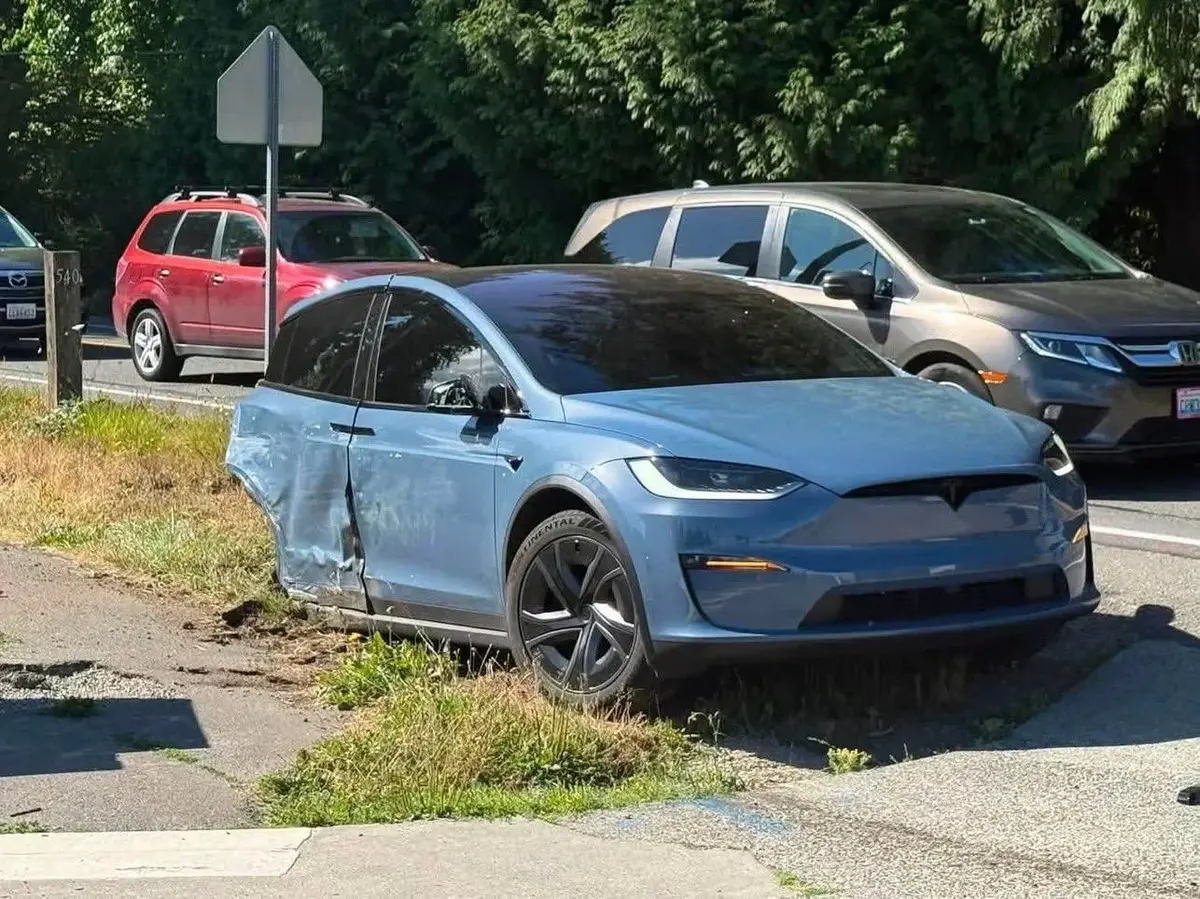 Determining whether the human driver attempted to override the system or intervene before the impact remains a primary objective of the technical audit. This analysis is expected to clarify how the vehicle’s onboard sensors and decision-making software interacted with the road environment leading up to the collision with the Cadillac Escalade.
The physical destruction of the vehicle underscores the significant kinetic forces involved in modern traffic accidents.
Tesla Emphasizes Driver Responsibility for Safety
Tesla has long maintained that its “Supervised” FSD technology is not a replacement for human drivers. Federal safety guidelines strictly mandate that the responsibility for safe operation remains with the vehicle owner, regardless of the active software features. 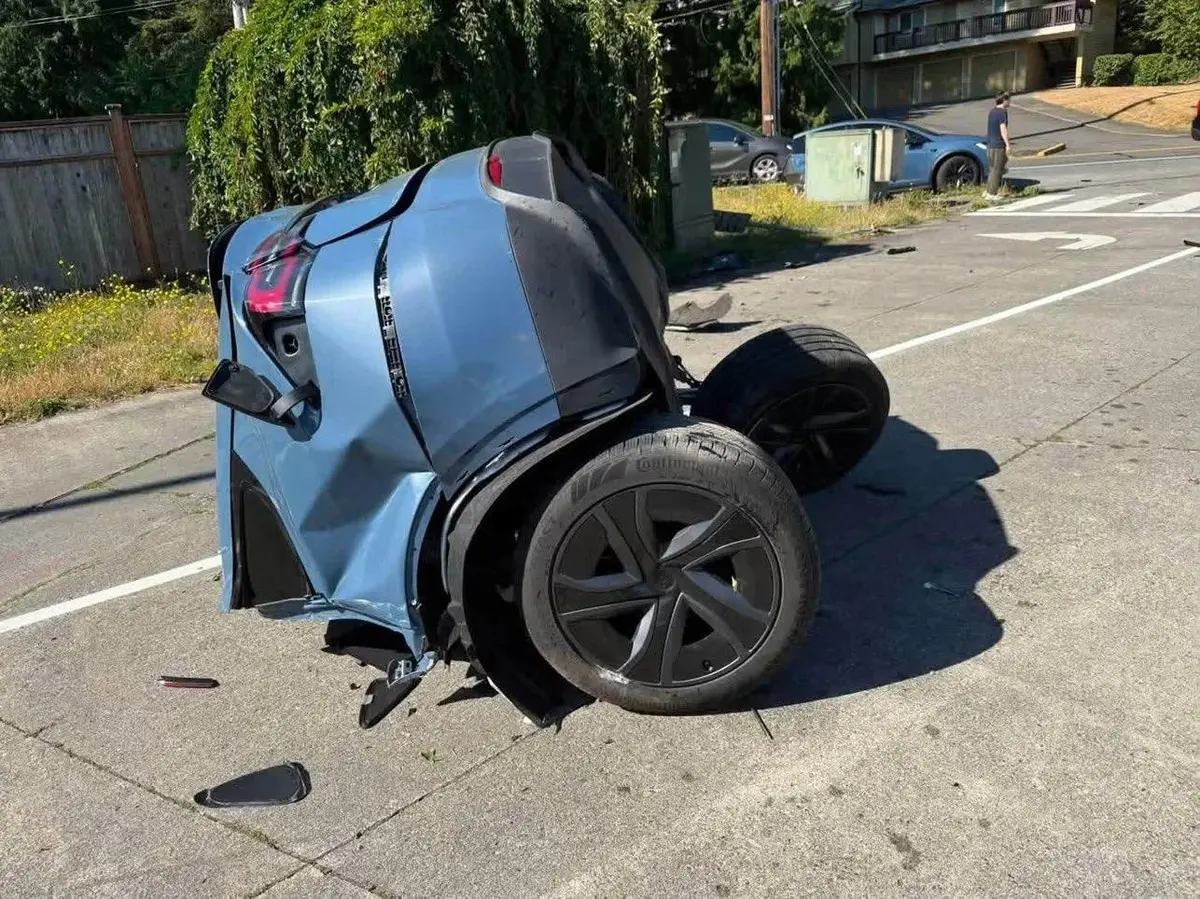 The company explicitly states in its user manuals that drivers must keep their hands on the wheel and remain vigilant at all times, prepared to take manual control of the vehicle if the system performs an unexpected maneuver. Industry experts warn that over-reliance on driver-assistance systems can create a false sense of security, leading to delayed reaction times during critical incidents.
Automated systems currently require constant human oversight to function within complex traffic environments.
Experts Advise Caution Regarding Automated Features
As the investigation continues, safety advocates are reiterating the necessity of maintaining full situational awareness while using advanced driver-assistance technologies. The recent incident in Washington serves as a stark reminder that these systems, while technologically sophisticated, are not infallible and cannot guarantee total safety in every traffic scenario. The final report from the authorities will likely influence how future updates to Tesla’s self-driving algorithms are implemented and regulated. For now, the automotive community waits to see what the specific data reveals about the relationship between human oversight and machine performance.
Given the ongoing debates surrounding the safety and reliability of autonomous driving features, we invite you to share your thoughts in the comments section below: do you believe these systems should be restricted until they reach a higher level of proven maturity?
Your comment has been submitted,
it will be published after approval.