


With the rise of portable handheld consoles in the gaming world, competition between operating systems has intensified. The Linux-based SteamOS, particularly popularized by Valve’s Steam Deck initiative, was notable for its performance on low-power hardware. However, recent tests reveal that the balance between Windows and SteamOS is not as good as expected when it comes to external graphics cards.
The Performance Difference Between Windows and SteamOS
New benchmark tests conducted by Ars Technica, a trusted technology source, reveal surprising results for gamers. While SteamOS delivers significant performance on devices with integrated graphics units (APUs) like the Steam Deck, the situation changes when external (dedicated) graphics cards are introduced. According to the test results, Windows 11 largely eliminates SteamOS’s performance advantage on systems using external GPUs.
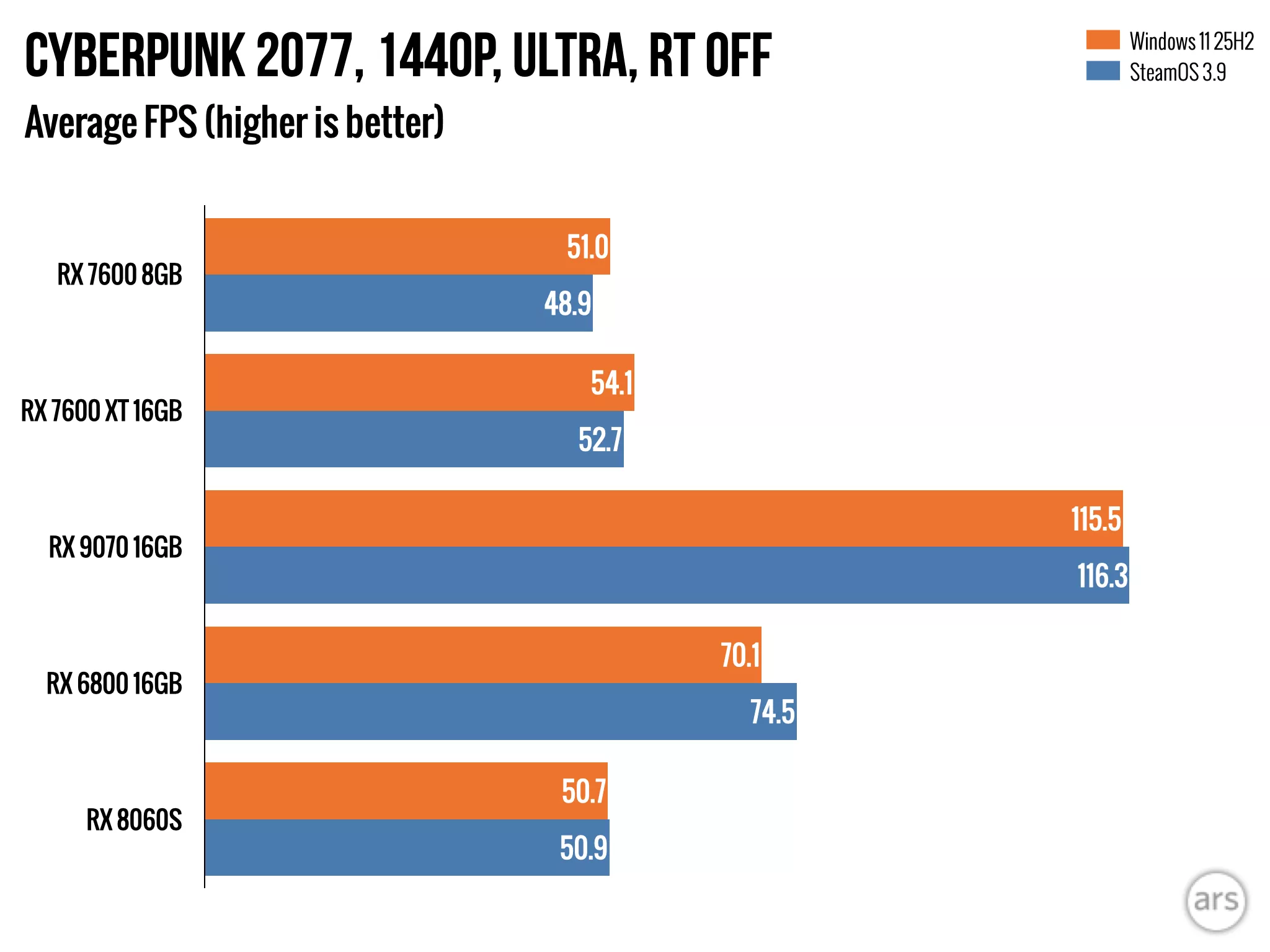
In fact, in some cases, Windows appears to have a significant lead. This suggests that Valve’s Linux distribution and the compatibility layer that allows Windows games to run on Linux are not yet as optimized as Windows on powerful hardware.
One of the most critical points revealed during the analysis concerns VRAM (Video RAM) usage. Valve’s operating system appears to exacerbate performance issues, particularly on graphics cards with 8GB of VRAM. The additional overhead of the Linux-based system’s memory management and compatibility layer can cause games to run at lower frame rates than Windows on cards with limited video memory.
In conclusion, if you’re using a Steam Deck, SteamOS is still the best option. However, if you have a powerful desktop or laptop with a dedicated graphics card, Windows 11 still holds the lead in gaming performance. Time will tell whether Valve can close this gap with future updates.
So, what are your thoughts on Windows and SteamOS? Share your thoughts with us in the comments!