


Molslinjen announced that two 129-meter catamaran ferries under construction in Australia will be equipped with fully integrated electric propulsion systems. These ferries will operate on the busy Kattegat, which runs between Jutland and Zealand. Each vessel will be capable of carrying 1,483 passengers and 500 vehicles, reaching speeds exceeding 40 knots.
The largest electric ferry in the world will be built.
The project will have a significant environmental impact. Molslinjen CEO Kristian Durhuus stated that the commissioning of these ferries will remove 132,000 tons of carbon dioxide emissions from Denmark’s carbon footprint each year. This amount is equivalent to the annual emissions of approximately 90,000 vehicles.
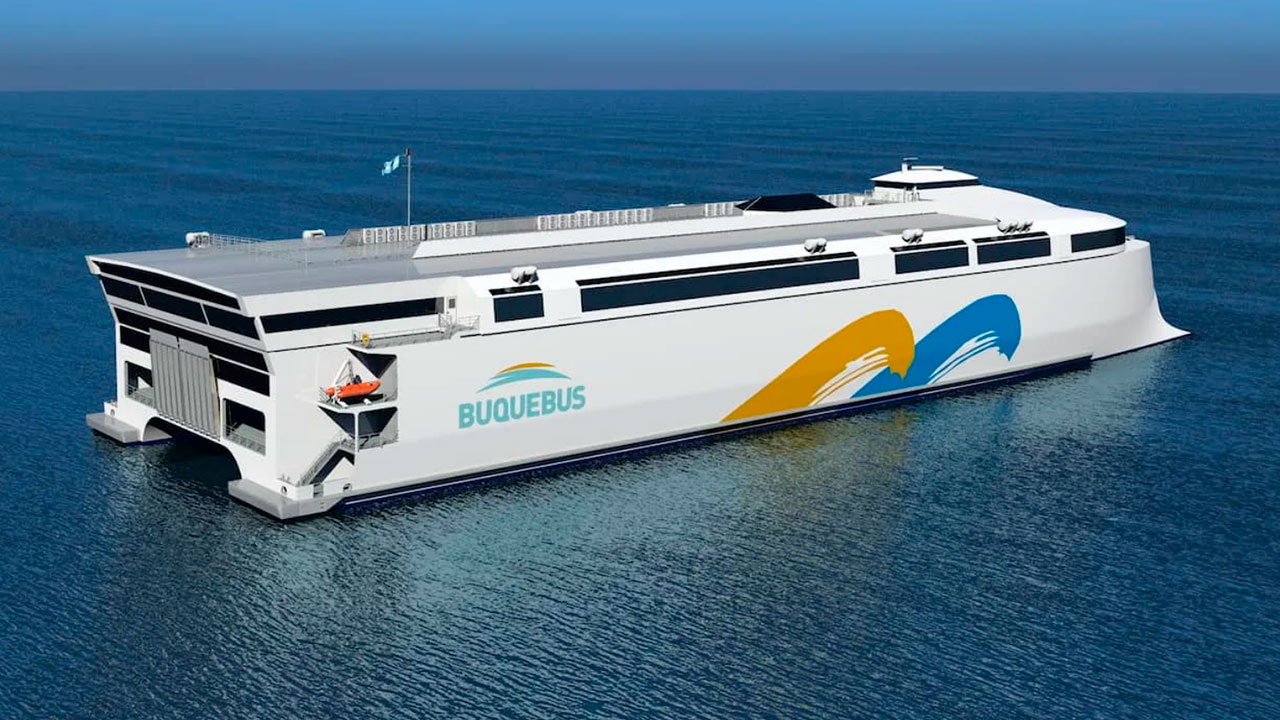
The ferries will be powered by lithium-ion battery systems, each with a capacity of 45,000 kWh. They are reportedly capable of storing approximately 25,000 kWh of energy in just 30 minutes. This short charging time will be made possible by 55,000 kW of power via a 15 kV AC line to be installed in the ports of Aarhus and Odden. The batteries will be protected by special cooling and fire prevention systems. Thanks to this technology, the ferries will be able to complete round-trip voyages on a single charge.
The technology package provided by Wärtsilä includes eight electric propulsion motors, an electric waterjet system, a power conversion infrastructure, energy management and automation systems, and the ProTouch control platform. The eight-waterjet configuration keeps the ferries’ weight low while providing high maneuverability and efficient movement in shallow waters.
The first ferry is expected to enter service in 2027, and the second in 2028. This project is considered a major step towards zero emissions in the maritime sector.