

Nvidia has announced the development of new software with the potential to verify the location of its AI graphics processing units (GPUs). This on-demand service comes at a time when Washington is intensifying its efforts to prevent the use of advanced chips in restricted regions like China, and could indirectly help enforce chip shipment restrictions.
Nvidia introduces new measures
In a blog post published Wednesday, the company stated that it is offering an on-demand client software agent that customers can install to monitor the health of their AI GPUs.
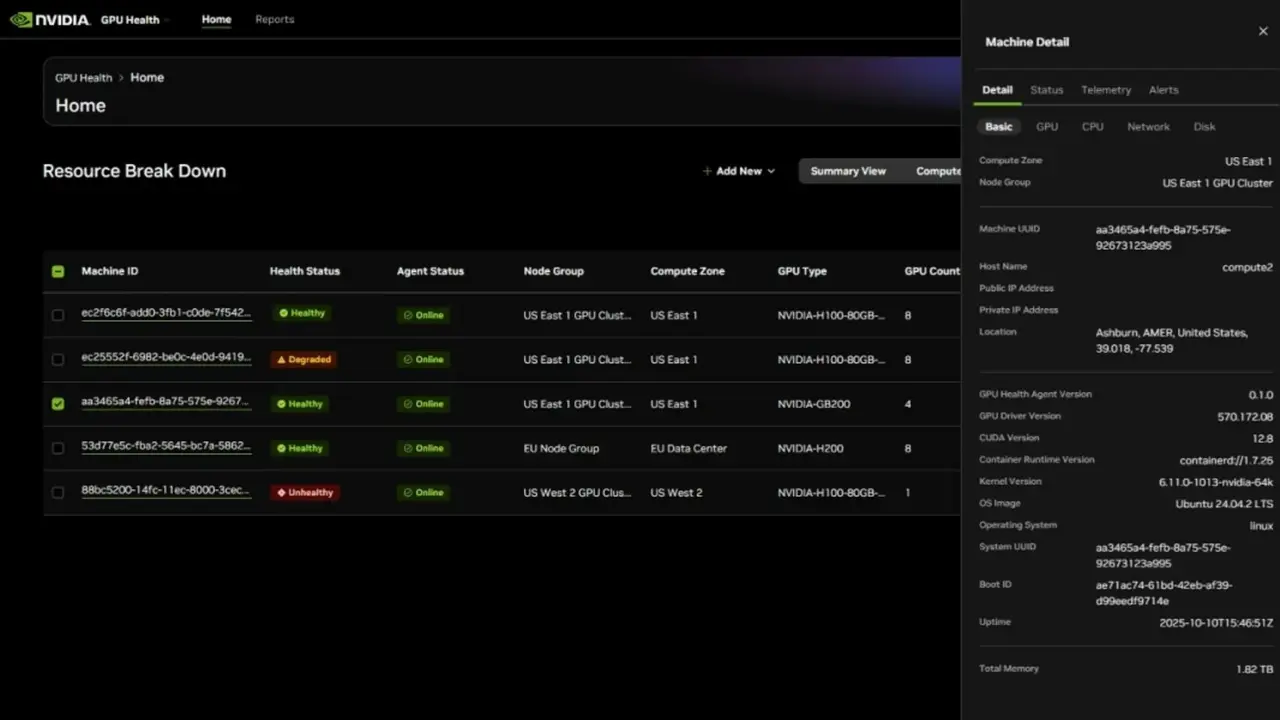
Nvidia reported that customers can use this software to “visualize the usage of their GPU fleets globally or by computing region (groups of nodes registered in the same physical or cloud locations) in a dashboard.” This feature could provide geolocation data that can help determine which GPUs are operating in which country.
However, Nvidia explicitly stated that the latest software does not give the company or external actors the ability to remotely disable its chips, adding, “There is no remote kill switch.”
The company stated, “For GPU health, there are no features that allow Nvidia to remotely control or activate registered systems. This is read-only telemetry sent to Nvidia.”
Telemetry is the process of collecting data from remote or inaccessible sources and transmitting it to a central location, and the analysis of this data relies on sensor data such as the device’s IP-based network information, timestamps, or other system-level signals that can be mapped to physical locations. A screenshot of the software shared on Nvidia’s blog shows details such as the machine’s IP address and location.
These new features from Nvidia come after calls from lawmakers in Washington to equip its chips with tracking software to help enforce export controls.
These rules prevent Nvidia from selling its more advanced AI chips to companies in China and other prohibited locations without special licenses. Although U.S. President Donald Trump has said he plans to roll back some of these export restrictions, the limitations on Nvidia’s newest chips will remain in place.