

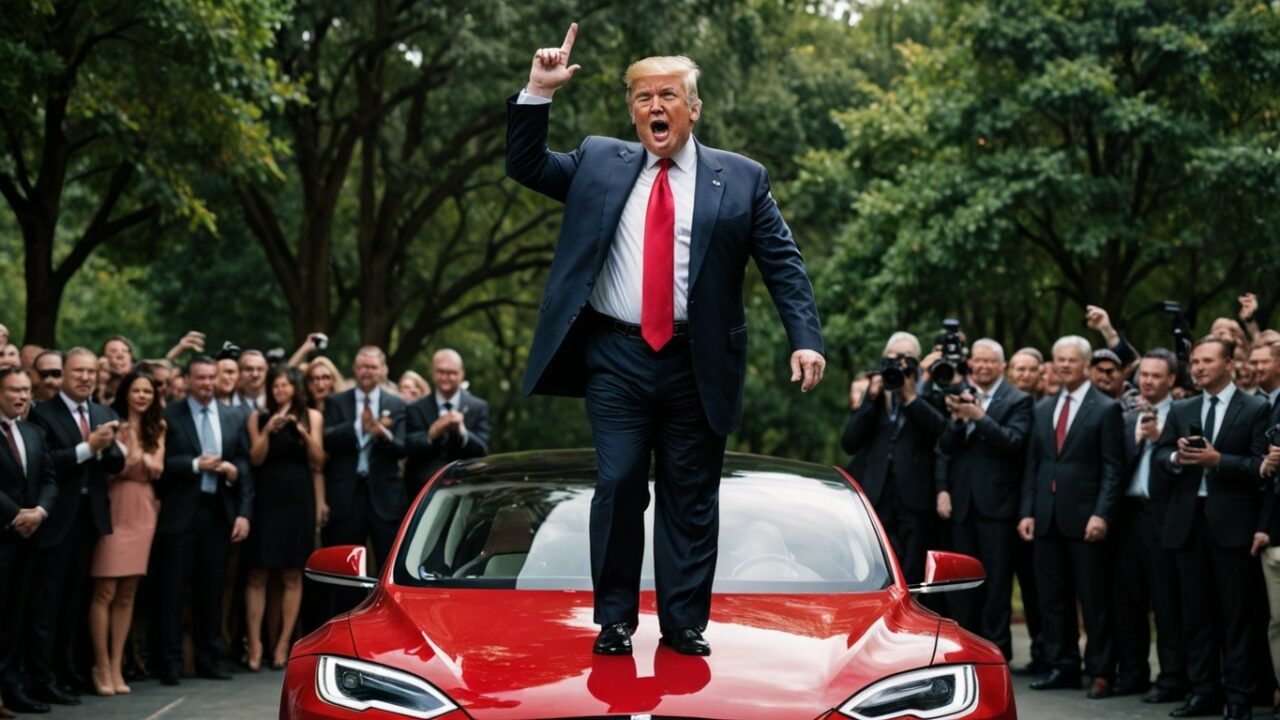
The Trump administration has introduced a new proposal that would significantly revise the Corporate Average Fuel Economy (CAFE) standards enacted by the previous administration. President Trump described these standards as “costly and unlawful” and announced plans to reset them. The new regulation calls for an average fuel efficiency of 34.5 mpg for fleets by the 2031 model year.
Fuel Efficiency Targets Are Shrinking
The White House announced that the new CAFE standards “return to levels that can actually be met with conventional gasoline and diesel vehicles.” This contradicts the previous administration’s fuel economy targets, which set “unrealistic targets” that would have mandated electric vehicles (EVs).
The White House claimed that the old standards were impossible to meet with existing gasoline vehicle technologies and forced widespread EV transitions that American consumers did not want. It also claimed that the average cost of a new car would increase by approximately $1,000 compared to the standards announced today.
The Ministry of Transportation has released the details of a new proposal titled “Freedom Means Affordable Cars.” This proposal eliminates CAFE standards for the 2022-2031 model year.
One of the most significant changes is that fuel economy standards will no longer be developed without considering electric vehicles and without using the credit trading mechanism. The proposal also eliminates CAFE credit trading starting in the 2028 model year. This decision is said to be particularly detrimental to EV companies like Tesla.
In terms of fuel efficiency targets, a 0.5 percent annual increase is planned for passenger vehicles between the 2023-2026 model years. This rate drops to 0.35 percent for the 2027 model year and 0.25 percent for the 2029-2031 model years.
For light commercial vehicles, the National Highway Traffic Safety Administration proposes a 0.5 percent improvement for the 2023-2026 model years, a 0.7 percent improvement for 2027, and a 0.25 percent improvement for the 2029-2031 model years. Another technical change in the proposal would reclassify crossovers and small SUVs as passenger cars instead of light commercial vehicles.
The administration claims this move will save Americans $109 billion over the next five years. The White House also estimated that by allowing more people to purchase newer, safer vehicles, this reset would save more than 1,500 lives and prevent nearly a quarter of a million serious injuries by 2050.