
Turkey Becomes First European Country Using UAVs Against Fires

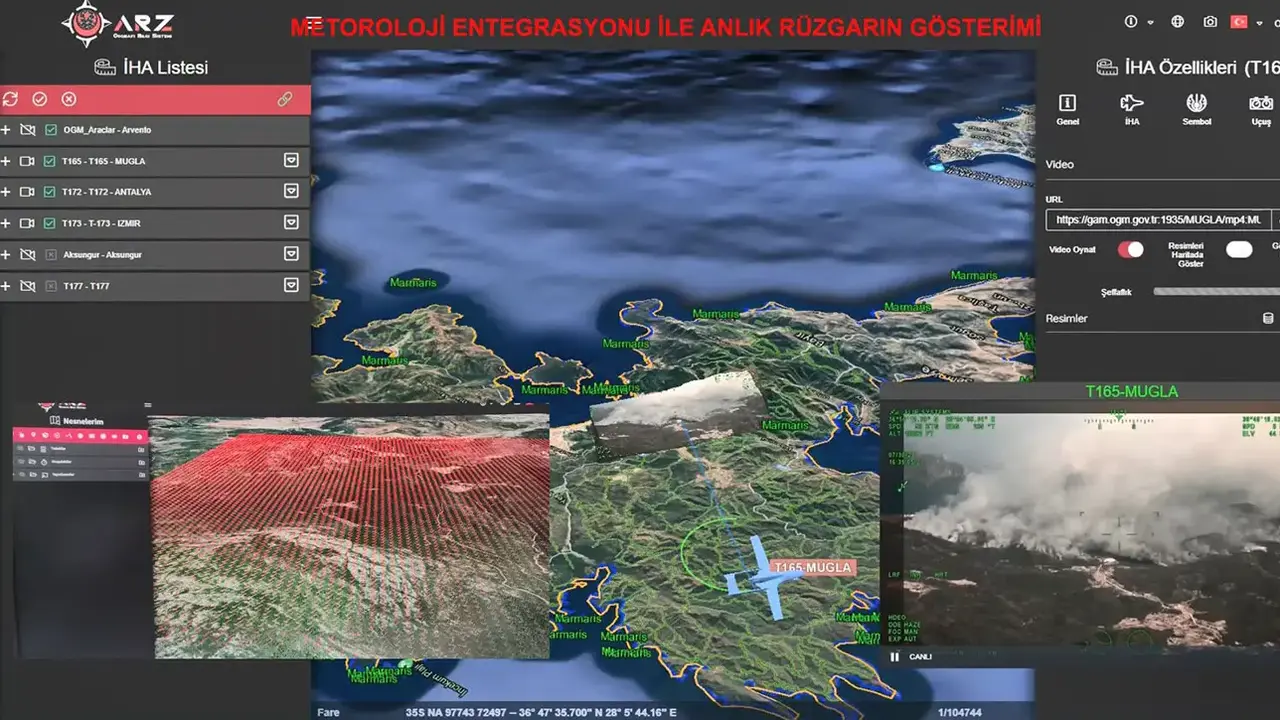
Turkey has officially become the first nation in Europe to integrate high-technology unmanned aerial vehicles (UAVs) into its operational response against forest fires. Under the leadership of the General Directorate of Forestry (OGM) and in partnership with Baykar, the country is currently one of only two nations globally utilizing such advanced aerial technology for persistent forest surveillance and firefighting. By deploying these assets, Turkish authorities have drastically improved incident response times, with artificial intelligence systems now enabling the detection of fire outbreaks in as little as two minutes, representing a significant shift in environmental protection strategies.
- Turkey operates a fleet of 14 high-tech UAVs specifically configured for forest surveillance and fire monitoring.
- The integration of thermal imaging and artificial intelligence reduces the time required for fire detection to just two minutes.
- Current deployment strategies allow for continuous monitoring during nighttime hours when traditional manned aircraft cannot operate.
- The national firefighting fleet is scheduled to expand to 147 total aircraft, including 14 UAVs, by 2026.
Turkey Deploys Advanced UAV Fleet Across the Country
The Turkish forestry department currently manages an inventory of 14 drones that serve as a critical layer over traditional ground crews and observation towers. This fleet primarily utilizes the Bayraktar TB2 for tactical wide-area scanning and the AKSUNGUR platform for long-endurance, high-capacity surveillance missions. 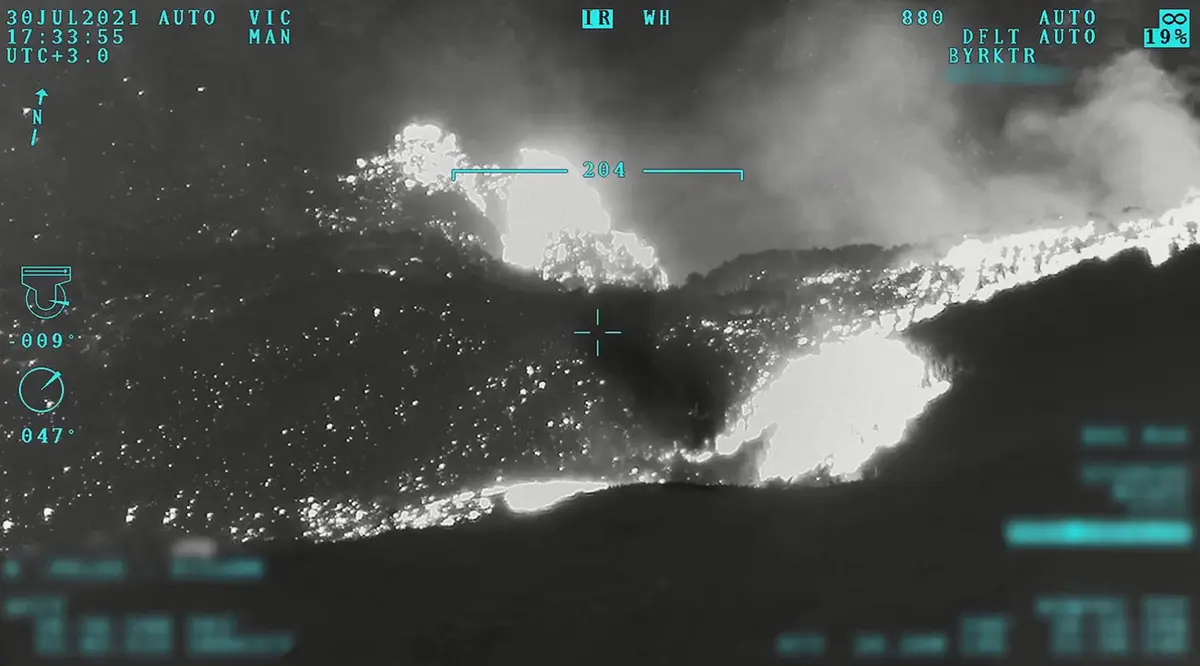 These platforms have transformed how the nation observes its vast forest resources, providing a constant aerial presence that human patrols cannot match.
The rapid detection capabilities enabled by these drones have successfully reduced the initial response time for forest fires to just 12 minutes.
Thermal Sensors Enhance Nighttime Firefighting Operations
The primary advantage of these drones lies in their sophisticated sensor arrays, specifically the thermal infrared cameras. These sensors allow the OGM to identify small heat sources from high altitudes even when visibility is compromised by dense smoke. Unlike manned aircraft, which are often grounded by poor visibility or nighttime conditions, these UAVs provide real-time thermal intelligence to the Fire Management Center in Ankara. 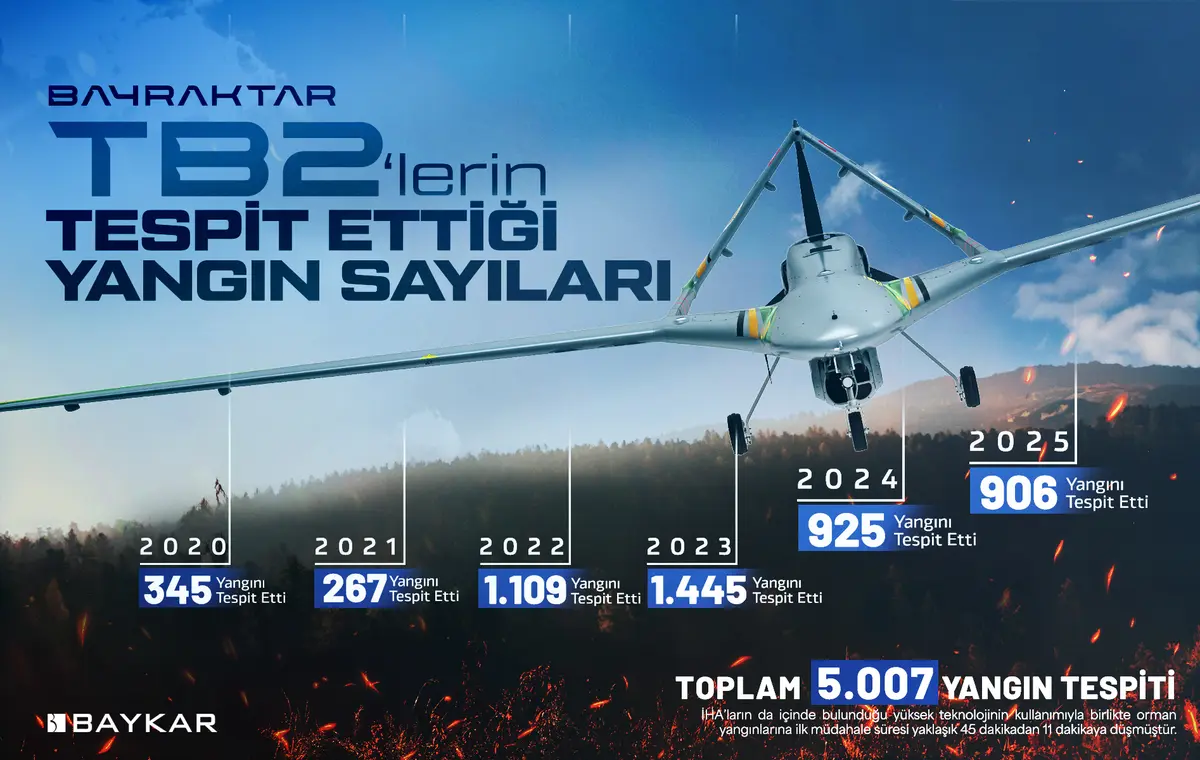 This thermal data is also essential for post-fire mop-up operations, as it helps teams detect smoldering hotspots that could potentially reignite.
Artificial intelligence algorithms continuously analyze live feeds to ensure that response teams receive accurate and actionable intelligence immediately.
Technology Improves Operational Safety and Efficiency
The operational efficiency of these drones was clearly demonstrated during the intense fire season of August 2024, when the fleet logged 301 flight hours over 258 separate incidents within four days. By utilizing these platforms, the General Directorate of Forestry eliminates the risks associated with human pilots navigating through turbulent, smoke-filled environments. Beyond the technological edge, the country continues to support these efforts with a massive ground force comprising 776 observation towers, 1,686 specialized trucks, and over 15,500 dedicated forestry workers. This multi-layered strategy ensures that every hectare of forest land remains under constant, vigilant oversight.
As Turkey continues to pioneer the use of artificial intelligence and drone technology in forestry, we would love to hear your thoughts on how these advancements could be adapted for fire prevention in other regions around the world; please share your views in the comments section below.
Your comment has been submitted,
it will be published after approval.