
Turkey Joins Hypersonic Club with TAYFUN Block-4 Missile

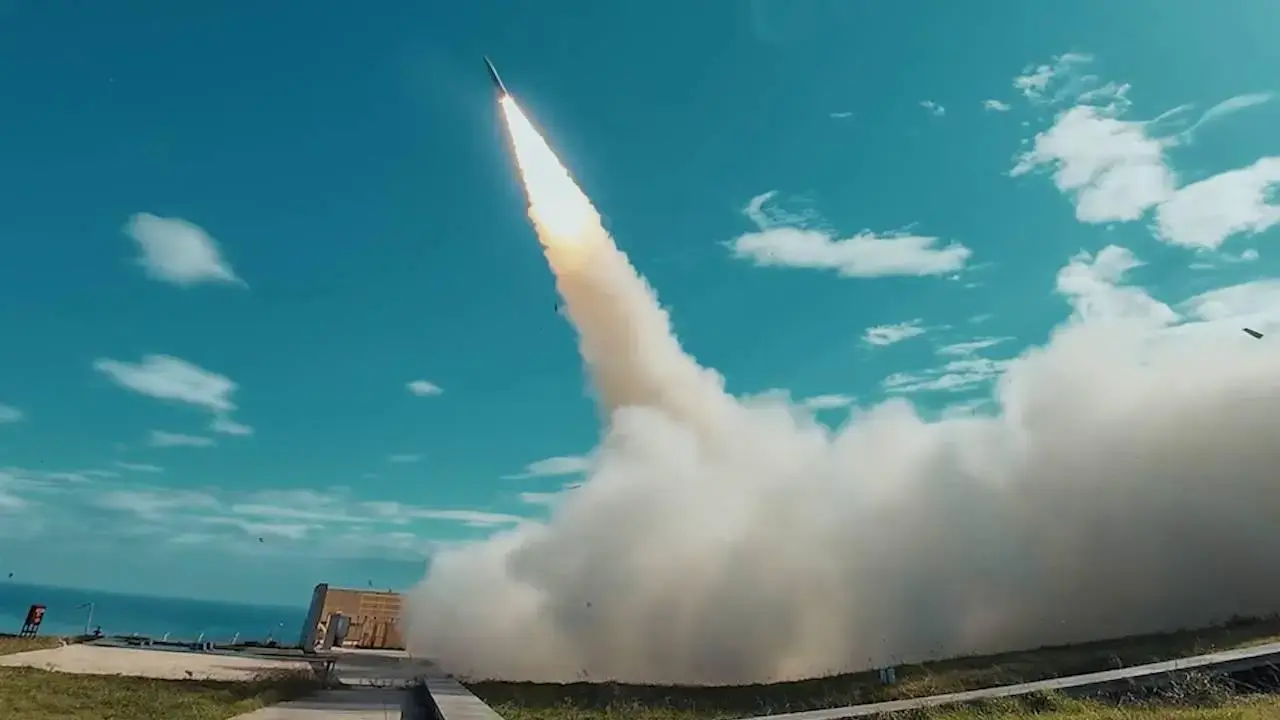
Turkey is officially joining the elite hypersonic weapons club as ROKETSAN prepares the TAYFUN Block-4 for mass production. Following successful test phases, ROKETSAN General Manager Murat İkinci confirmed that the state-of-the-art system is slated to enter production lines within this year. As the most advanced iteration of the domestically developed TAYFUN ballistic missile family, the Block-4 represents a significant leap in Turkey’s defense capabilities, offering hypersonic speed combined with advanced maneuvering features that challenge modern air defense systems. This strategic development positions Turkey among the few nations globally capable of fielding such sophisticated military technology.
- ROKETSAN prepares to initiate mass production of the TAYFUN Block-4 missile system this year.
- The missile features a design capable of reaching speeds of Mach 5 and beyond while maintaining maneuverability.
- Turkey integrates this new capability into its broader ‘Steel Dome’ layered air defense architecture.
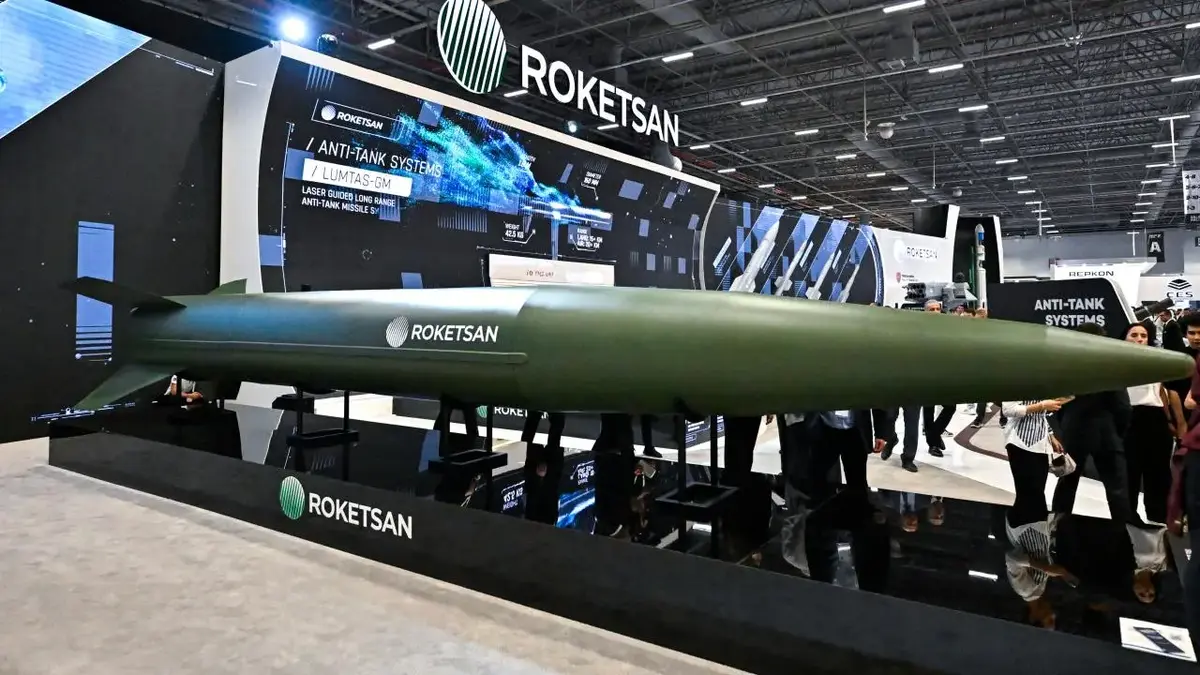
TAYFUN Family Evolution Continues to Progress
The TAYFUN Block-4 is not an isolated development but rather the culmination of a systematic maturation process within the TAYFUN missile family. The initial variant, Block-1, set a milestone in 2022 by achieving a range of approximately 561 kilometers, becoming the longest-range indigenous ballistic missile in the Turkish arsenal. By May 2026, the Block-2 variant successfully entered the inventory of the Land Forces Command, followed by the delivery of comprehensive command, control, and logistics support vehicles later that year.
Block-4 elevates the existing platform by incorporating critical hypersonic flight characteristics.
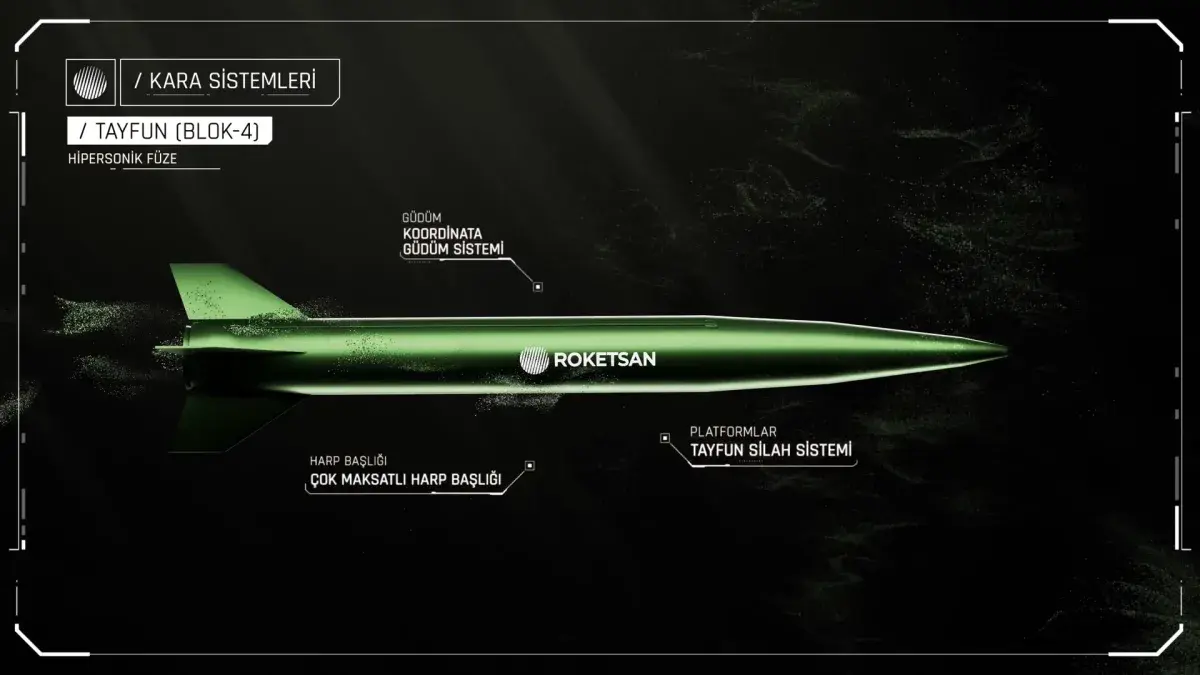
Technical Specifications Define the System Performance
Engineers have designed the TAYFUN Block-4 as a formidable platform measuring 10 meters in length and 938 millimeters in diameter. With a total weight of approximately 7,200 kilograms, the missile utilizes an advanced inertial navigation system bolstered by satellite-aided guidance. Most importantly, the system distinguishes itself through its ability to execute high-speed maneuvers, making its trajectory highly unpredictable for enemy radar and interception assets.
Hypersonic Maneuverability Redefines Modern Defense
A common misconception persists regarding hypersonic classification, which is often mistakenly attributed solely to speed. While standard ballistic missiles attain high velocities during atmospheric reentry, they follow predictable, calculated parabolic paths. In contrast, the TAYFUN Block-4 is engineered to perform maneuvers at hypersonic speeds, effectively disrupting the interception solutions of opposing air defense networks. This capability forces adversaries to significantly reduce their reaction windows, providing a decisive tactical advantage on the modern battlefield.
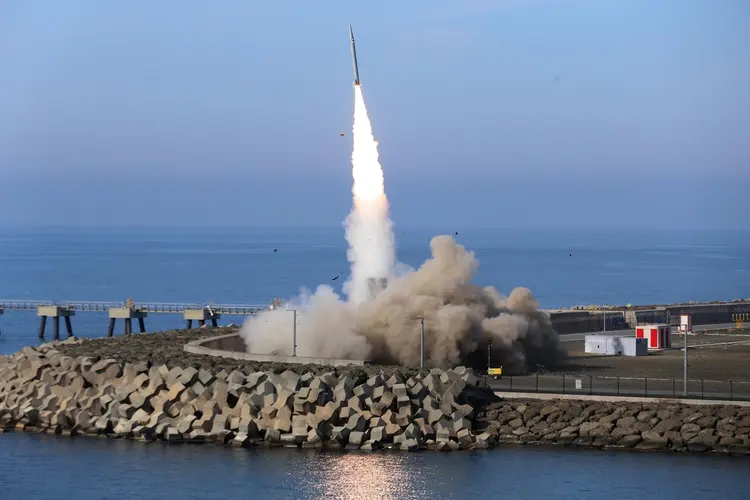
Turkey Develops Integrated Defensive Countermeasures
ROKETSAN’s current initiatives extend beyond offensive capabilities, as the organization is actively working on defensive solutions against hypersonic threats. This dual-track approach serves as a cornerstone of the ‘Steel Dome’ project, Turkey’s comprehensive layered air defense architecture. By integrating the long-range SİPER system into this network and enhancing early warning radar coverage, Turkey aims to build a robust shield against sophisticated aerial threats.
Global Standing of the Program Improves
Only a handful of nations currently possess the industrial capacity to develop and deploy hypersonic weapon systems. While powers like Russia, China, and the United States continue to refine their respective programs, Turkey’s strategy of evolving a proven platform like TAYFUN offers a faster and more efficient development path. Upon the commencement of mass production, Turkey will solidify its status as a key player in the global defense market.
How do you evaluate the strategic impact of Turkey’s progress in hypersonic technology on the regional balance of power? Share your thoughts in the comments section below.
Your comment has been submitted,
it will be published after approval.