
Turkey’s Automotive Special Consumption Tax Exceeds 480 Billion Lira

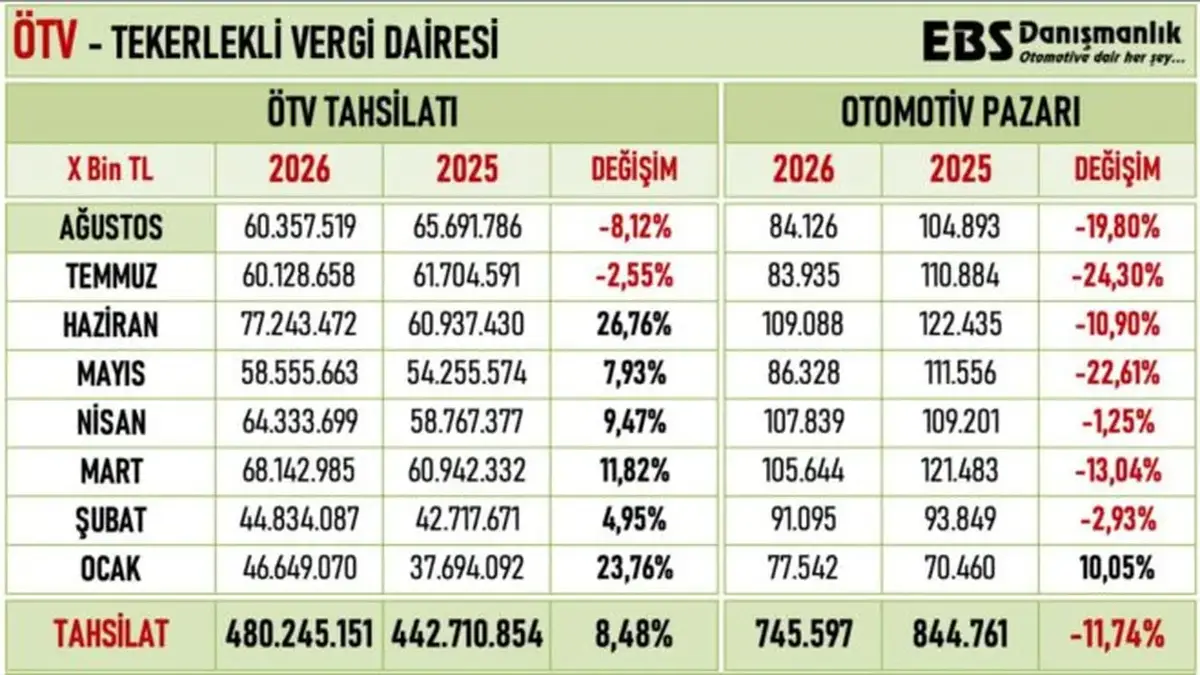
Recent data analyzed by automotive journalist Emre Özpeynirci indicates that Turkey has reached a critical turning point regarding its Special Consumption Tax (SCT) revenue from motor vehicles. During the first eight months of 2024, the total SCT collected from automobile sales surpassed the 480 billion TL threshold. Despite this substantial figure, the ongoing contraction in the domestic automotive market and a discernible downward trend in tax collection present significant risks to the national treasury. Following consecutive monthly declines throughout July and August, concerns have escalated regarding the state’s ability to meet its projected annual tax targets from the automotive sector.
- The automotive market’s contraction caused two consecutive months of decline in state tax revenue.
- The average SCT amount per vehicle surged to 718,000 TL in 2024.
- Total SCT collected in the first eight months covers only 50.51 percent of the year-end target.
Automotive Market Contraction Deepens Further
The statistical analysis provides a clear explanation for why total tax collection has dwindled despite a rise in the tax burden per vehicle. As of August 2024, the average SCT per vehicle reached 718,000 TL, compared to 626,000 TL during the same period last year. However, this increase in per-unit taxation failed to compensate for the 19.8 percent contraction observed in the total automotive market. This disparity highlights the mounting pressure that rising vehicle prices and shifts in tax brackets have placed on the overall volume of tax revenue collected by the government.
Tax Revenue Targets Are Not Being Met
A widening gap has emerged between the year-end SCT targets set by the Ministry of Treasury and Finance and the actual tax receipts reported. In the first eight months, the realization rate remained at 50.51 percent, which is notably lower than the 55.38 percent recorded during the same period in the previous year. Financial experts characterize this decline as a direct consequence of the cooling demand within the automotive sector, which negatively impacts the state budget. Analysts have emphasized that maintaining the current pace of sales will make achieving the original year-end budgetary goals increasingly difficult for authorities.
Future Market Trends Remain Uncertain
These evolving dynamics in the automotive world remain a focal point for both consumers and industry representatives. The combination of a heavy tax burden and a shrinking market creates a challenging environment for citizens planning to purchase new vehicles. As vehicle prices continue to climb under the weight of these fiscal policies, fears are growing that the downward trajectory in sales figures will persist in the coming months. This economic landscape forces a broader discussion regarding the delicate balance between state fiscal policies and the vitality of the domestic automotive market.
How do you evaluate the current downward trend in motor vehicle tax revenues and its impact on your purchasing power? We invite you to share your thoughts in the comments section on how you expect these market contractions to influence future vehicle prices.
Your comment has been submitted,
it will be published after approval.