
Turkish Air Force Receives Two Additional HÜRKUŞ-II Training Aircraft

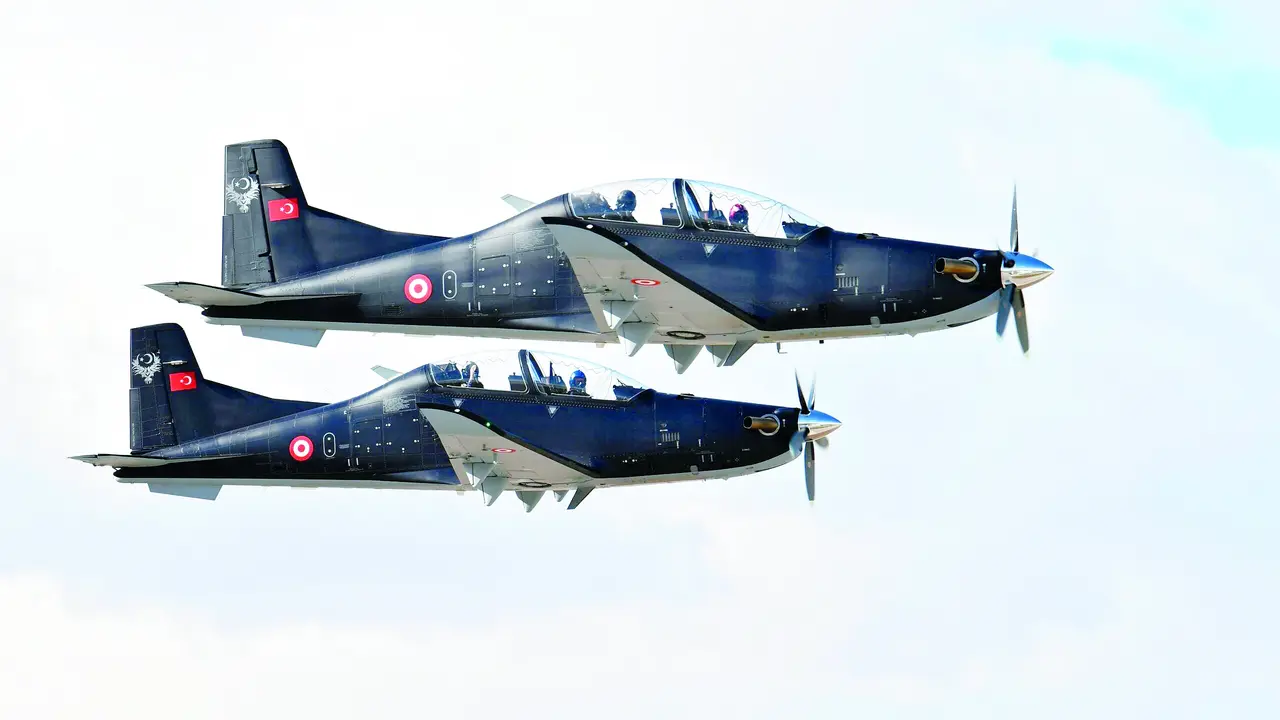
Rear Admiral Zeki Aktürk, the spokesperson for the Turkish Ministry of National Defense (MSB), announced on October 22 during a weekly briefing that the Turkish Air Force is set to integrate two more HÜRKUŞ-II aircraft into its inventory. Developed by Turkish Aerospace Industries (TUSAŞ), these advanced turboprop trainers have successfully completed their inspection and acceptance activities. This move follows the initial delivery ceremony held on September 28, 2026, marking a significant step in the modernization of pilot training programs. The induction of these platforms strengthens the domestic defense industry’s contribution to national security and pilot readiness.
- The Turkish Air Force plans to integrate a total of 55 HÜRKUŞ-II aircraft into its fleet by the end of 2028.
- TUSAŞ successfully completed 153 certification tests to secure the military type certificate for the training platform.
- Azerbaijan signed an export agreement to acquire 14 HÜRKUŞ-II units to modernize its own air force training capabilities.
The Delivery Program for Fifty-Five Aircraft Proceeds
The recent announcement by the Ministry of National Defense highlights the ongoing momentum within the HÜRKUŞ-II procurement project. Following the successful delivery of the first two aircraft in late September 2026, the program is now focused on scaling up production to meet the ambitious targets set by the Presidency of Defense Industries (SSB). Haluk Görgün, the President of the SSB, previously outlined a comprehensive roadmap that includes the acquisition of 55 aircraft in total to fully modernize the training infrastructure of the Turkish Air Force.

According to the official schedule, the production line at TUSAŞ is working toward delivering 10 additional units by the end of this year. The final goal remains to complete the entire 55-aircraft program by the conclusion of 2028. This rapid induction process ensures that the Turkish Air Force maintains a young and technologically advanced fleet, capable of meeting the evolving demands of modern aerial warfare and pilot education.
Pilot Preparation for Advanced Jet Platforms Improves
The HÜRKUŞ-II is designed primarily as a single-engine, turboprop trainer that facilitates both basic and advanced initial flight training. Its primary mission is to prepare student pilots for the complexities of jet training and the subsequent transition to high-performance combat aircraft. The cockpit and avionics architecture are specifically engineered to mirror the control principles found in Turkey’s next-generation platforms, such as the HÜRJET advanced trainer and the KAAN fifth-generation fighter jet.
By maintaining consistency in flight logic and interface design across these platforms, TUSAŞ ensures that the experience gained during early training phases is directly applicable to more advanced systems. Beyond its educational role, the HÜRKUŞ-II is also designed with the versatility to perform light attack and close air support missions when configured appropriately. However, the Turkish Air Force has emphasized that its primary utility within the national inventory remains focused on high-level pilot instruction.
High-Performance Technical Specifications for Training are Optimized
The technical capabilities of the HÜRKUŞ-II reflect its dual-role potential and its robustness as a training platform. Powered by a Pratt & Whitney Canada PT6A-68T engine delivering 1,600 shp, the aircraft can reach a maximum cruise speed of 533 km/h. Its operational range extends to 1,190 kilometers, providing sufficient endurance for prolonged training sorties. Furthermore, the aircraft features a service ceiling of 11,970 meters, allowing it to operate in various atmospheric conditions.
Safety and maneuverability are central to the design, with the aircraft supporting G limits ranging from +7 to -3 G. It is equipped with Martin-Baker MK T16N ejection seats and an on-board oxygen generation system to enhance pilot safety during high-altitude or high-maneuverability exercises. Additionally, the platform is capable of sustained inverted flight for up to 30 seconds, demonstrating the acrobatic agility required for advanced flight maneuvers.
Military Type Certification Standards for the Inventory are Verified
Before entering active service, the HÜRKUŞ-II underwent an exhaustive testing and certification phase to ensure it met all military requirements. TUSAŞ conducted studies across 12 distinct disciplines, verifying 1,790 certification requirements in the process. This rigorous evaluation involved the technical review of 950 separate evidence documents and the execution of 153 individual certification tests. The platform officially received its Military Type Certificate on September 9, 2026.
This certification serves as a formal validation that the aircraft is fit for military operations and meets the stringent safety and performance standards of the Turkish Armed Forces. With the certification process concluded, the program has transitioned from the development phase to a steady-state production and acceptance cycle, ensuring a consistent flow of aircraft to the frontline training squadrons.
Strategic Export Agreements with International Partners are Signed
The success of the HÜRKUŞ-II is not limited to the domestic market, as the platform has garnered significant international interest. During the ADEX 2026 defense exhibition, TUSAŞ finalized a major export contract with Azerbaijan for the delivery of 14 HÜRKUŞ-II aircraft. These units will be utilized by the Azerbaijani Air Force to modernize their pilot training curriculum, marking a significant milestone for the Turkish defense industry in the global market.
The combination of a 55-aircraft domestic program and growing export orders underscores the strategic importance of the HÜRKUŞ-II. As production continues to ramp up, the platform is expected to become a cornerstone of pilot training not only in Turkey but also among allied nations, reinforcing Turkey’s position as a leading provider of advanced aviation solutions.
What are your thoughts on the expanding capabilities of the Turkish Air Force and the role of domestic aircraft like the HÜRKUŞ-II in modern pilot training? Share your views and join the discussion in the comments section below.
Your comment has been submitted,
it will be published after approval.