
Türksat 3A Satellite Retirement: Will SD Broadcasts End Soon?


The Türksat 3A communication satellite, which has provided reliable service from the 42-degree East orbital position for nearly 17 years, is scheduled to conclude its mission and retire on August 15, 2026. On this date, all television broadcasters currently operating through Türksat 3A will be transitioned to the Türksat 4A satellite. This significant infrastructure migration has sparked widespread concern among viewers regarding the future of Standard Definition (SD) broadcasts and potential changes to frequency settings. While rumors regarding an industry-wide shutdown of SD signals have circulated, officials have clarified that the transition is primarily a technical migration rather than a mandate to terminate legacy broadcast formats.
- Türksat 3A will officially cease operations on August 15, 2026, leading to a migration of all broadcast services to Türksat 4A.
- Satellite operators confirm that there is no official industry-wide mandate to terminate SD broadcasting services.
- Television stations maintain the individual authority to decide whether to continue or cease SD transmissions based on their own budgetary constraints.
- Users with automatic update systems or subscription platforms will not be affected by the upcoming satellite migration.
The choice to maintain or abandon SD broadcasting remains entirely at the discretion of individual television networks.
Misconceptions Are Being Addressed Regarding SD Channel Closures
Recent reports suggesting that all SD channels will be permanently deactivated on August 15 are inaccurate. Industry representatives, including the Telecommunications Satellite and Broadcasting Businesspeople Association (TUYAD), have explicitly stated that Türksat, acting as a service provider, has not issued any directive to discontinue SD transmissions. 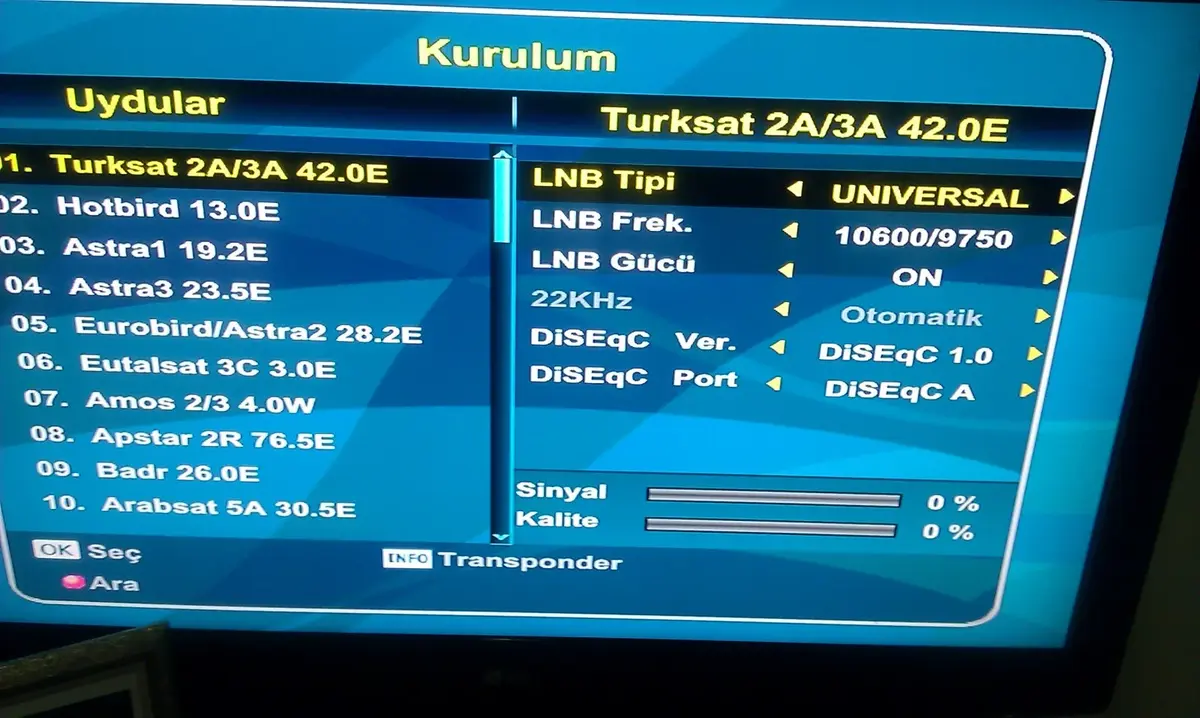
The decision to continue SD broadcasting is largely driven by financial considerations. With monthly satellite capacity costs for a single SD signal potentially reaching between 30,000 and 40,000 dollars, many broadcasters are opting to migrate exclusively to High Definition (HD) to optimize their overhead. However, because there are currently around 271 channels utilizing SD formats and an estimated one million households still relying on SD-compatible receivers, many networks find it commercially viable to continue these legacy broadcasts to retain their audience reach.
Frequency Updates Are Being Managed for Seamless Transitions
For the vast majority of users, the transition will be seamless. Channels currently operating on Türksat 4A will see no changes to their signal parameters. Stations that currently transmit via Türksat 3A will maintain their existing frequencies as they move to the new satellite platform. 
However, channels that have been operating simultaneously on both satellites may require manual intervention by the end user. If a viewer has tuned into the Türksat 3A frequency for a channel that is also hosted on Türksat 4A, they will need to delete the outdated frequency and manually add the current Türksat 4A parameters. It is recommended that viewers check the official websites of their preferred channels to obtain the most recent frequency data. 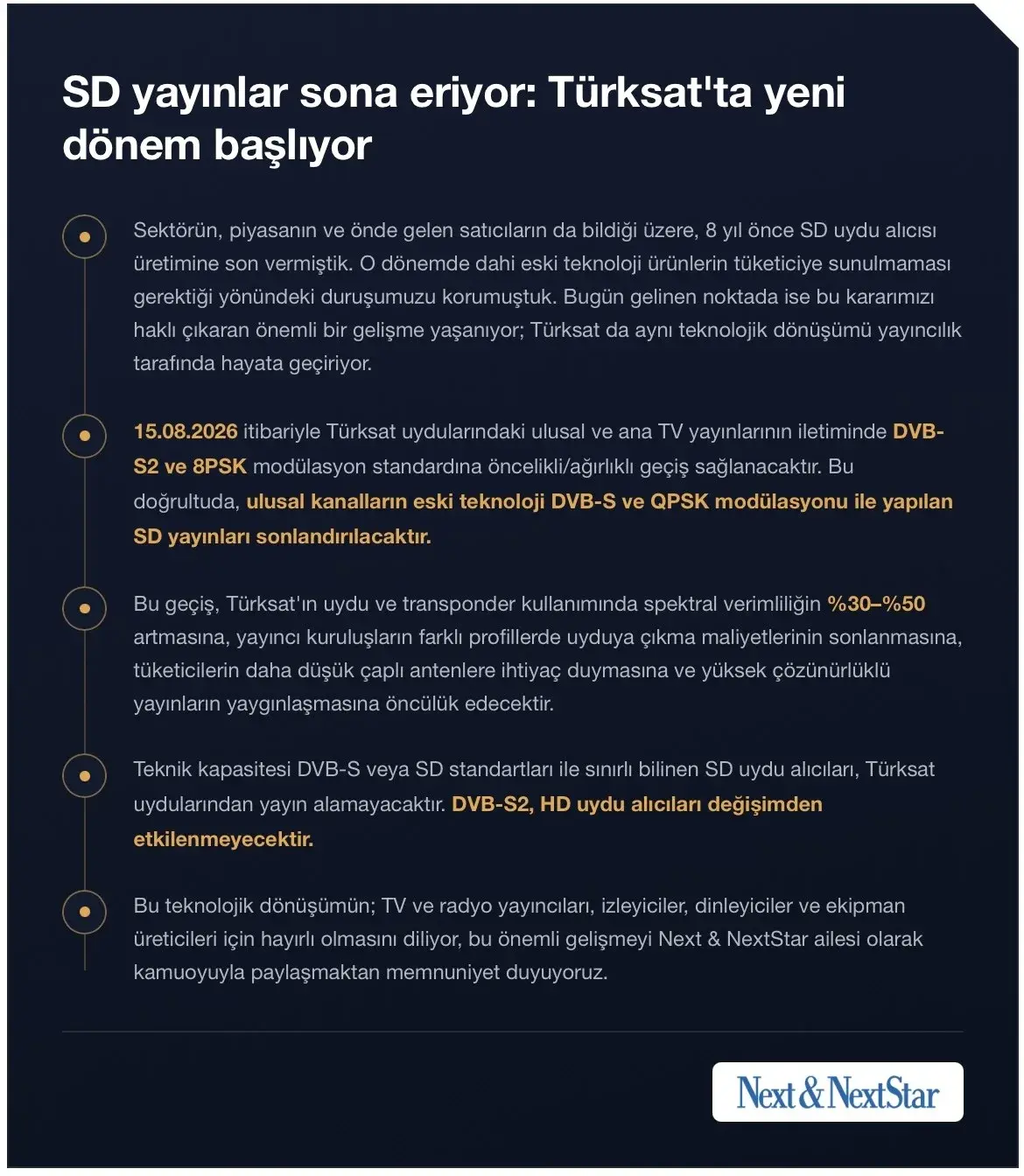
Automatic updating systems and digital subscription platforms will automatically handle these technical adjustments for their subscribers.
TUYAD President Hayrettin Özaydın emphasized that the transition is a standard operational procedure. He clarified that Türksat serves as an infrastructure provider and does not dictate the signal quality or format preferences of the content providers. Therefore, viewers who use legacy receivers will still be able to enjoy their favorite programs as long as the broadcasters themselves decide to keep those channels active.
We would love to hear your thoughts on this upcoming satellite transition; are you planning to upgrade your satellite equipment, or will you continue using your current SD receiver?
Your comment has been submitted,
it will be published after approval.