


In a long-term test conducted in Germany, a Volkswagen ID.3 covered 170,000 kilometers and delivered remarkable results. Over the four years of operation, the vehicle experienced a loss of only 9% of its battery capacity.
The ID.3’s battery performance attracted attention.
During this period, the car frequently employed inappropriate charging practices. The battery was frequently charged to 100%, parked for extended periods with a full charge, and 40% of the total charging was done at fast DC charging stations. Despite this, the range reduction was limited to only 13 kilometers.
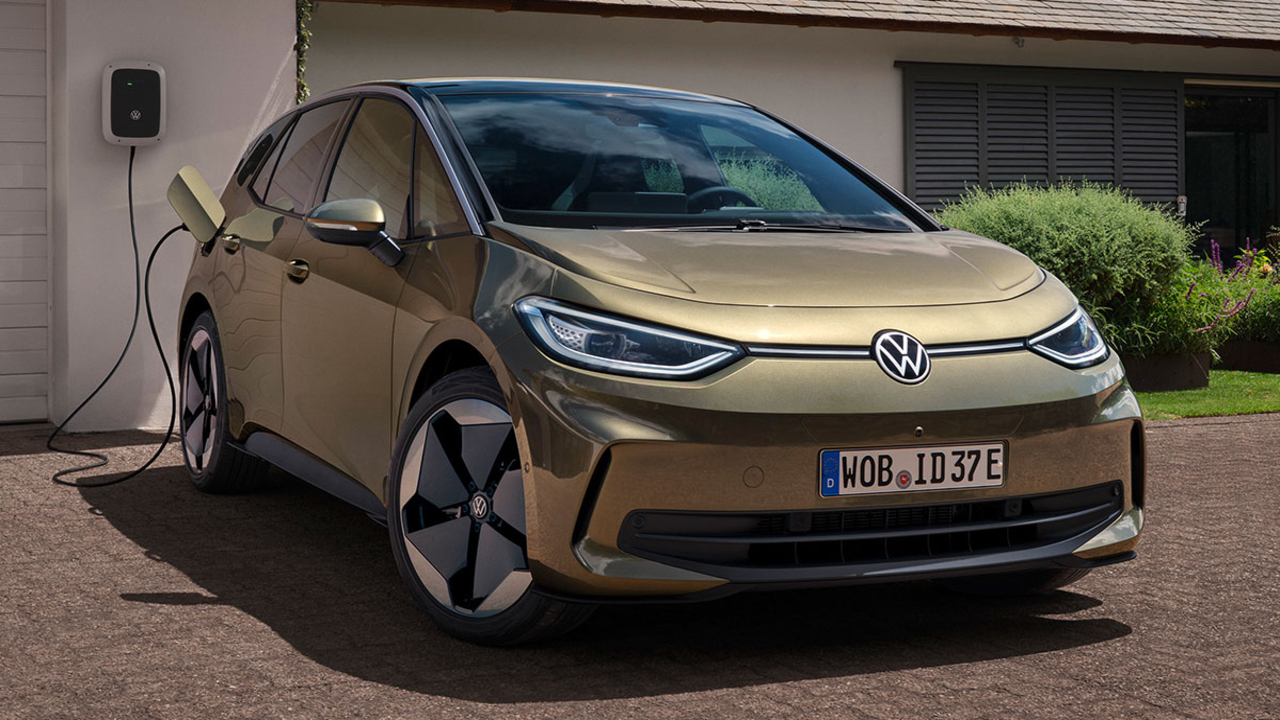
The test was conducted by Germany’s well-established automobile club, ADAC. The vehicle used was a Volkswagen ID.3 Pro S Tour. The 77 kWh battery offered a real-world range of 438 kilometers at the beginning of the test.
After four years, this range had decreased to 425 kilometers. This corresponds to a 3% percentage reduction, demonstrating that the vehicle maintained its efficiency despite the 9% decrease in battery capacity.
Regular battery checks throughout the test also supported the results. At 21,800 kilometers, the battery health was at 96%. This figure dropped to 94% at 84,300 kilometers and 91% at 169,700 kilometers.
Volkswagen’s battery warranty is activated if the capacity drops below 70% after 160,000 kilometers. However, the tested vehicle performed well above this limit.
Another significant result of the test was the vehicle’s increased efficiency over time. Initially consuming 20 kWh per 100 kilometers, the ID.3 reduced this consumption to 18.3 kWh towards the end of the test.
The reason for this improvement was explained as a software update released by Volkswagen. The update not only increased energy consumption but also charging speed. The initial maximum charging power of 125 kW was increased to 160 kW with the update. This reduced the charging time from 10% to 80% by two minutes.
The Volkswagen ID.3’s performance over four years of relatively careless use offers a compelling example of the kind of performance that should prompt a reassessment of concerns about battery life and range in electric vehicles. The test demonstrated the critical role software updates play not only in functionality but also in efficiency.