
What Awaits Türkiye’s 6 F-35 Jets Stranded in the US?

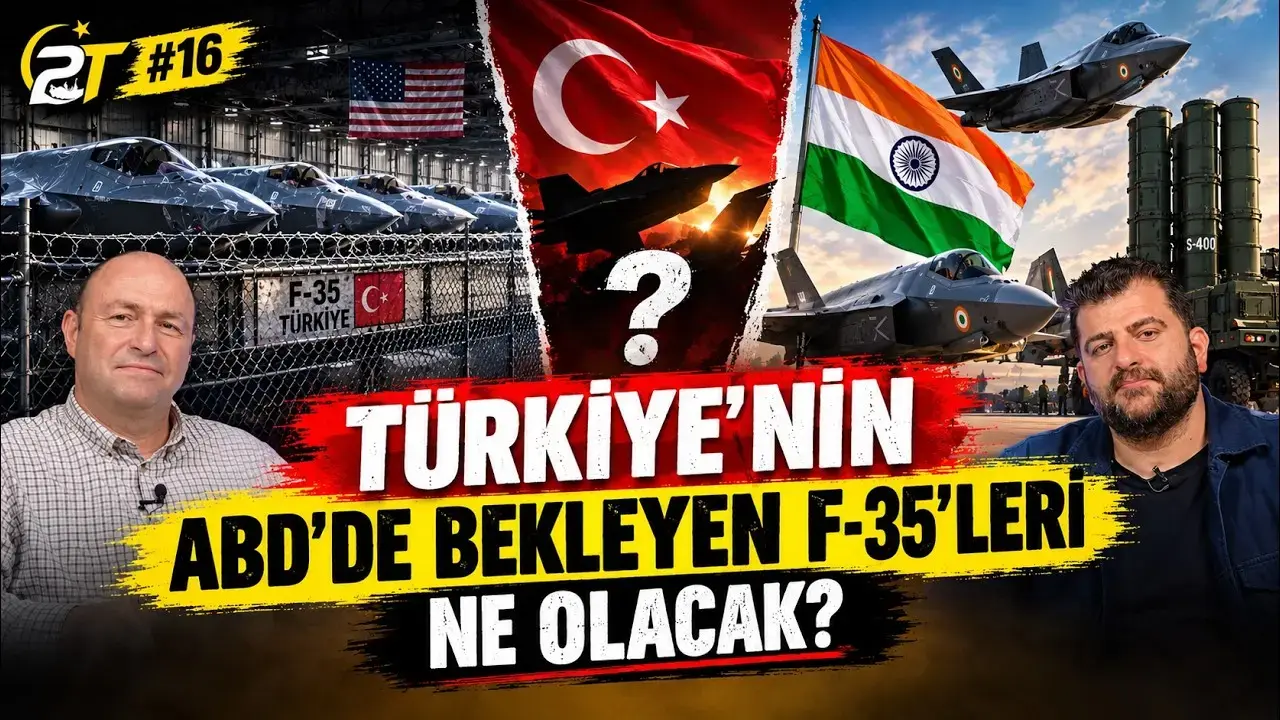
The status of six Turkish F-35A fighter jets remains a focal point of geopolitical tension as these aircraft continue to sit in storage within the United States. Following Turkey’s procurement of the Russian S-400 air defense system in 2019, Washington removed the country from the F-35 Joint Strike Fighter program, leaving the already-paid-for jets grounded on American soil. While discussions regarding a potential return to the program persist, legal hurdles and security concerns continue to complicate the situation. This ongoing impasse, recently highlighted in the 16th episode of the 2T Technology & Defense program, raises critical questions about the future of the Turkish Air Force and its strategic autonomy.
- The United States officially excluded Turkey from the F-35 program in July 2019 due to the procurement of Russian S-400 systems.
- Legal restrictions under the 2020 National Defense Authorization Act prevent the transfer of F-35 technology to Turkey until the S-400 issue is resolved.
- India’s recent participation in joint exercises with US F-35s despite owning S-400 systems has prompted questions regarding inconsistent American defense policies.
- The Turkish military continues to balance its long-term air power strategy between potential F-35 reintegration and the domestic development of the KAAN fighter jet.
The Turkish F-35A Jets Remain in Storage
Turkey entered the F-35 program in 2002 as a primary partner, contributing significantly to both the development of the aircraft and the production of its components. Having invested approximately 1.4 billion dollars, Turkey originally envisioned a fleet of 100 F-35A aircraft. However, the diplomatic fallout from the S-400 acquisition led to the expulsion of Turkish pilot trainees and the indefinite grounding of the six jets built specifically for the Turkish Air Force. Recent imagery confirms that these assets remain under American control, representing a multi-billion dollar point of contention in bilateral relations.
Legal Hurdles Prevent the Delivery of Aircraft
The primary security concern cited by the US involves the risk that Russian radar systems could extract sensitive data regarding the F-35’s stealth capabilities. Beyond these technical fears, the situation is bound by rigid legal frameworks. Section 1245 of the 2020 National Defense Authorization Act explicitly forbids the transfer of these jets until the S-400 standoff is settled. Furthermore, CAATSA sanctions imposed in 2020 against the Turkish Presidency of Defense Industries add a layer of bureaucratic complexity, ensuring that even if political tensions ease, the legal barriers remain firmly in place.
Double Standards Emerge During Military Exercises
Public discourse surrounding the program intensified when US F-35s participated in the Tarang Shakti 2026 exercises in India. Because India also utilizes Russian S-400 systems, observers have questioned the consistency of US policy. While the US maintained strict operational security by limiting Indian access to the F-35’s sensitive cockpit and avionics, the event highlighted a distinct difference in how Washington manages security risks with different strategic partners. This disparity suggests that diplomatic and geopolitical alignment plays a significant role in US military cooperation policies alongside pure technical risk assessments.
The Future of Turkish Air Power Remains Uncertain
The debate extends beyond the immediate fate of the six stranded jets to the broader question of Turkey’s aerial strategy. While the F-35 offers unparalleled sensor fusion and stealth, Turkey is simultaneously pushing forward with the KAAN, its indigenous fifth-generation fighter project. The development of a domestic platform is seen as a safeguard for long-term operational independence. Whether Turkey pursues a dual-path approach or pivots exclusively to local solutions will depend on future defense budgets, NATO interoperability requirements, and the evolution of its relationship with the United States.
Given the complex interplay between international sanctions, sovereign defense choices, and the development of the national KAAN project, we invite our readers to share their perspectives below. Do you believe a resolution with the US is still possible, or should Turkey focus all its resources on the domestic fighter jet program?
Your comment has been submitted,
it will be published after approval.