
Why Advanced Artificial Intelligence Models Struggle to Learn Like Infants

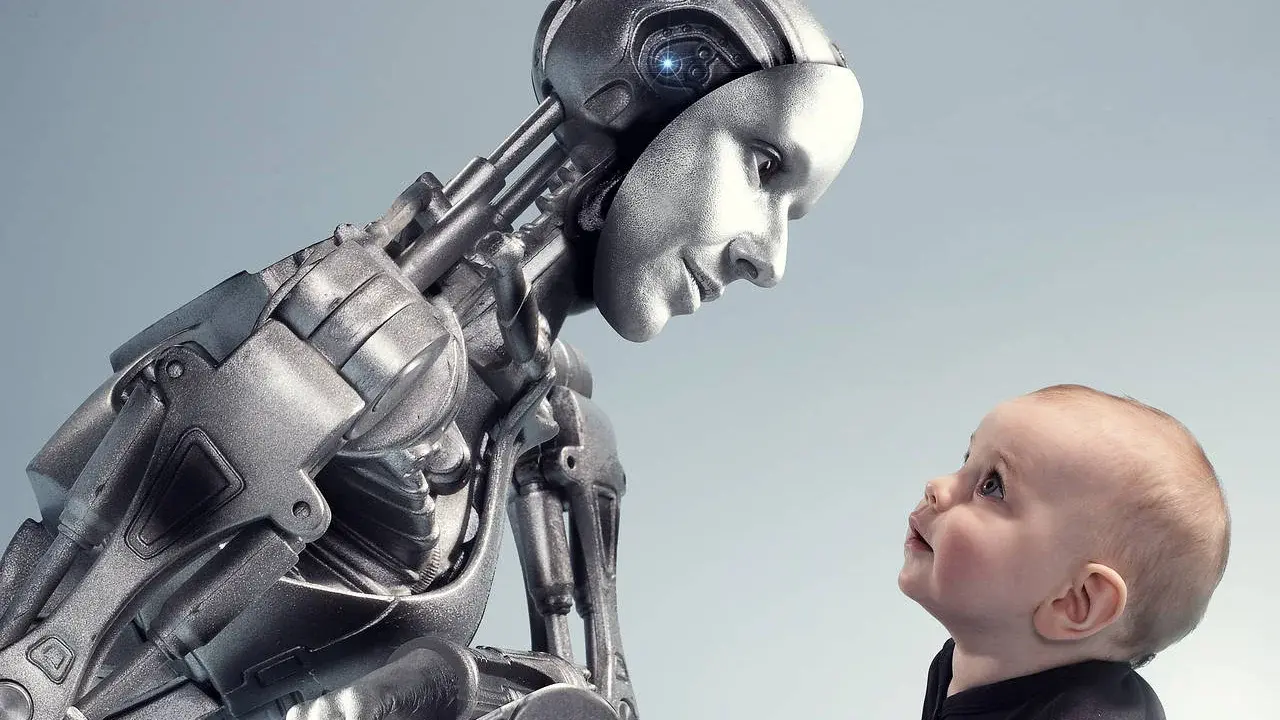
A collaborative group of researchers from Meta, Stanford University, the University of Tokyo, and Ecole Normale Superieure has recently launched the EgoBabyVLM Challenge to investigate why the world’s most advanced artificial intelligence models fail to match the learning efficiency of one-year-old infants. Despite utilizing massive datasets and thousands of high-performance chips, modern AI systems still lag behind human infants who can recognize objects and navigate their environments after only minimal exposure. This study highlights a fundamental gap between the computational architectures used in current machine learning and the biological cognitive mechanisms that allow human babies to process sensory information, social cues, and physical dynamics with remarkable speed and minimal energy consumption.
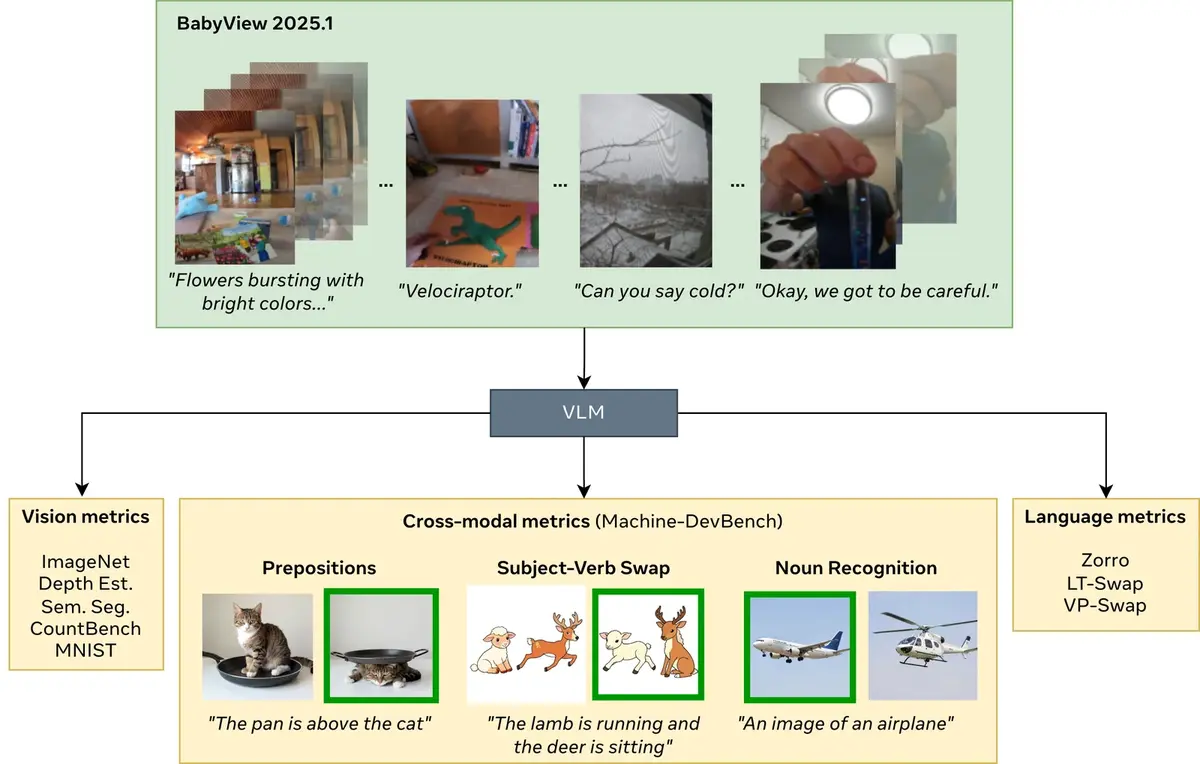
- Researchers developed the EgoBabyVLM Challenge to analyze how AI models process thousand-hour datasets captured from head-mounted cameras worn by infants.
- Current AI models demonstrate significant performance drops when transitioning from clean, curated datasets to complex, real-world visual environments.
- Experts suggest that replicating human cognitive mechanisms, such as social engagement and physical reasoning, is essential for developing next-generation AI systems.
Infant Learning Processes Provide a Template for Future AI
The research team utilized the EgoBabyVLM Challenge to test various models against real-life footage. Unlike standard benchmarks, this data captures the messy, unpredictable nature of daily life. The results reveal that even the most sophisticated systems struggle to interpret unstructured visual information, whereas an infant naturally synthesizes touch, sight, and sound to build a coherent understanding of the world.
The cognitive leap required for machines to emulate the rapid learning pace of an infant remains the primary hurdle for the future of artificial intelligence.
Stanford cognitive scientist Michael Frank notes that infant learning is inherently multimodal and social. It involves observing parental behavior, interpreting gaze directions, and listening to linguistic patterns related to objects that may not even be in the immediate field of view. These social and environmental context clues provide a level of guidance that static AI training datasets currently lack.
Physical Reasoning Remains a Major Barrier for Machines
While the 2023 BabyLM project achieved success in teaching AI linguistic syntax using limited childhood-scale data, the same efficiency did not translate to physical world understanding. Joshua Tenenbaum from MIT explains that although current models are excellent at identifying statistical patterns, they fail to grasp common sense, social relationships, and the laws of physics in the way a toddler does.
Addressing these gaps requires moving beyond mere pattern recognition. Researchers are now prioritizing models that emphasize causality and the temporal relationships between objects. By focusing on how infants internalize object dynamics, scientists hope to develop systems that can learn faster and operate more reliably in dynamic environments.
Understanding how human infants reach comprehensive cognitive milestones by age two is now considered a critical threshold for future technological advancements.
The next generation of AI development will likely involve architectures that integrate sensory-motor feedback loops similar to those observed in human development. As teams at institutions like Stanford continue to refine models that simulate causal reasoning, the goal remains to bridge the divide between computational processing and intuitive, human-like intelligence.
Given the rapid evolution of technology, do you believe artificial intelligence will ever truly mirror the natural reasoning and learning capabilities of a human infant? Share your thoughts in the comments section below.
Your comment has been submitted,
it will be published after approval.