
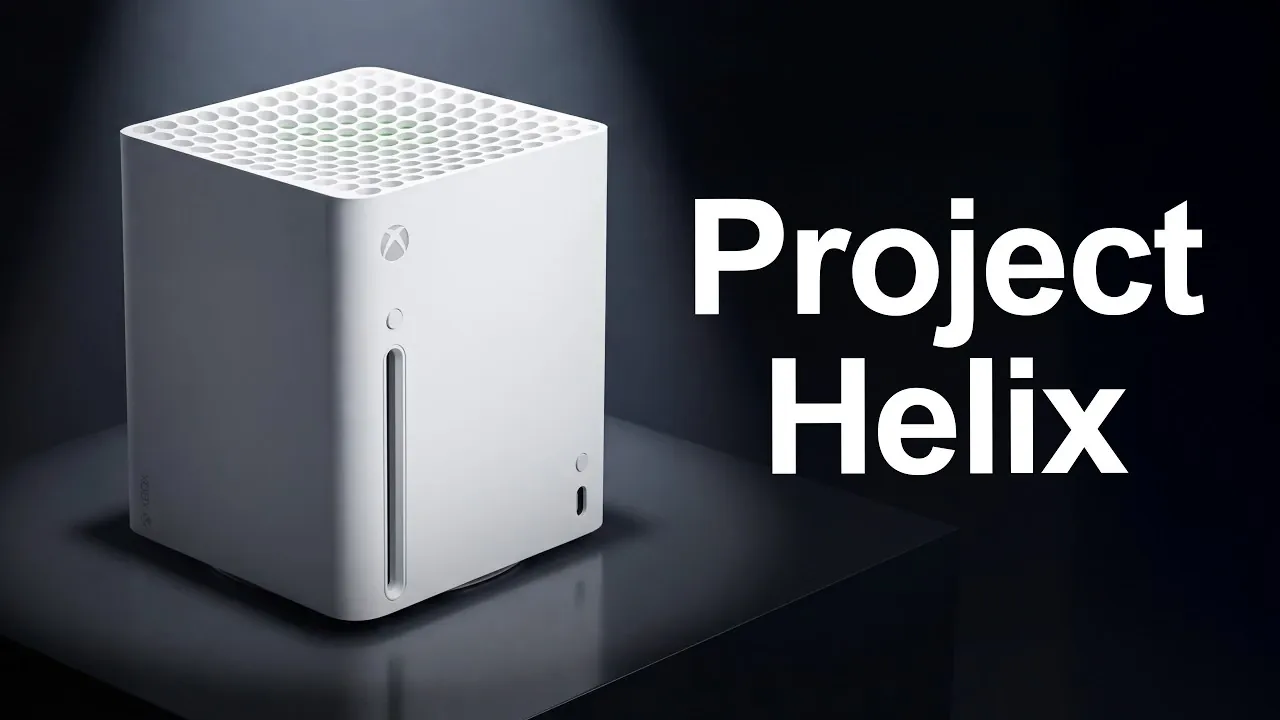
Microsoft’s upcoming gaming console, codenamed Project Helix, is set to transform the gaming industry by merging the console and PC ecosystems. This new hardware offers a hybrid structure catering to both console enthusiasts and PC gamers alike. According to leaked information, the device stands out with its extreme performance and next-gen AI capabilities.
Xbox Project Helix vs. PlayStation 6: The Rivalry Intensifies
At the heart of the console lies a custom AMD processor manufactured using an advanced 3nm fabrication process. This technology allows for significantly higher performance with lower power consumption. The GPU, based on the AMD RDNA 5 architecture, is rumored to rival the Nvidia RTX 5080 in rasterization and even surpass the RTX 5090 in ray tracing performance, promising flawless visuals.

One of the most critical innovations is the dedicated Neural Processing Unit (NPU). This hardware integration allows for more sophisticated AI-driven NPCs and highly realistic physics. The system aims to deliver the most fluid and life-like gaming experience to date through AI-assisted optimization.
A Unified Ecosystem: Native Windows & Xbox Support
Project Helix is capable of running both Xbox and PC games natively. Microsoft is reportedly developing a specialized “Xbox Mode” for Windows, providing PC users with a simplified, console-like user interface. To achieve near-4K visuals at high frame rates, the device will utilize AMD’s new FSR Diamond technology.
Additionally, thanks to DirectStorage technology and the new ZSD (Zero Seek Delay) compression method, loading screens are expected to become virtually non-existent. The console will also maintain Microsoft’s commitment to backward compatibility, supporting games from the previous four generations of Xbox.
Launch Timeline and Pricing Strategy
Developer kits are expected to be distributed in early 2027, with a targeted consumer launch in 2028. However, such high-end hardware comes with a premium price tag. Project Helix is estimated to retail between $900 and $1,200. In contrast, Sony’s rival PlayStation 6 is expected to maintain a more accessible price point of around $600.
While Microsoft targets enthusiasts seeking peak performance, Sony appears to be following a more traditional pricing policy. In this new era where the boundaries between console and PC vanish, the competition is fiercer than ever. Given the price gap, would your next-gen choice be Microsoft’s hybrid powerhouse or the more affordable PlayStation 6? Share your thoughts in the comments!