
Xiaomi Xring O3 vs Dimensity 9500: Which Processor Dominates Performance?

Xiaomi has officially entered a new era of mobile computing with the introduction of its second proprietary chipset, the Xring O3, launched in August 2026. This high-end silicon is designed to challenge the dominance of MediaTek’s flagship Dimensity 9500 in the competitive smartphone market. By utilizing cutting-edge TSMC 3nm manufacturing processes, both manufacturers aim to push the boundaries of mobile efficiency and processing power. The Xring O3 distinguishes itself through a unique architectural design that prioritizes multi-core throughput and advanced graphical capabilities, signaling a strategic shift in Xiaomi’s effort to control its hardware ecosystem and deliver superior device performance.
- The Xring O3 utilizes a ten-core architecture to surpass the performance of the eight-core Dimensity 9500.
- Geekbench testing indicates that the Xring O3 delivers a 41 percent improvement in multi-core processing efficiency.
- The integrated Mali-G2 Ultra NX GPU provides a 58 percent performance gain in 3DMark graphical benchmarks.
- Native support for LPDDR6 memory significantly increases data bandwidth for intensive applications.
Technical Specifications Reveal Architectural Advantages
A detailed analysis of the hardware specifications highlights a more aggressive design strategy employed by Xiaomi for its latest silicon. The Xring O3 incorporates 24 billion transistors and features two high-performance C1-Ultra cores clocked at 4.35 GHz. In comparison, the MediaTek Dimensity 9500 relies on a single C1-Ultra core operating at 4.21 GHz. 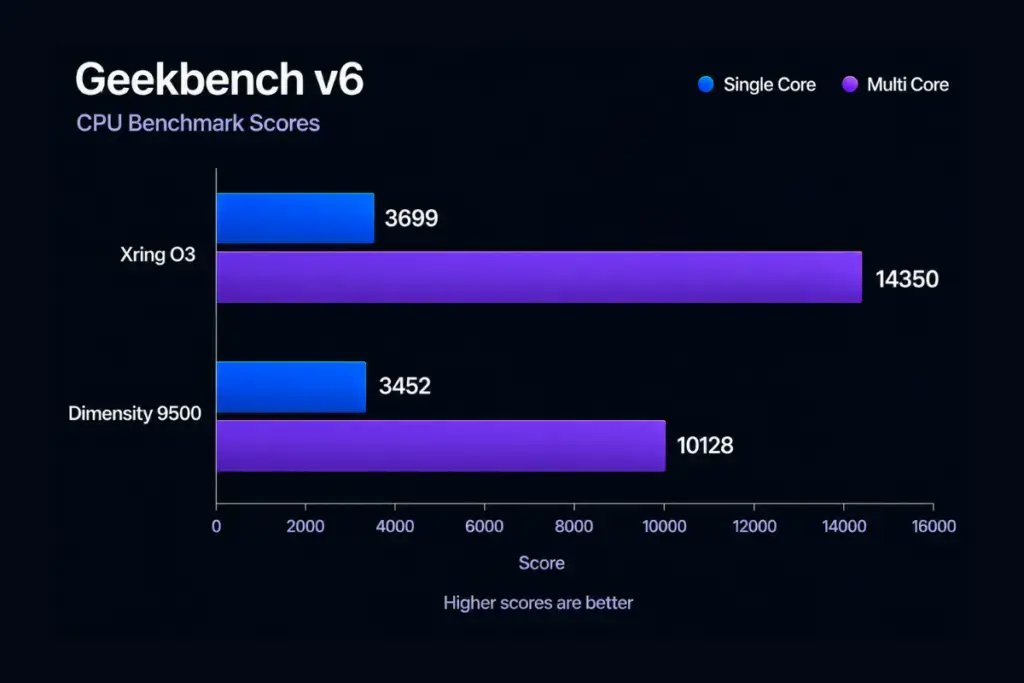 Furthermore, the graphical processing unit inside the Xiaomi chipset is equipped with 16 cores, effectively outclassing the 12-core configuration found in the competing MediaTek model, which results in superior rendering speeds for high-fidelity gaming and professional-grade video editing tasks.
Benchmark Results Confirm Performance Gaps
The performance disparity between the two processors becomes evident through standardized benchmark testing. In the Geekbench v6 evaluation, the Xring O3 achieved a notable multi-core score of 14,350 points, significantly outpacing the 10,128 points recorded by the Dimensity 9500. 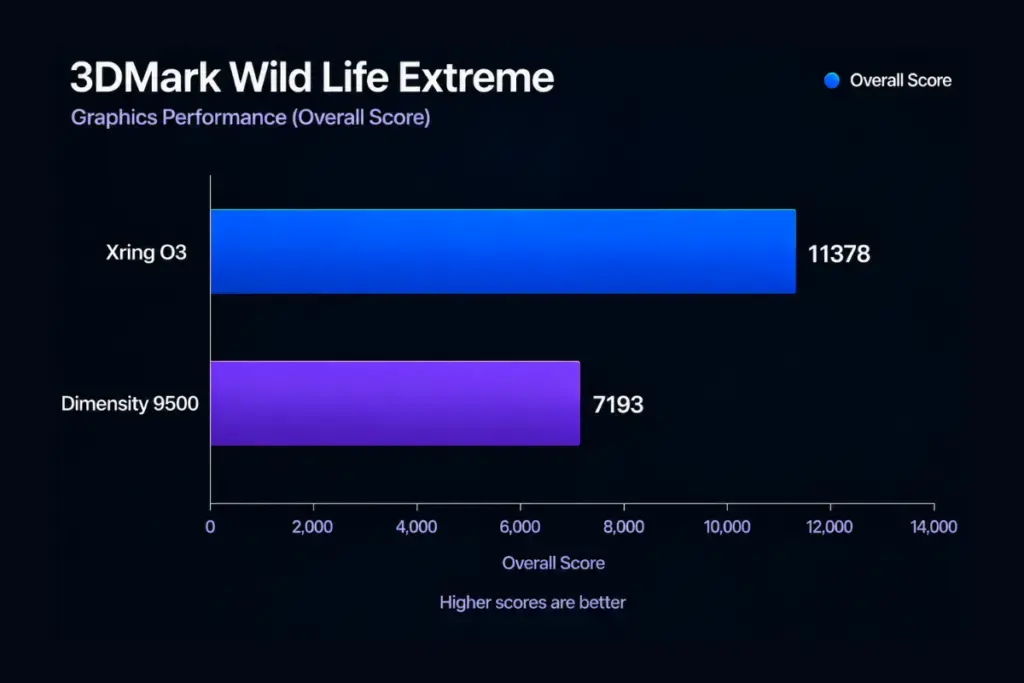 These figures demonstrate the raw power efficiency of Xiaomi’s ten-core setup under heavy computational stress. Additionally, the 3DMark Wild Life Extreme test reinforces this dominance, with the Xring O3 securing 11,378 points, confirming that the new chipset is optimized for users who demand top-tier graphical performance from their mobile devices.
Artificial Intelligence and Memory Standards Expand
Beyond traditional processing, the Xring O3 sets a new benchmark in artificial intelligence with an NPU capable of 200 TOPS, effectively doubling the 100 TOPS capacity of the Dimensity 9500. This massive increase in AI throughput allows for faster local image processing, enhanced real-time language translation, and improved computational photography. The integration of LPDDR6 memory support ensures that the system can handle larger datasets without bottlenecks, facilitating a smoother multitasking experience. Coupled with the reliable T900 5G modem, the Xring O3 maintains current connectivity standards while providing a robust foundation for the next generation of mobile applications.
Do you believe Xiaomi’s shift toward proprietary silicon will fundamentally alter the power structure of the smartphone industry, or will established manufacturers maintain their lead? We encourage you to share your thoughts on the Xring O3 performance metrics in the comments section below.
Your comment has been submitted,
it will be published after approval.