
Tencent’s Voyager AI Turns Photos Into 3D-Style Video Worlds

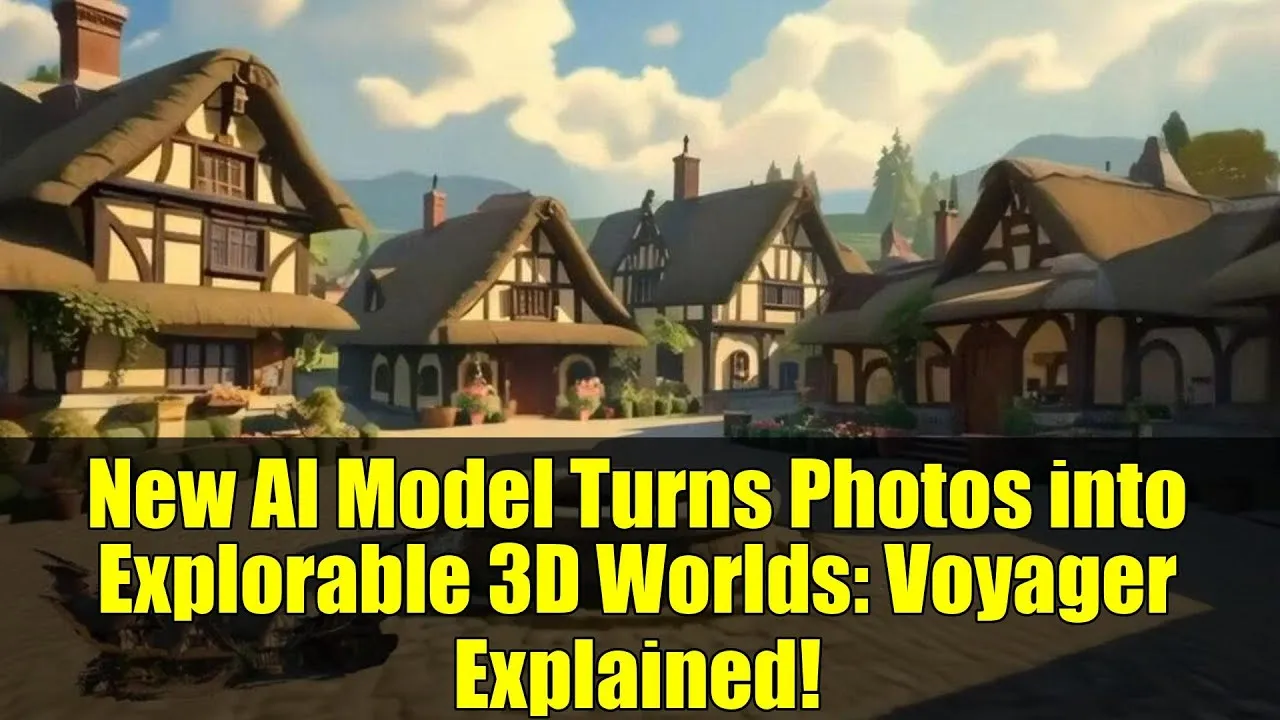
Tencent just lifted the curtain on Hunyuan World-Voyager, a new AI model built to turn static photos into short, 3D-style video sequences. While it doesn’t create true 3D models, Voyager delivers convincing camera movement and depth, offering a fresh way to simulate space without the heavy lifting of traditional modeling tools.
Voyager uses AI to simulate movement from a single photo
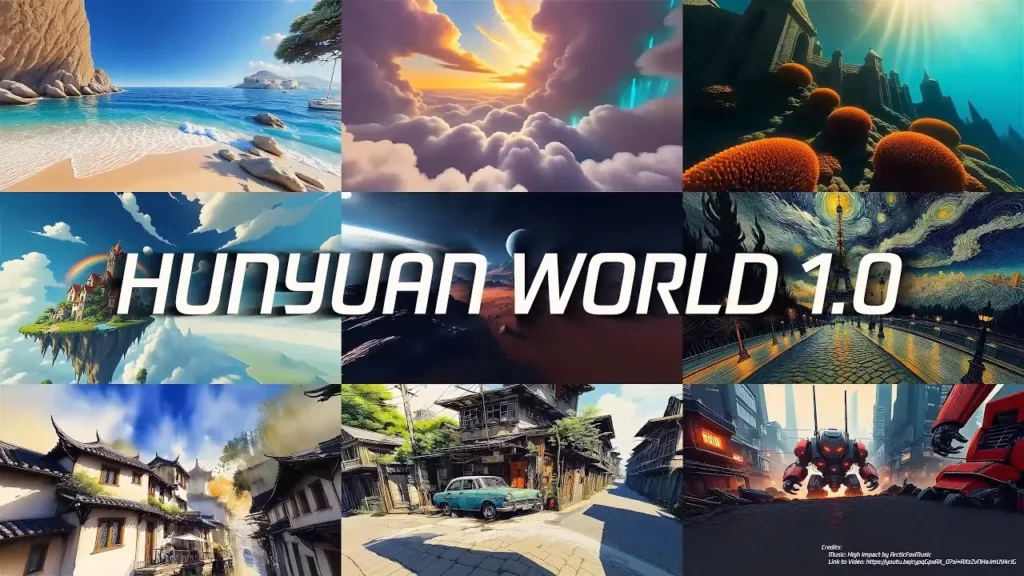
The Voyager system outputs RGB video paired with depth data, giving viewers the illusion of flying through a three-dimensional world. Users can simulate movement forward, backward, or even rotating by feeding the model just one image.
Each output creates 49 frames, or about two seconds of video. Clips can be chained together for longer sequences, but Tencent admits performance degrades during longer or more complex paths.
Unlike standard 3D generation, Voyager doesn’t build volumetric meshes. Instead, it maintains spatial consistency in 2D frames, backed by depth maps. For creators, that means easier scene generation with a fraction of the technical overhead.
World cache system boosts frame-to-frame consistency
A key feature of Voyager is its “world cache,” which stores 3D point estimates from earlier frames and reprojects them to keep the visuals coherent. That gives the model a sense of spatial memory, important for smooth transitions.
Still, there’s a trade-off. Longer scenes introduce more errors, especially when navigating extreme angles or shifting subjects. The AI is fast, but it’s not flawless.
Voyager stands out from other photo-to-3D tools
While companies like Google and Dynamics Labs are pushing AI into interactive 3D spaces, Tencent is aiming squarely at video production and point cloud reconstruction.
Here’s how Voyager compares:
- Google’s Genie 3 creates interactive 3D worlds from text prompts
- Mirage 2 by Dynamics Labs converts photos into online, playable spaces
- Voyager focuses on video realism and depth for 3D-style animation
Voyager trained on over 100,000 clips, including Unreal Engine footage, to learn camera dynamics and depth estimation. That helped it top Stanford’s WorldScore benchmark with a rating of 77.62, beating other models in visual quality and consistency, though it came second in camera control.
Voyager still needs power and refinement
Running Voyager isn’t light work. It demands at least 60GB of GPU memory for 540p output, and Tencent recommends 80GB for smoother performance. It’s not viable for real-time applications just yet.
And licensing? Voyager’s model weights are published on Hugging Face, but commercial use is restricted in the EU, UK, and South Korea. Any deployment serving more than 100 million users needs extra clearance from Tencent.
For now, HunyuanWorld-Voyager sits at the edge of what’s possible in AI-driven video from photo to motion, without sculpting a single 3D model. The results are short, striking, and spatial, but not quite ready to run wild.
Your comment has been submitted,
it will be published after approval.