
Samsung Announces SmartThings Safe Premium: Availability and Global Impact

Samsung has officially unveiled its latest innovation in residential security, the Samsung SmartThings Safe Premium service, developed in strategic partnership with Arlo. Announced to bolster the safety of smart home ecosystems, this premium subscription model provides 24/7 professional emergency monitoring accessible through smartphones and integrated home hardware. By utilizing a dedicated in-app panic button, the service aims to protect vulnerable individuals by connecting them directly to emergency response professionals. While the launch represents a significant milestone in global smart home safety, users are currently evaluating how this integration will function across different international markets.
- Samsung SmartThings Safe Premium offers continuous professional monitoring through a strategic partnership with Arlo.
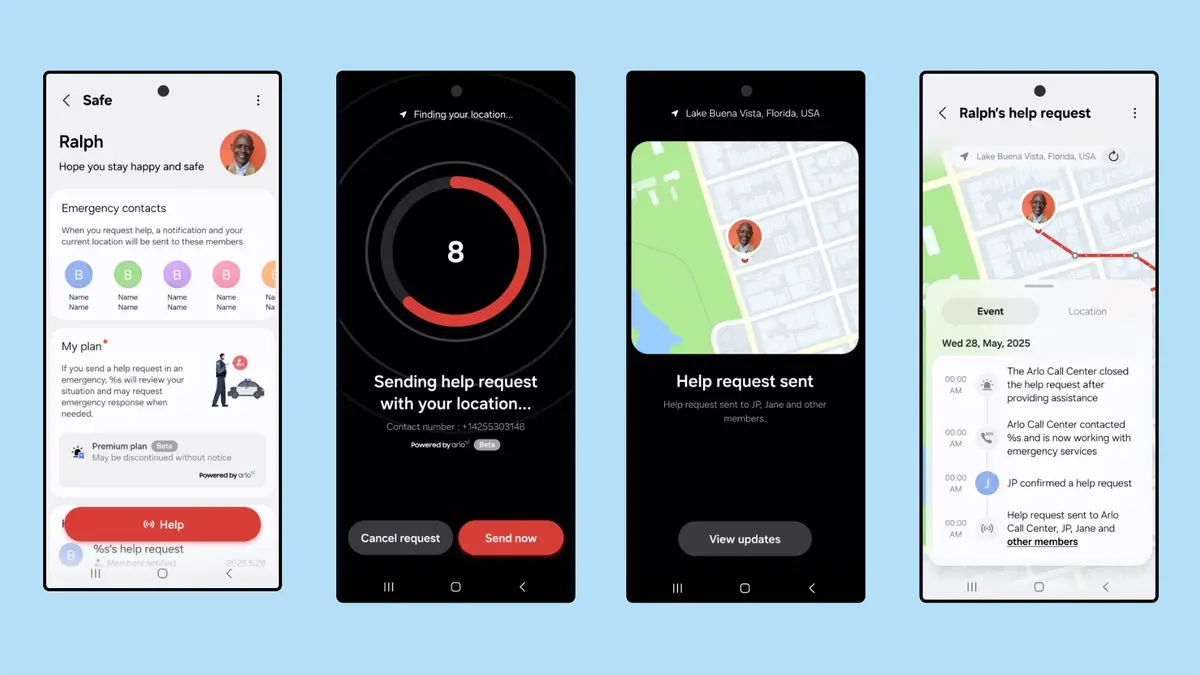
- The system triggers emergency responses via a panic button that includes a ten-second cancellation window to prevent false alarms.
- Local legislative and bureaucratic constraints currently prevent the service from integrating with emergency response networks in certain regions like Turkey.
The System Operates Through Automated Emergency Protocols
The core functionality of Samsung SmartThings Safe Premium revolves around a streamlined automation process designed for high-stress situations. When a user activates the help button within the SmartThings interface, the system initiates a ten-second countdown. This feature provides a necessary buffer for users to cancel the alert in the event of an accidental trigger.
Once the countdown concludes, an emergency signal is transmitted directly to Arlo’s professional monitoring center. Trained personnel then attempt to establish contact with the user via voice call or SMS to verify the emergency. If the user fails to respond, the system utilizes the device’s precise GPS data to dispatch local authorities, including police, fire, or ambulance services. Furthermore, the platform automatically notifies pre-designated emergency contacts to ensure a comprehensive safety net.
The system promises a seamless bridge between smart home technology and professional emergency intervention services.
Regional Infrastructure Affects International Availability
Despite the global excitement surrounding the launch, the practical application of Samsung SmartThings Safe Premium varies significantly depending on the user’s location. In markets such as Turkey, the service faces substantial hurdles regarding technical and legal integration. The primary challenge lies in the lack of direct data interoperability between private security firms and national emergency response centers like the 112 Emergency Call Center.
Because Arlo’s monitoring infrastructure is predominantly optimized for North American and European frameworks, it cannot currently facilitate the automated dispatch of local emergency responders in other regions. Consequently, the promise of direct police or ambulance deployment remains unfeasible under current bureaucratic regulations in several countries.
Market Penetration Influences Adoption Rates
The success of such advanced security services is deeply tied to the existing smart home ecosystem’s maturity within a country. In many developing markets, the adoption of interconnected sensors, smoke detectors, and automated home security hardware remains limited compared to Western standards. Economic factors, including currency fluctuations and high initial hardware costs, continue to slow the widespread integration of these smart technologies.
Automated security services currently remain a luxury rather than a standard utility in many global regions.
Ultimately, while Samsung SmartThings Safe Premium signifies a shift toward using home automation for life-saving protection, it remains a work in progress for many international users. Unless local partnerships are established with regional emergency agencies, the service may offer limited value beyond basic location sharing. Users are encouraged to share their thoughts on whether they would subscribe to such a service if it were fully integrated with their local emergency infrastructure.
We invite you to share your thoughts in the comments section: Do you believe smart home security services should be integrated with national emergency systems, or do you prefer to keep your home security data independent?
Your comment has been submitted,
it will be published after approval.