
AMD FSR 4.1 Performance Issues Disappoint RDNA 3 Users

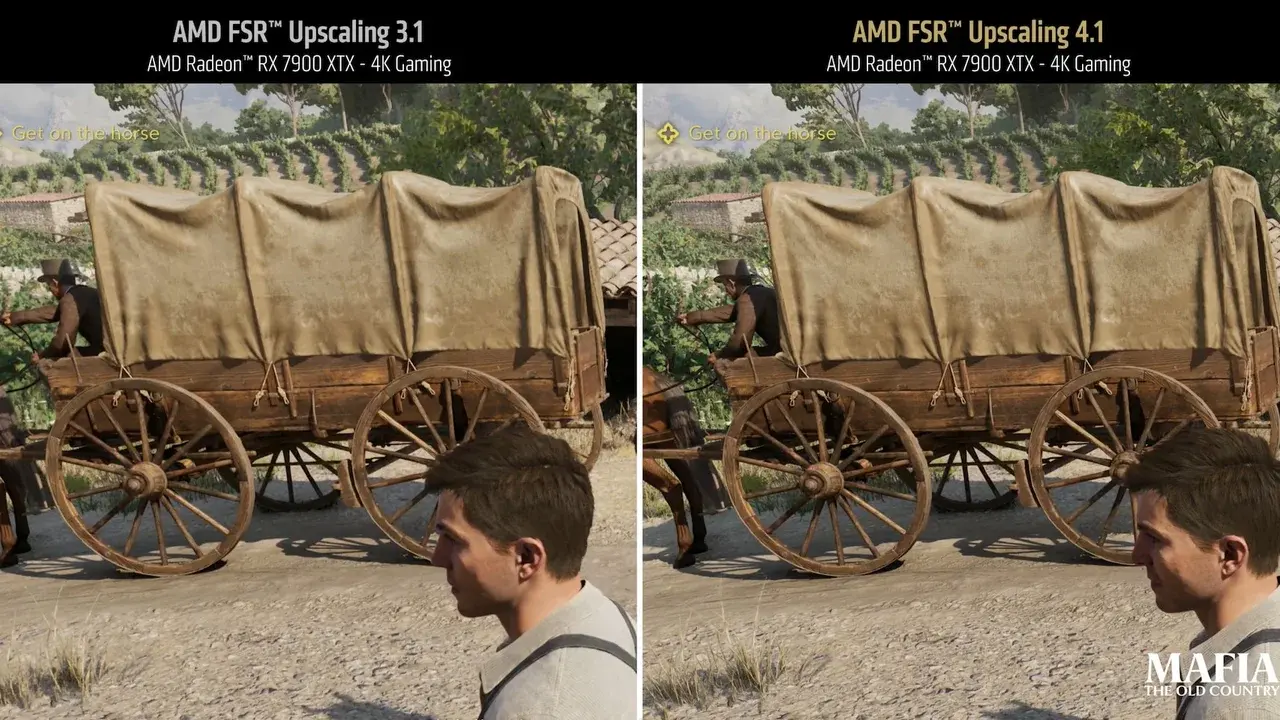
AMD recently released its FSR 4.1 upscaling technology, aimed at improving frame rates for users with RDNA 3 architecture graphics cards. However, comprehensive testing conducted by the German tech publication ComputerBase has revealed unexpected performance regressions compared to the previous FSR 3.1 version. While the update promises visual fidelity improvements, users running popular hardware like the RX 7900 XTX, RX 7800 XT, and RX 7600 are experiencing a notable drop in frame rates. These findings indicate that the new FSR 4.1 implementation may be placing a heavier computational burden on existing hardware than initially anticipated, raising concerns among the gaming community regarding the efficiency of the update.
- Testing shows FSR 4.1 results in performance losses of up to 14.5% compared to FSR 3.1 on RDNA 3 GPUs.
- Technical architecture differences between FP8 and INT8 data handling cause significant overhead on older hardware.
- AMD plans to delay FSR 4.1 support for older RDNA 2 RX 6000 series cards until early 2027.
Technical Architecture Differences Affect Performance
The core of the issue appears to stem from how different GPU architectures process artificial intelligence workloads. AMD has clarified that its newer RDNA 4 architecture is specifically optimized for second-generation AI accelerators that utilize FP8 support. In contrast, the current RDNA 3 lineup relies on 8-bit integer (INT8) data processing. 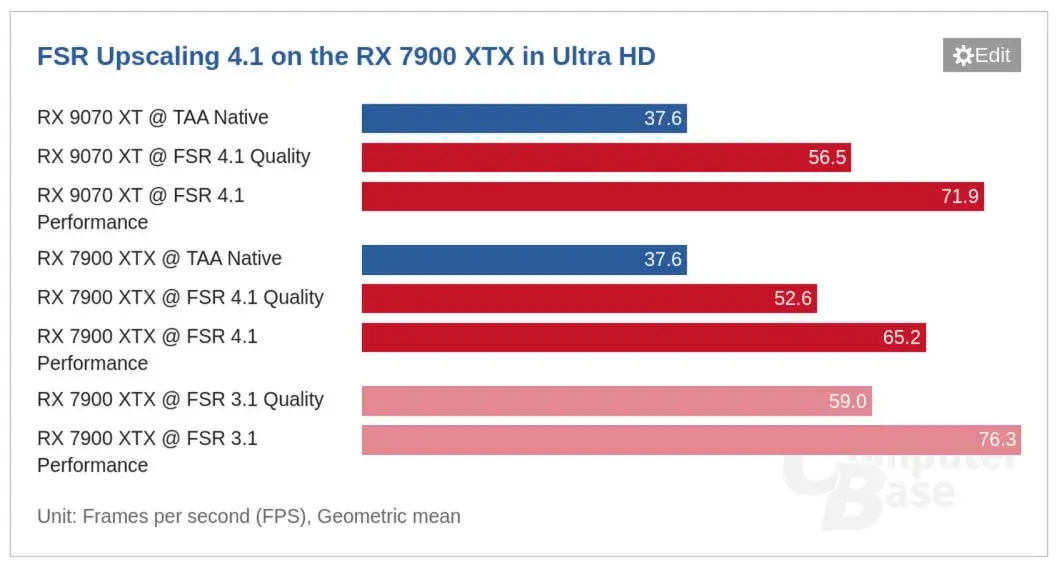
The attempt to harmonize visual quality across generations has introduced a significant performance penalty for RDNA 3 users.
When analyzing the geometric mean across nine major gaming titles, the data shows that FSR 4.1 causes an 11% performance decrease in Quality mode and a 14.5% decrease in Performance mode. Even top-tier cards like the RX 7900 XTX are not immune, as they exhibit a 9% performance drop in Performance mode. This disparity becomes even more apparent when compared to the RDNA 4-based RX 9070 XT, which handles these new instructions with greater efficiency.
Compatibility Expectations Extend to Older Series
For owners of the previous generation RX 6000 series, the wait for FSR 4.1 will be considerably longer. Reports suggest that support for these RDNA 2 cards is currently projected for early 2027. 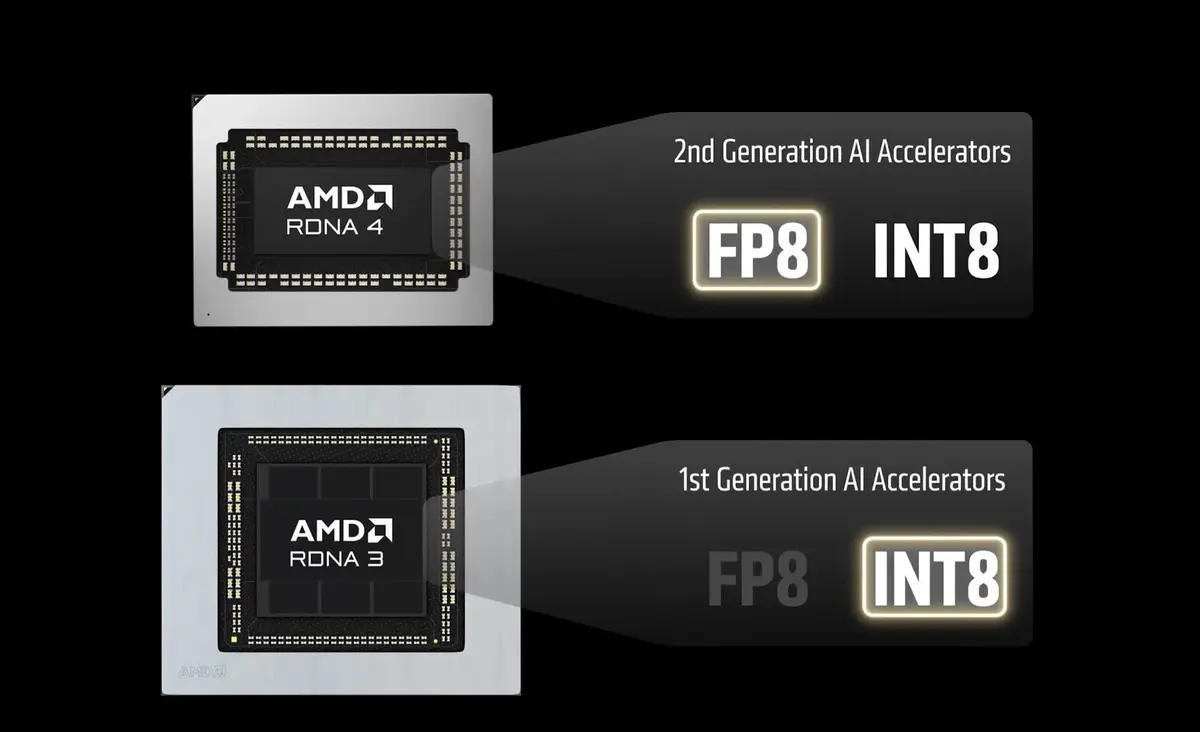
Because the RX 6000 series lacks dedicated AI hardware accelerators, the system will be forced to offload all FSR 4.1 computations onto the standard stream processors. This limitation suggests that the performance trade-offs observed on RDNA 3 cards could be even more pronounced on older hardware. Testing on mid-range and entry-level models like the RX 7800 XT and RX 7600 already confirms a persistent performance deficit of 7% to 9% compared to the older FSR 3.1 iteration. As AMD continues to refine its software stack, the industry will be watching to see if future driver updates can optimize these workflows for existing users.
We would love to hear your thoughts on this situation: do you prioritize image quality over raw frame rates, or do you find this performance trade-off unacceptable for your gaming experience? Share your opinions in the comments section below.
Your comment has been submitted,
it will be published after approval.