
Google Expands Noto 3D Emoji Designs Across Android Devices


Google has officially announced the widespread rollout of its comprehensive Noto 3D emoji set, extending access beyond its proprietary Pixel devices to the broader Android ecosystem. This strategic expansion, directed by the Google Design team, marks a significant shift from traditional 2D icons to a modern, three-dimensional aesthetic designed to enhance digital communication. By providing these assets to a vast array of manufacturers, Google aims to standardize high-quality, emotionally resonant visual elements across its entire platform. This transition represents months of meticulous refinement, ensuring that every character maintains its original intent while adopting a sophisticated, volumetric form that feels more natural in modern digital environments.
- Google has extended the availability of its Noto 3D emoji collection to various third-party Android manufacturers including Xiaomi, OnePlus, and Motorola.
- Designers prioritized emotional clarity by removing excessive anatomical details that create visual noise on smaller screen sizes.
- The development team redesigned animal figures to incorporate full silhouettes and accurate postures to foster deeper user empathy.
Designers Prioritize Emotional Clarity in Character Development
The core philosophy behind the Noto 3D project rests on the belief that emojis should function as expressive tools rather than mere miniature copies of real-world objects. During the design process, Google engineers identified that complex anatomical details, such as pupils or intricate nasal structures, often hindered the brain’s ability to process emotions quickly. 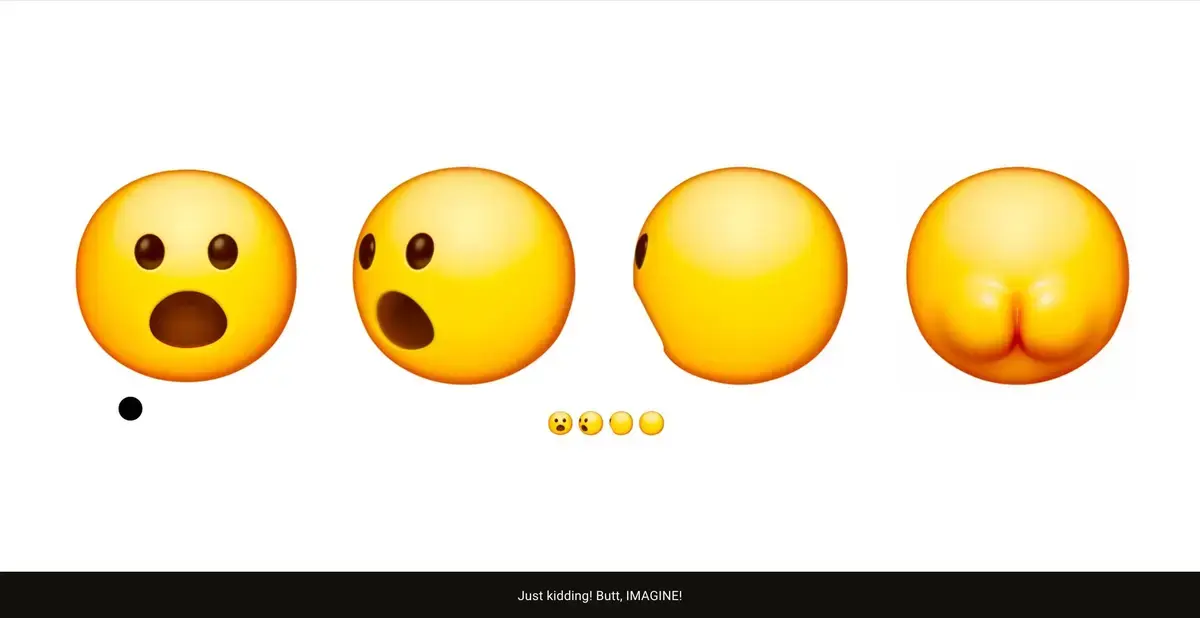 Consequently, the team adopted a simplified approach, limiting each character to three essential visual cues to preserve identity while reducing visual clutter. This refined methodology ensures that users can interpret the intended sentiment instantly, regardless of the device’s display capabilities or physical dimensions.
Transitioning from 2D to 3D presented unique technical challenges, particularly regarding character perspective and rear-view aesthetics. For instance, the team had to completely remodel figures like the poodle, which previously lacked fully rendered limbs. 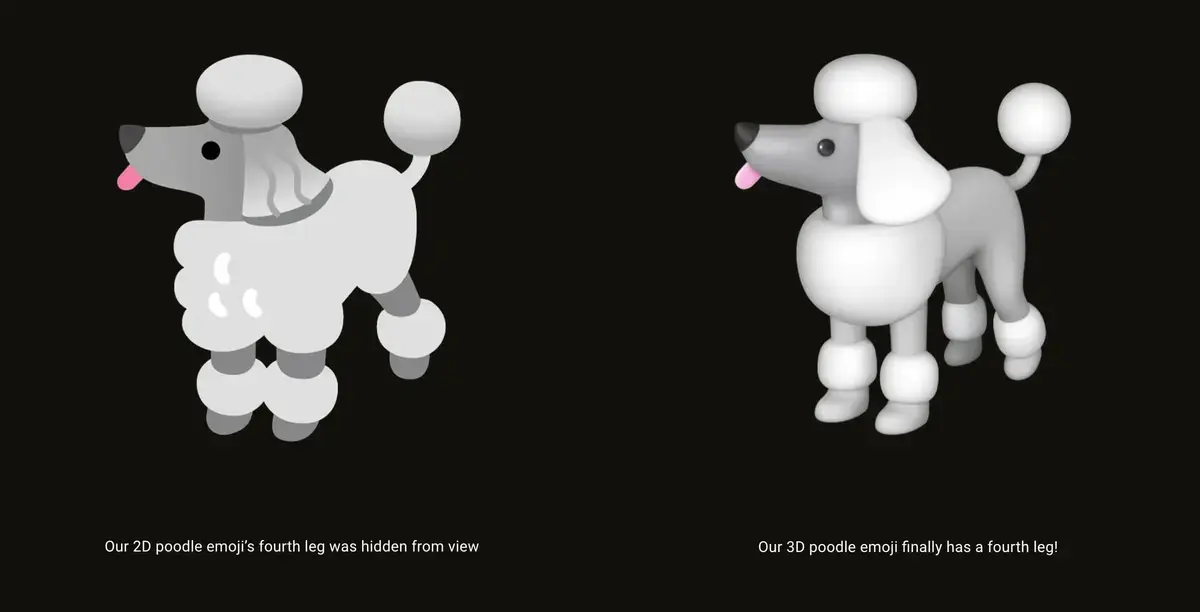 By merging the expressive soul of traditional illustration with the structural depth of 3D technology, the design team achieved a harmonious balance that prioritizes clarity and character recognition above all else.
Animal Figures Feature Complete Silhouette Strategies
Extensive research conducted by the design team revealed that users feel a stronger sense of empathy toward figures that display complete silhouettes. Previously, many animal emojis suffered from a floating head illusion, which limited their expressive potential. To rectify this, designers focused on elements such as paws, tail positions, and body posture to better reflect the intent and personality of each creature. 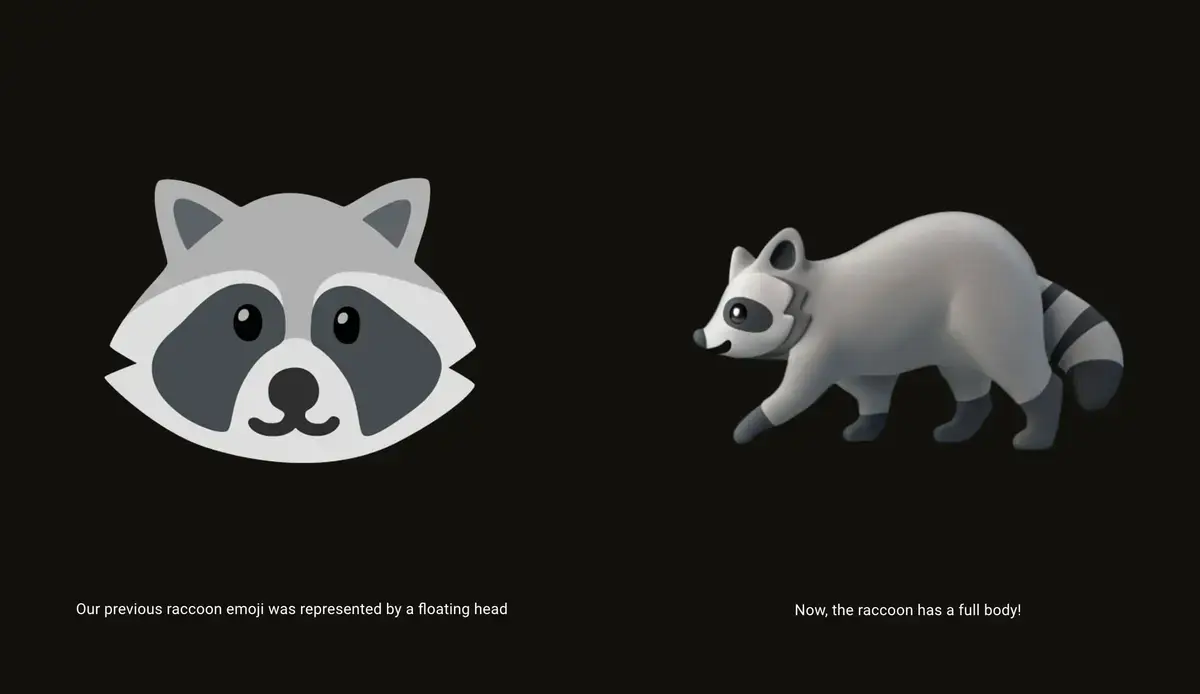 For example, the raccoon emoji underwent a significant transformation to ensure a more holistic and lively appearance. This new design language creates a more consistent and immersive visual experience across the entire Android ecosystem.
Global Android Manufacturers Adopt the New Emoji Standard
The deployment of these 3D assets began following the launch of the Pixel 11 and now encompasses a wide variety of brands, including Nothing, Lenovo, OPPO, vivo, iQOO, HONOR, TECNO, Infinix, and itel. By enabling such a vast range of partners to integrate these emojis, Google is successfully fostering a unified visual language for millions of Android users globally. Developers and enthusiasts can review the full library via official Google documentation, which details the technical specifications of these new assets. This initiative underscores Google’s ongoing commitment to modernizing the digital communication experience through consistent design updates.
How do you feel about the transition to 3D emojis in your daily messaging apps, and which character do you think represents the biggest improvement in this new set? Let us know your thoughts in the comments section below.
Your comment has been submitted,
it will be published after approval.