
Gotion High-Tech Targets 400 Wh/kg Energy Density for Electric Vehicle Batteries

At the World Manufacturing Convention 2026 held in Hefei, Chinese battery manufacturer Gotion High-Tech announced significant advancements in solid-state battery technology. The company, which counts Volkswagen as its largest shareholder, revealed plans to increase the energy density of its Jinshi cells to 400 Wh/kg, surpassing its previous milestone of 350 Wh/kg. This development represents a pivotal shift for the electric vehicle industry, as manufacturers race to improve range and safety. With pilot production lines already operational and rigorous testing ongoing, Gotion is positioning itself as a leader in the next generation of power storage solutions for global automotive markets.
- Gotion High-Tech aims to elevate the energy density of its Jinshi solid-state batteries to 400 Wh/kg.
- The company has successfully transitioned its 350 Wh/kg cells from laboratory settings to pilot production lines and real-world vehicle testing.
- A strategic partnership with BASF supports the development of high-performance materials necessary for mass production.
- Gotion targets a long-term cost reduction to 1 yuan per watt-hour to improve the market viability of solid-state technology.
Production Capacity Scales Up Significantly
Gotion High-Tech is moving rapidly from conceptual design to industrial-scale application. By 2025, the company had established a pilot production line with an annual capacity of 0.2 GWh, which allowed for the integration of solid-state cells into actual test vehicles. Following the success of these trials, the company finalized the design for a larger production facility in March 2026, which is expected to support an annual output of 2 GWh. 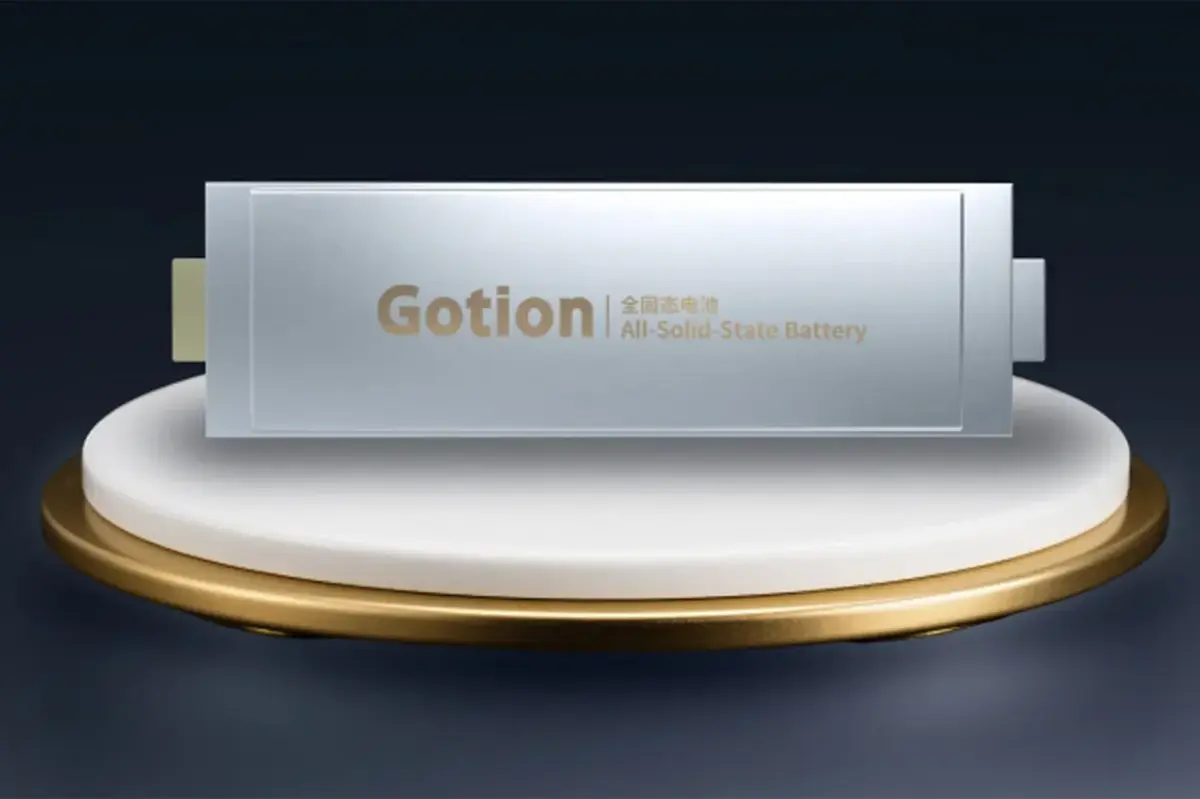 While initial plans suggested small-scale production by 2027, the company is now laying the groundwork for a broader transition to mass manufacturing by the year 2030.
Material Challenges Require Collaborative Solutions
The path toward commercialization necessitates overcoming persistent material-related obstacles. To address these technical hurdles, Gotion entered into a collaborative agreement with chemical giant BASF at the beginning of 2026. This partnership focuses on engineering the advanced materials required to maintain the stability and performance of solid-state architecture during high-volume manufacturing. As a global entity operating 20 production facilities, Gotion currently ranks as the fifth-largest battery producer in the Chinese market, having achieved a cumulative installation volume of 4.61 GWh as of August 2026.
Safety Standards Remain a Priority
A primary advantage of the Jinshi cell technology lies in its inherent safety profile. Unlike conventional lithium-ion batteries that utilize liquid electrolytes, the solid-state design employed by Gotion prevents the formation of smoke or flames during extreme stress. In standardized puncture and high-temperature tests, these cells demonstrated remarkable stability. This robust safety architecture is a key component of the company’s expanded cooperation with Volkswagen, which aims to integrate these advanced power units into future European production strategies.
Cost Targets Guide Future Market Adoption
Economic feasibility remains the final barrier to widespread adoption. Gotion has set a long-term cost target of 1 yuan per watt-hour, which converts to approximately 150 dollars per kilowatt-hour. Although this remains significantly higher than the current costs associated with standard lithium iron phosphate (LFP) cells in the Chinese market, it represents a critical step toward making high-density solid-state batteries affordable for the mass market. As the industry watches these developments closely, the timeline for when these 400 Wh/kg cells will reach consumer vehicles remains the subject of ongoing analysis.
Given the rapid advancements in battery chemistry, how do you think the shift toward solid-state technology will influence your decision to purchase an electric vehicle in the coming years? Please share your thoughts in the comments section below.
Your comment has been submitted,
it will be published after approval.