
Huawei MatePad Air Review: A 5.3mm Ultra-Thin PC-Like Tablet

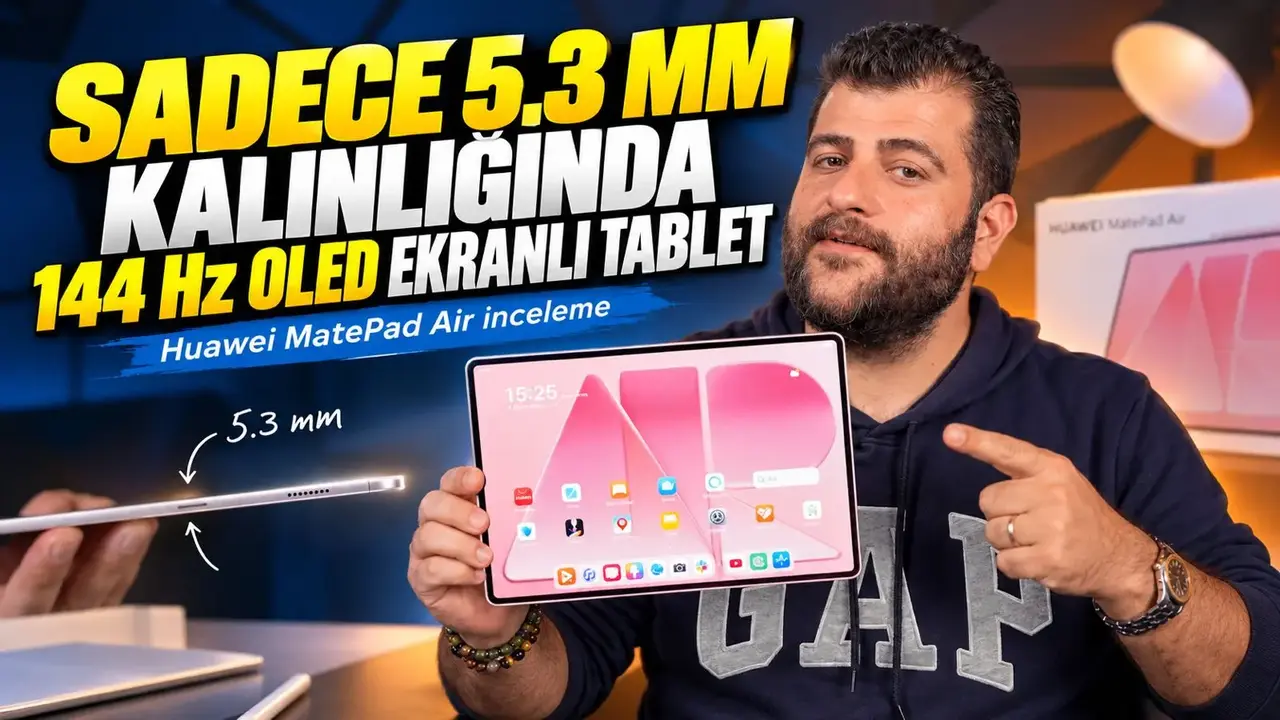
Huawei has officially launched the new Huawei MatePad Air, a sophisticated tablet that aims to bridge the gap between portable media devices and high-performance workstations. Debuting in the market with a focus on productivity, this device challenges the traditional tablet category by offering a 5.3 mm ultra-thin profile and a powerful hardware setup. Designed for professionals and creatives, the MatePad Air combines a 144 Hz OLED display with PC-level software capabilities to serve as a legitimate replacement for a laptop in various professional workflows. With aggressive launch campaigns in Turkey, Huawei is positioning this device as a primary tool for those who demand mobility without sacrificing computing power.
- The device features a remarkably thin 5.3 mm chassis that weighs 509 grams to ensure maximum portability.
- It utilizes an OLED PaperMatte display that supports a 144 Hz refresh rate for fluid visual performance.
- Huawei integrates the Kirin T93C processor alongside Wi-Fi 7 connectivity to handle intensive multitasking requirements.
- The tablet supports a 10,100 mAh battery combined with 66W SuperCharge Turbo technology for efficient power management.
Design Aesthetics Prioritize Portability and Style
The physical construction of the Huawei MatePad Air highlights a move toward premium aesthetics and ergonomic utility. Its full-metal body is treated with a Pearlescent E-Coating, which creates a distinct, shimmering appearance when exposed to light from different angles. Available in Cloud Blue, Sakura Pink, and White, the tablet is designed to be visually striking while maintaining a robust build quality. The inclusion of a 6-speaker crossover system further enhances the user experience, providing high-fidelity audio despite the device’s remarkably slim profile.
Display Technology Enhances Visual Clarity
At the heart of the user experience is the 12-inch OLED screen, which boasts a resolution of 2,800 x 1,840 pixels. The PaperMatte technology employed by Huawei is a critical differentiator, as it utilizes nano-level etching to minimize glare and reflections without compromising the vivid contrast of the OLED panel. This technology effectively simulates a paper-like texture, which significantly improves the tactile experience when using the M-Pencil Pro for digital illustrations or note-taking.
Performance Hardware Supports Professional Multitasking
Under the hood, the MatePad Air is powered by the Kirin T93C chipset. The system is bolstered by 8GB of physical RAM, which can be extended via virtual memory, and offers up to 256GB of internal storage. The Live-Multitask feature allows users to run multiple applications simultaneously, making it an ideal environment for users who need to perform research while drafting documents. Furthermore, the inclusion of WPS AI provides advanced tools for summarizing PDFs, analyzing data, and generating professional presentations directly on the tablet.
Software Integration Expands Creative Potential
Huawei has tailored its software suite to transform the tablet into a creative workstation. The GoPaint application provides artists with over 150 brushes and complex customization parameters, turning the MatePad Air into a professional-grade canvas. When paired with the Smart Magnetic Keyboard and the M-Pencil Pro, the device supports complex gestures that streamline editing and design tasks. This ecosystem approach ensures that hardware and software function in harmony to maintain a seamless workflow for mobile professionals.
We are curious to hear your thoughts on whether a tablet can truly replace your primary laptop for daily work tasks; please share your opinions and experiences in the comments section below.
Your comment has been submitted,
it will be published after approval.