
12-Core AMD Zen 6 CPUs May Match 16-Core Zen 5 Performance

AMD’s next-generation Ryzen processors, featuring the Zen 6 architecture, are poised to deliver remarkable multi-threaded performance, potentially redefining desktop computing standards. According to insights shared by 1usmus, the creator of the Hydra tool, 12-core AMD Zen 6 CPUs are anticipated to achieve multi-threaded performance levels comparable to current 16-core Zen 5-based flagship models. These advancements suggest AMD is once again raising the bar in the processor landscape, with the Zen 6 architecture, codenamed Olympic Ridge, expected to intensify competition in the desktop market upon its planned release in 2027.
- Information from Hydra tool creator 1usmus suggests that 12-core AMD Zen 6 processors could achieve the multi-threaded performance of 16-core Zen 5 CPUs.
- A 12-core Zen 6-based CPU is expected to approach the impressive 11,000-point score of the AMD Ryzen 9 9950X3D2 in Cinebench 2026 tests.
- Each Zen 6 CCD will reportedly house 12 cores, meaning a Ryzen 7-level chip could deliver current high-end Ryzen 9 performance.
- The Zen 6 “Olympic Ridge” processors are slated for release in 2027, coinciding with Intel’s Nova Lake-S launch.
1usmus Shares Key Insights on Zen 6 Performance Expectations
Recent speculation arose following the appearance of Cinebench 2026 benchmark results, where a blurred chipset seemed to exhibit performance similar to the AMD Ryzen 9 9950X3D2. While many initially believed this indicated a next-generation Zen 6 chip, these figures were ultimately attributed to the existing 16-core Zen 5 chip. However, 1usmus, renowned for creating the Hydra tool, has since provided crucial details regarding where Zen 6 performance is expected to land.
1usmus himself initially thought the benchmark belonged to a Zen 6 processor. After clarification, he affirmed that a 12-core Zen 6 processor would indeed showcase similar performance. The Ryzen 9 9950X3D2 currently holds the title as one of the fastest multi-threaded chips, achieving approximately 11,000 points in Cinebench’s rendering test. This projection suggests that a 12-core AMD Zen 6 CPU could potentially rival one of the most powerful chips available today.
12-Core Zen 6 Processors Are Set to Elevate Performance Standards
If an AMD Ryzen CPU equipped with merely 12 “Zen 6” cores can deliver this level of performance, it signals exciting developments for the next generation of desktop chips. It is important to note that a single Zen 6 CCD (Core Complex Die) is anticipated to house 12 cores. This configuration implies that a Ryzen 7-class chip could potentially match the performance of today’s high-end Ryzen 9 chips. Furthermore, the flagship variants of the Olympic Ridge family are expected to feature up to 24 cores in total, spread across two Zen 6 CCDs.
AMD Zen 6 and Intel Nova Lake-S Prepare for Head-to-Head Competition
The eagerly awaited AMD Olympic Ridge processors are designed to compete directly with Intel’s Nova Lake-S series in the market. Both architectures are projected to utilize TSMC’s N2P manufacturing process. While Intel appears to lead in maximum core count with 52 cores (comprising 16 P-Cores, 32 E-Cores, and 4 LP-E Cores), AMD Zen 6 is expected to offer a more homogeneous core structure with up to 24 P-Cores. Regarding memory, the Intel Core Ultra 400 series is anticipated to support 8000 MT/s DDR5, whereas the AMD Ryzen 10000 series is expected to arrive with 7200 MT/s DDR5 support. Both platforms will also support CUDIMM technology. 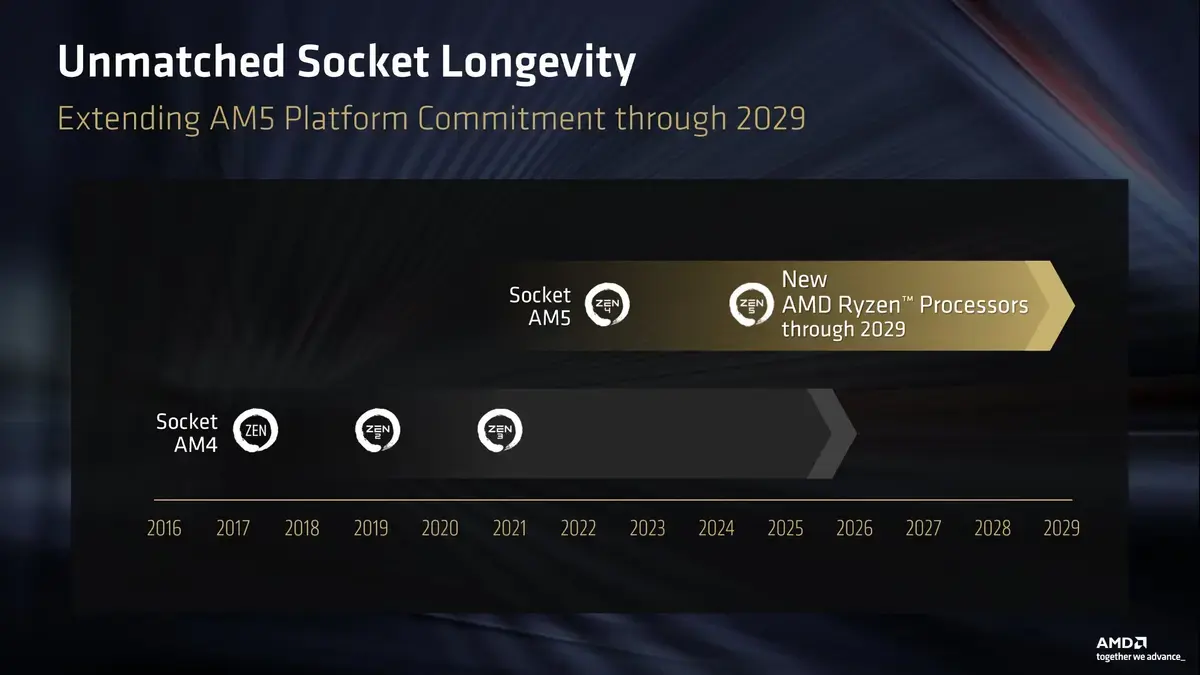
Enhanced Architecture and Advanced Technologies Are Being Introduced
A dual-CCD Zen 6 chip could potentially deliver a significant performance leap, pushing multi-threaded scores in Cinebench closer to 20,000 points. AMD’s Zen 6 architecture is also expected to benefit from clock speed gains through the N2P node. Additionally, the next-generation chips will feature an enhancement in 3D V-Cache technology. Two Zen 6 CCDs could distribute up to 288 MB of cache, matching the 288 MB cache count over two compute tiles on Intel’s bLLC CPUs.
It is already known that AMD has been dispatching samples of its next-generation Ryzen “Zen 6” CPUs to its partners. These chips will be supported on existing AM5 platforms, and a new wave of AM5 parts offering improved functionality, including CUDIMM DDR5 support, is also expected. This ensures that users can continue to utilize their current AM5 motherboards with the upcoming generation of processors.
Release Timeline and Market Expectations Are Taking Shape
Olympic Ridge is slated for a 2027 release, a timeframe that aligns with the launch of Intel’s Nova Lake-S. While these new CPUs promise to make the consumer market more intriguing, rising prices for memory and other components might hinder many users from upgrading. Although next-generation processor technologies are exciting, accessibility and pricing will remain critical factors in reaching a broad audience.
What are your thoughts on AMD’s new Zen 6 architecture and its performance expectations? Are you excited about these potential advancements, or are you holding out for Intel’s Nova Lake-S processors? Share your comments below!
Your comment has been submitted,
it will be published after approval.