
AMD Announces Ray Tracing Boosting Technology


AMD has announced its new technology, Dense Geometry Format (DGF), coming to future graphics cards. This technology aims to improve performance, particularly in graphics-intensive tasks like ray tracing and animation.
Graphics cards typically have to manage large amounts of data when processing animations and geometry within scenes. DGF stores this data in smaller, more compressed blocks. This allows the graphics card to both use less memory and process more data simultaneously.
Ray tracing performance increases with DGF
DGF, which offers a significant advantage in ray tracing, reduces the load on the graphics card during scene recalculation. This results in a smoother and faster experience in games or 3D applications. A similar benefit exists for animation: only necessary updates are made without having to re-render the entire scene every frame.
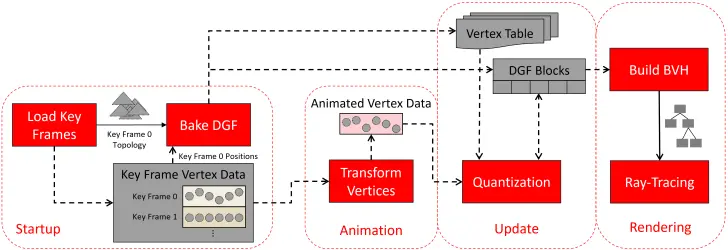
AMD currently handles these operations with software-based solutions. However, it is stated that next-generation RDNA 5-based UDNA graphics cards will utilize dedicated hardware units for this task. This translates to higher performance for gamers and content creators.
The company emphasizes that DGF alone won’t provide the full performance boost, but it will contribute to the more efficient operation of next-generation graphics cards. Users are expected to feel this difference, especially in games that support ray tracing and in intensive animation scenes.
Your comment has been submitted,
it will be published after approval.