
AMD Confirms Zen 6 Ryzen Processors Olympic Ridge and Medusa


AMD has officially confirmed the development of its next-generation Zen 6-based Ryzen processors, marking a significant evolution in its computing roadmap. Revealed through the company’s official technical portal, the upcoming lineup includes the Olympic Ridge and Medusa1 families for desktop users, alongside the Medusa1 and Medusa2 architectures for the mobile platform. Scheduled for an anticipated debut at CES in early 2027, these processors will leverage the AM5 and FP10 platforms to challenge Intel’s Nova Lake series. This strategic expansion aims to redefine high-performance computing by integrating advanced architectural improvements designed to meet the growing demands of modern software and gaming applications.
- AMD plans to launch the Zen 6-based Olympic Ridge and Medusa1 processors for desktop systems in early 2027.
- The mobile segment will utilize the FP10 platform for both Medusa1 and Medusa2 architectures.
- New processors are engineered to provide direct competition to Intel’s upcoming Nova Lake and Core Ultra 400 series.
- Desktop variants will support the current AM5 socket architecture to ensure long-term platform compatibility.
Desktop Computing Performance Increases With Olympic Ridge
The Olympic Ridge family serves as the successor to the current Ryzen 9000 series, specifically targeting the high-performance desktop segment. These chips are designed to provide superior clock speeds and expanded 3D V-Cache capabilities, which are essential for competitive gaming and professional workflows. 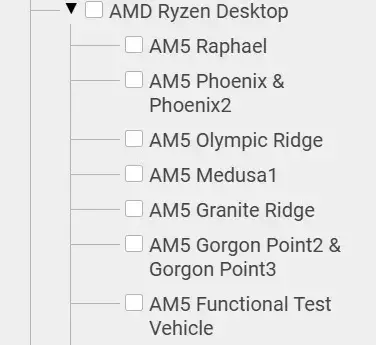
Technical specifications indicate that these processors will scale up to 24 cores, utilizing a design that hosts up to 12 Zen 6 cores per CCD. With a TDP range spanning from 65 to 170 Watts, AMD aims to maintain an optimal balance between energy efficiency and raw processing power. By maintaining compatibility with the AM5 socket, the company ensures that users can transition to this new technology without replacing their entire motherboard infrastructure.
Medusa Series Refines APU Integration Capabilities
Complementing the Olympic Ridge lineup, the Medusa1 series is positioned as a sophisticated update to the APU category. Serving as the natural evolution of the Ryzen 8000G series, these processors combine the efficiency of the Zen 6 architecture with upgraded integrated graphics. 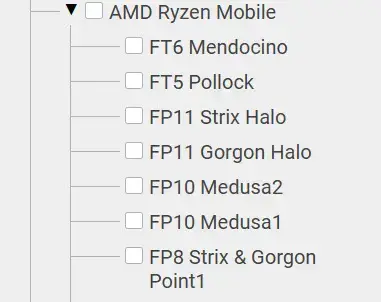
This design allows users to achieve high-fidelity visual performance without the immediate necessity for a dedicated graphics card. By streamlining the internal layout, the Medusa1 series offers a more fluid experience for general computing tasks and entry-level gaming, further cementing AMD’s dominance in the integrated graphics market.
Mobile Platforms Are Transitioning to the Medusa Architecture
AMD’s strategy for the mobile market centers on the versatility of the FP10 platform, which will host both the Medusa1 and Medusa2 chips. The Medusa1 series is tailored for high-performance laptops, whereas the Medusa2 variant focuses on power-efficient designs for portable devices.
The Medusa1 series will feature up to 22 cores, representing a substantial performance jump over the existing Strix and Gorgon series. Furthermore, the integration of RDNA 4m graphics technology in specific models will significantly enhance the visual processing capabilities of future laptop generations. These advancements ensure that mobile users receive a desktop-class experience in a portable form factor.
How do you feel about the upcoming shift to the Zen 6 architecture and the potential for a 24-core desktop processor? We invite you to join the discussion in the comments section and share your thoughts on how these hardware changes might impact your next PC upgrade.
Your comment has been submitted,
it will be published after approval.