
Apple M7 Chip Strategy Shifts to Dominate Artificial Intelligence

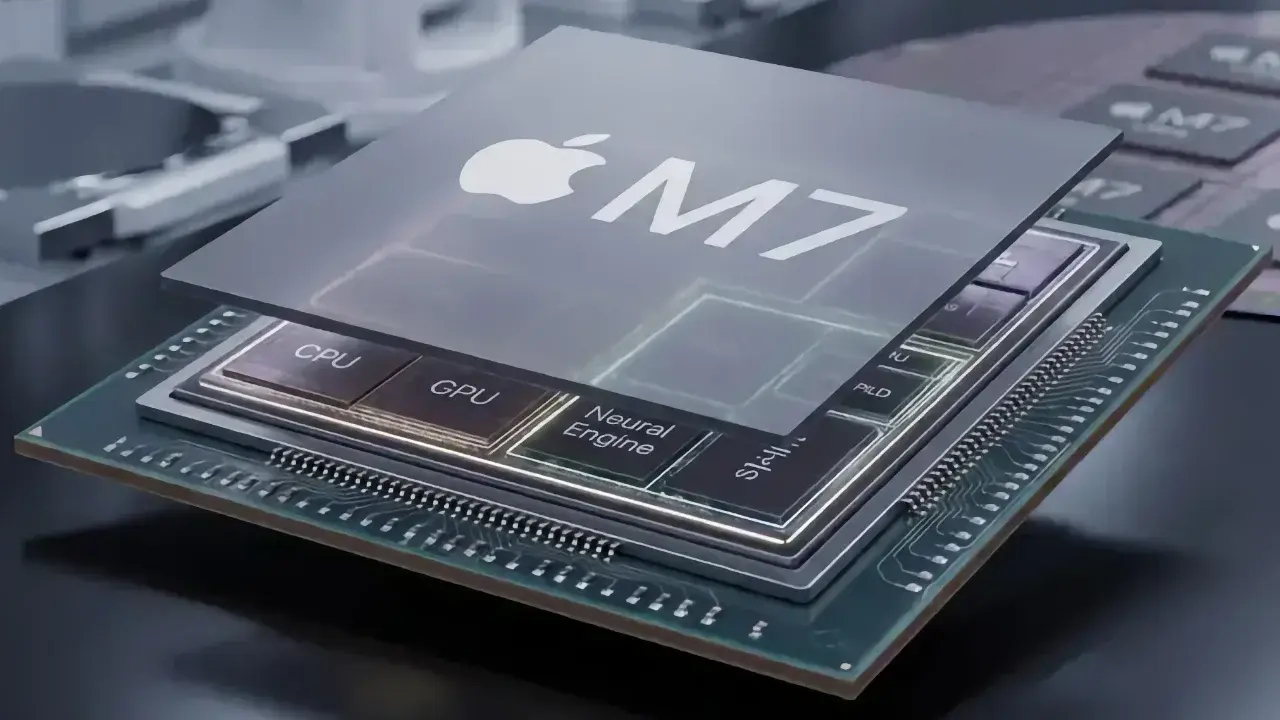
In a major strategic pivot aimed at maintaining its competitive edge in the rapidly evolving artificial intelligence landscape, Apple has officially overhauled its silicon development roadmap. The tech giant has decided to bypass the Pro and Max variants of the M6 series, opting instead to finalize the design of the Apple M7 chip just six months after its predecessor. This accelerated development cycle, which targets a release in the first half of 2027, signifies Apple’s commitment to delivering unparalleled on-device AI performance for future MacBook Pro and iPad Pro models as the industry races toward more sophisticated machine learning integration.
- Apple has officially opted to skip the M6 series high-end variants to prioritize the deployment of the M7 architecture.
- The M7 chip design provides a significantly higher unified memory bandwidth to optimize complex artificial intelligence workloads.
- The upcoming M7 Ultra processor aims to achieve performance levels competitive with specialized AI hardware such as the Nvidia Blackwell series.
Apple Prioritizes Artificial Intelligence in its New Chip Strategy
The global surge in artificial intelligence adoption is forcing hardware manufacturers to rethink their traditional product lifecycles. By breaking away from its standard release schedule, Apple is positioning its silicon to handle intensive AI tasks that were previously reserved for cloud-based servers. The M7 series represents a critical milestone in this transition, offering a 56% increase in unified memory bandwidth compared to the M5 generation, reaching 240GB/s. This technical improvement ensures that users experience significantly smoother performance when running localized AI models.
The M7 Ultra processor reaches a capacity that will revolutionize artificial intelligence performance.
Release Schedule Targets Significant Upgrades Through 2028
According to recent industry reports from Mark Gurman, the rollout of the M7 family will follow a phased approach. The standard M7 models are expected to debut in the first half of 2027, followed by the Pro and Max versions later that same year. By 2028, Apple plans to introduce the M7 Ultra, which will likely be housed in a redesigned Mac Studio chassis capable of supporting up to 1.5TB of unified memory.
Beyond the current M7 development, Apple is already looking toward the future with its M8 series. The company is reportedly preparing to transition from the current 2nm production process to 1.4nm technology in the coming years. This aggressive roadmap highlights Apple’s intention to dominate the hardware sector by consistently pushing the boundaries of miniaturization and computational efficiency.
Apple’s accelerated chip development speed signifies more frequent hardware updates for consumers.
This shift toward a more rapid innovation cycle brings both benefits and challenges. While professional users and AI developers will gain access to exponentially more powerful tools, the increased complexity and production costs associated with these advanced chips may lead to higher device prices. Ultimately, this significant transformation within the Apple ecosystem is actively shaping the future of high-performance computing.
How do you feel about the massive leap in artificial intelligence performance that Apple plans to achieve with the M7 series? Do you believe this accelerated update cycle will encourage users to upgrade their devices more frequently? Please share your thoughts with us in the comments section below.
Your comment has been submitted,
it will be published after approval.