
Apple Plans to Utilize Intel 18A Process for iPhone 18


In a strategic move to mitigate supply chain vulnerabilities, Apple is reportedly planning to incorporate Intel’s 18A production technology for the base models of the iPhone 18, which is scheduled for release in the first quarter of 2027. By integrating the Intel 18A process, the tech giant aims to reduce its heavy reliance on TSMC for the manufacturing of its flagship A20 processors. This decision comes as Apple seeks to navigate the persistent supply bottlenecks caused by the surging global demand for artificial intelligence hardware, ensuring that its chip procurement remains resilient against potential capacity constraints in the semiconductor industry.
- Apple intends to manufacture A20 processors for the standard iPhone 18 models using Intel’s 18A production node.
- The growing demand for AI chips is straining TSMC’s manufacturing capacity and forcing Apple to seek alternative suppliers.
- Intel has achieved an 18A production yield exceeding 55 percent, meeting the reliability thresholds required by Apple.
Apple Expands Its Semiconductor Supply Diversity Strategy
For years, Apple has maintained a near-exclusive relationship with TSMC, but the complexities of the modern chip market have necessitated a broader approach. Following a similar strategy used in its camera sensor procurement—where the company diversified its dependence by partnering with Samsung alongside Sony—Apple is now diversifying its processor supply chain. Industry analysts suggest that this shift is primarily defensive; it is designed to prevent production stoppages during times of regional or logistical instability. 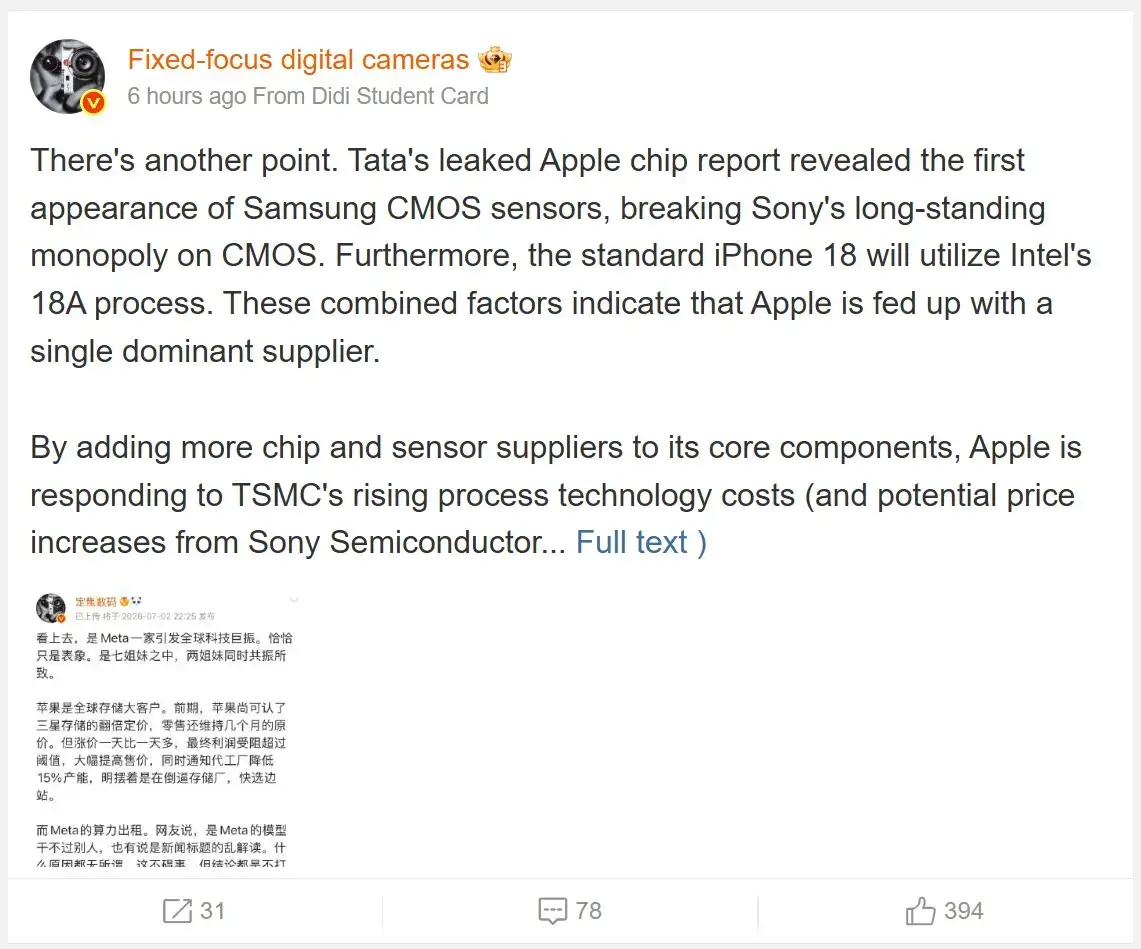
Apple’s move to diversify beyond TSMC is fundamentally altering the power dynamics within the global semiconductor industry.
AI Demand Accelerates the Transition to 1.4nm Technologies
The relentless appetite for artificial intelligence silicon is pushing existing production capacities to their absolute limits. Apple is not only focusing on current 2nm innovations but is also aggressively planning for the 1.4nm generation within the next two years. In this roadmap, Intel’s advanced 18A-P nodes and Samsung’s upcoming 1.4nm commercial production, expected by 2029, represent critical alternatives to the existing TSMC-dominant ecosystem. While TSMC remains a leader, its overwhelming market share has become an inherent risk factor for its largest clients.
Production Models Will Differ Across Future Product Lines
It is expected that the bifurcation of manufacturing will define the iPhone 18 lineup. While standard models are slated for the Intel 18A process, the high-performance A20 Pro chips will likely remain under the purview of TSMC’s advanced lines. Nevertheless, these developments confirm that Apple is transitioning toward a multi-foundry architecture. As Intel continues to demonstrate improvements in yield and operational efficiency, Cupertino is successfully safeguarding its long-term hardware independence.
This radical change in the company’s manufacturing strategy will directly influence the competitive landscape of the smartphone market for years to come.
How do you view Apple’s decision to move a portion of its chip production to Intel? Do you believe Intel can consistently meet Apple’s stringent quality standards for the iPhone 18? Please share your thoughts and predictions in the comments section below.
Your comment has been submitted,
it will be published after approval.