
Boosting MacBook AI Performance by Connecting an iPhone 17

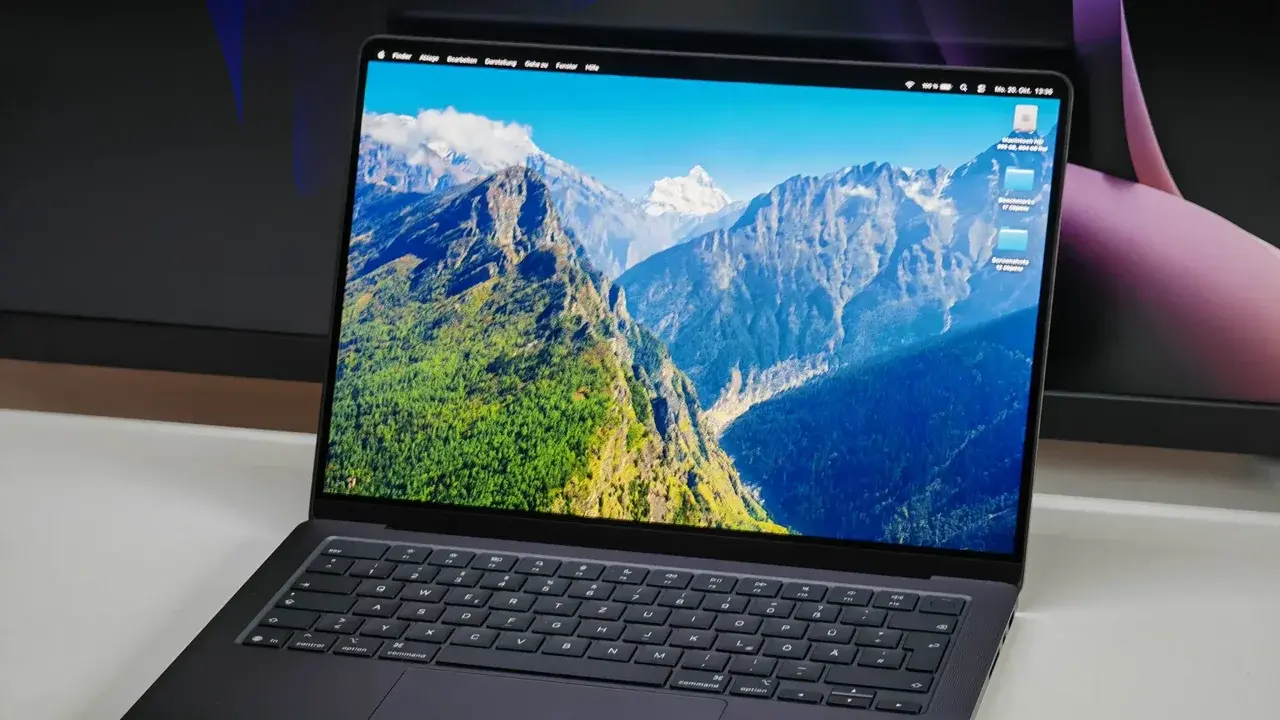
A Reddit user has discovered a groundbreaking method to boost the performance of local artificial intelligence models on a MacBook Pro by utilizing an iPhone 17 Pro Max as a secondary GPU. By connecting the devices via USB-C, the developer leveraged the A19 Pro chip to handle specific layers of the Qwen3.8-27B model, effectively bypassing memory bottlenecks. This innovative setup allows the MacBook’s 24GB unified memory to offload intensive tasks, resulting in a prefill performance improvement of up to 44 percent. This experiment highlights how cross-device hardware orchestration can optimize local AI workloads.
- The custom software offloads the initial 40 layers of AI token processing to the iPhone 17 Pro Max.
- Performance metrics indicate a 44 percent speed increase for 16K context windows.
- The system utilizes the iPhone’s Neural Engine to accelerate the compilation of historical context data.
- Current limitations restrict the performance gains to prefill processes, while standard generation remains handled by the MacBook.
Workload Distribution Between Devices Improves Processing
The developer, known as u/StayLameBro, implemented a unique strategy to overcome the 24GB RAM limitation inherent in modern MacBook Pro models. By distributing the computational burden, the MacBook processes the first 40 layers of each 256-token group before transmitting the data to the iPhone. The iPhone 17 Pro Max then employs its dedicated GPU to compute layers 41 through 64. This collaborative approach renders the prefill process approximately 2.4 times faster than when the MacBook operates in isolation.
Furthermore, the iPhone’s Neural Engine contributes by managing older context data, which significantly reduces total latency. For instance, the time required to process a 140,000-token context length dropped from 279 milliseconds to 176 milliseconds. This optimization demonstrates the untapped potential of combining mobile hardware with desktop environments to achieve more efficient AI training and inference cycles.
Significant Performance Gains Are Recorded Under Stress
Rigorous testing confirmed the efficacy of this hybrid architecture across various context windows. When handling a 2,000-token file, the speed improvements were consistent and measurable. For an 8K context window, the processing speed increased from 132 tokens per second to 177 tokens per second, marking a 35 percent rise. The most dramatic result occurred at 16K, where speeds surged from 109 to 157 tokens per second, representing a 44 percent improvement.
Even at a 32K context window, the system demonstrated a 29 percent gain, moving from 101 to 130 tokens per second. However, the system is not without its technical constraints. The acceleration is specifically targeted at the prefill phase; consequently, the iPhone provides no tangible benefit for standard text generation speeds below 64K. The MacBook remains solely responsible for these latter stages of the operation.
Future Hardware May Expand These Capabilities
Industry experts anticipate that upcoming iterations, such as the iPhone 18 Pro equipped with the A20 Pro chip, will offer even greater efficiency. The potential inclusion of dual 16-core Neural Engines could provide a substantial increase in throughput compared to the current 7-core GPU configuration. The open-source software, titled “backburner” and available on GitHub, serves as a proof-of-concept for enthusiasts seeking to maximize their local hardware resources.
As local AI development continues to evolve, do you believe that smartphones will eventually become standard external accelerators for personal computers? Share your thoughts on this cross-platform hardware integration in the comments section below.
Your comment has been submitted,
it will be published after approval.