
Control Local AI Models on Your Mac via iPhone

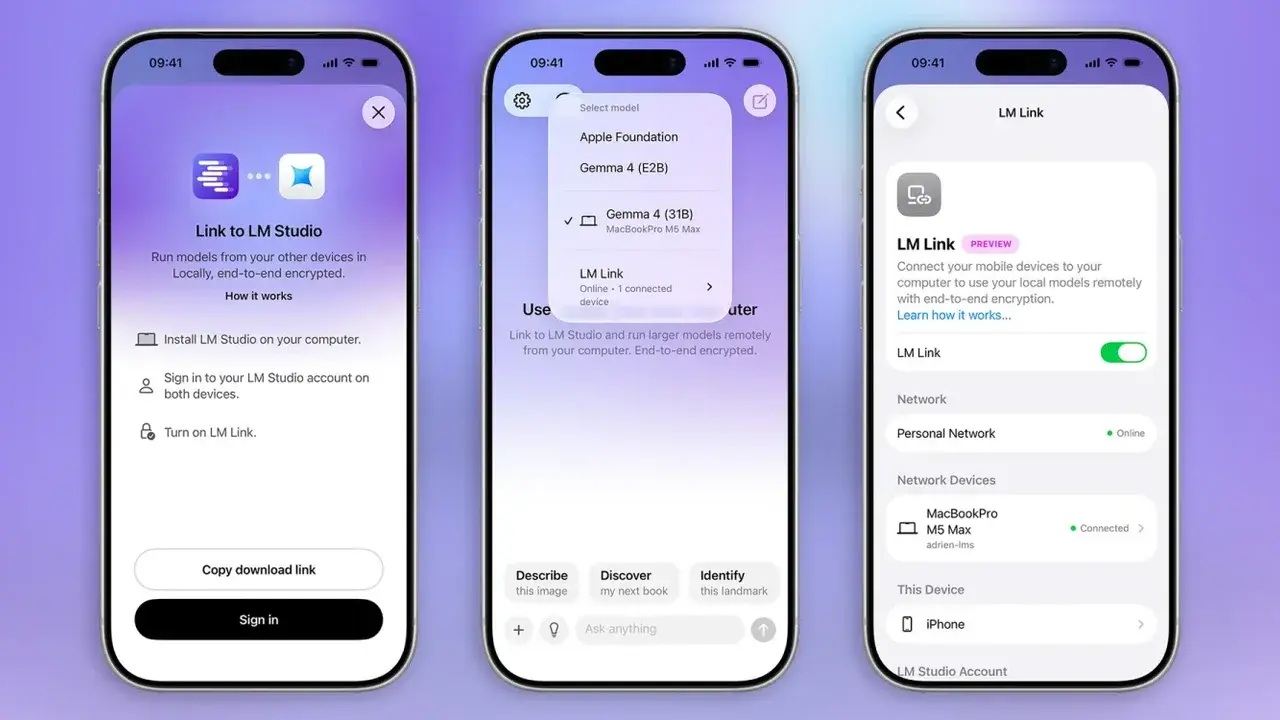
LM Studio has officially launched a new feature called LM Link, enabling users to interact with large language models (LLMs) running on their Mac computers directly from their iPhones. Released as part of a significant update to both the Mac application and the Locally AI iOS companion app, this integration facilitates a seamless connection between desktop processing power and mobile accessibility. By establishing an end-to-end encrypted bridge, the platform ensures that users can leverage the advanced capabilities of their Mac-based local AI models while on the move, without compromising data privacy or exposing their hardware to the public internet.
- LM Link utilizes Tailscale mesh VPN infrastructure to establish secure, encrypted communication between macOS and iOS devices.
- The feature supports all locally hosted models on the Mac, including compatibility with advanced architectures like the Apple Intelligence base model.
- Users must log into an LM Studio account on both devices to initiate and maintain the secure cross-platform connection.
This technological advancement effectively turns any powerful Mac into a private, portable artificial intelligence server for mobile users.
LM Link Connects Desktop Power to Mobile Devices
The core objective of LM Studio is to simplify the management and deployment of local AI models, which often require significant hardware resources. With the introduction of LM Link, users are no longer confined to their desks to run complex LLMs. The system operates independently of existing network configurations, ensuring that personal VPN setups remain undisturbed while the AI bridge functions in the background.
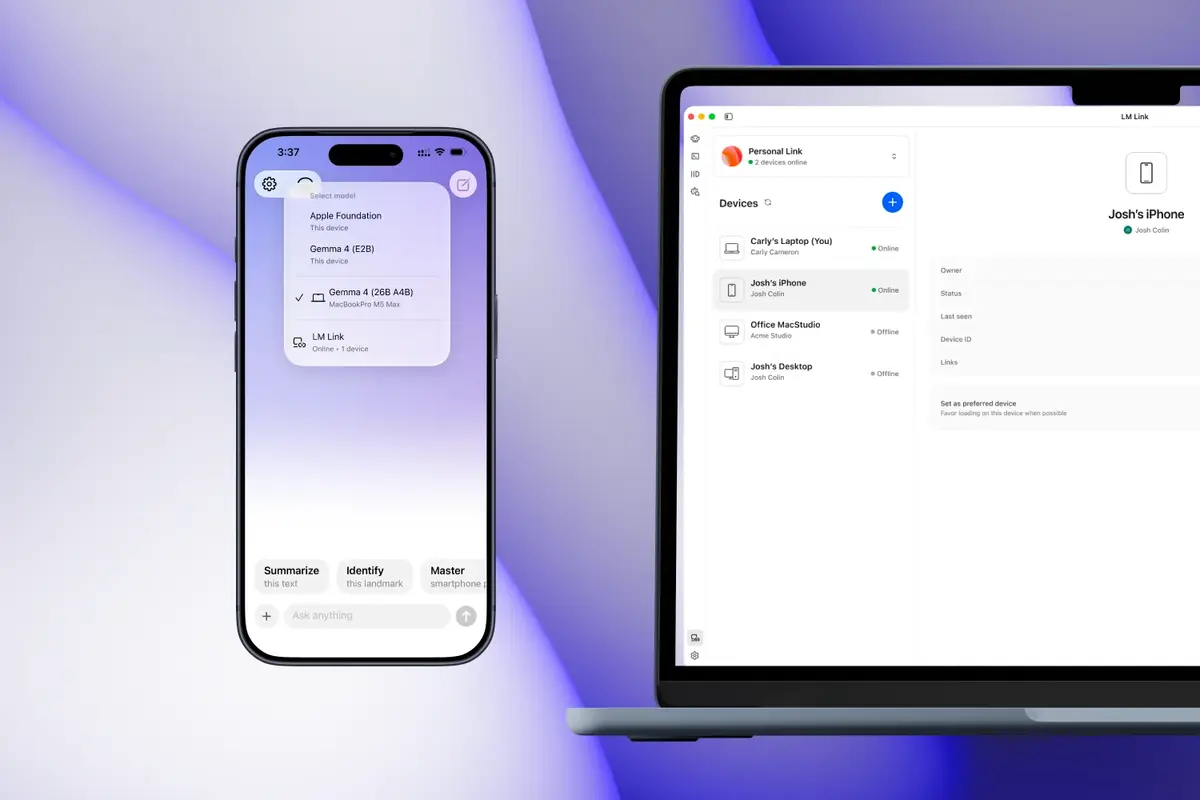
By leveraging the Mac’s local processing power, the iPhone acts as a remote terminal that sends instructions and receives responses from the desktop machine. This setup is particularly beneficial for users who want to experiment with resource-heavy models, such as the 12-billion-parameter Gemma 4, without the battery and thermal constraints typically associated with running such software directly on a mobile device.
Technical Challenges Influence Current Performance
Although the initial release of LM Link is currently in a preview phase, early testing indicates a high level of operational efficiency. Developers have acknowledged that maintaining a constant connection when the application is moved to the background can occasionally prove challenging due to the inherent nature of mobile operating system protocols. The team is currently dedicating resources to refining these connection stability issues and reducing latency to ensure a fluid user experience.
The integration is currently free to use as a preview, with plans to introduce tiered subscription models in the future.
As the landscape of local AI continues to evolve, tools like LM Link provide a practical bridge between high-performance desktop computing and the ubiquitous reach of smartphones. By focusing on privacy-first infrastructure, the developers aim to provide a reliable environment for those who prioritize data sovereignty over cloud-based alternatives.
We are eager to hear your thoughts on this cross-platform development; how do you envision using your Mac’s processing power while away from your desk, and do you believe local AI will eventually replace cloud-based services?
Your comment has been submitted,
it will be published after approval.