
First iPhone Ultra Test Results Reveal New Foldable Design

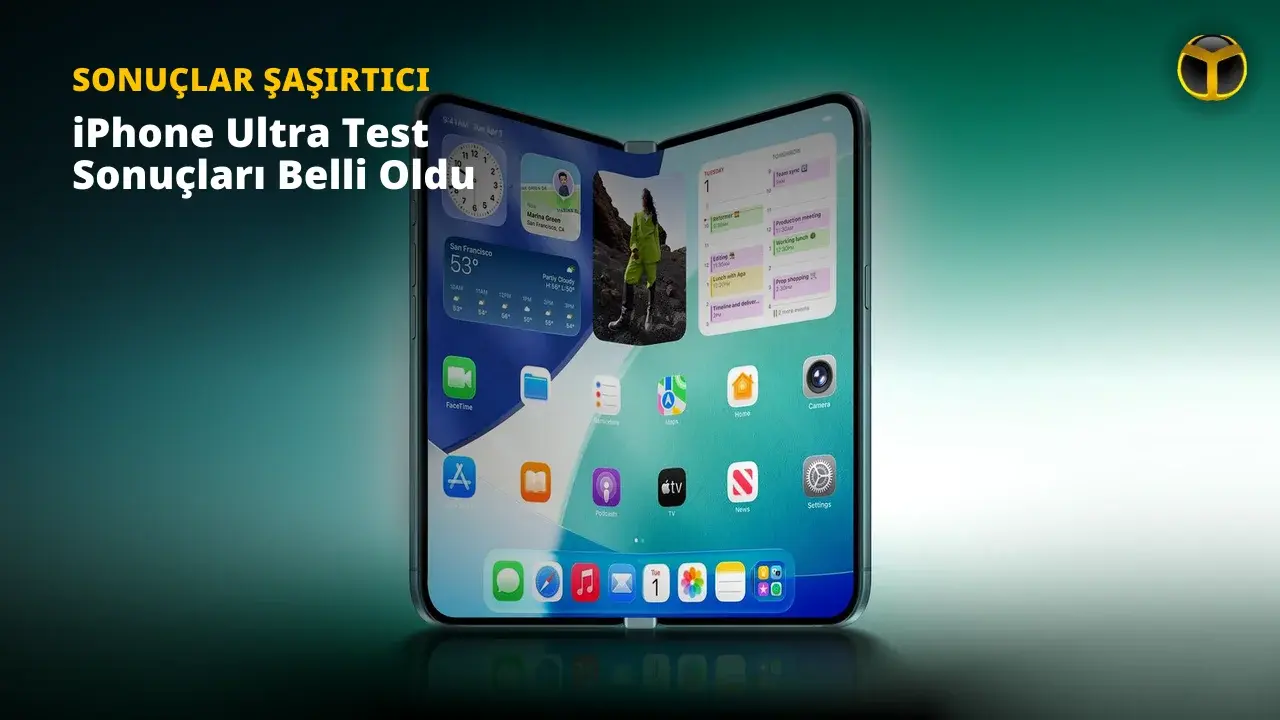
Apple’s highly anticipated entry into the foldable smartphone market, the iPhone Ultra, has officially entered its preliminary testing phase, according to insights shared by Bloomberg’s Mark Gurman. The device, which aims to bridge the gap between a traditional smartphone and a portable tablet, has received positive initial feedback regarding its build quality and hinge durability. Reports suggest that testers are particularly impressed by the ergonomics of the device when held, as well as its overall portability. This major development indicates that Apple is preparing to challenge its competitors in the foldable category with a premium, high-performance handset scheduled for an unveiling around September 9.
- The iPhone Ultra will feature a 5.5-inch external display and an expansive 7.8-inch internal folding screen.
- Apple has opted for a side-mounted Touch ID sensor to maintain an ultra-thin 4.5-millimeter profile.
- The device will launch with a starting price of 2,000 dollars and could reach 2,500 dollars based on storage.
- The camera system will utilize a 48-megapixel primary sensor but will lack a dedicated telephoto lens.
The transition to a foldable form factor represents Apple’s most radical design shift in over a decade.
Internal Displays Enhance User Productivity
The core philosophy behind the iPhone Ultra is the maximization of screen real estate. When fully opened, the 7.8-inch display is designed to mirror the functional efficiency of an iPad. This layout allows for complex multitasking and advanced application management, which is expected to appeal to power users. While the absence of a telephoto lens in the camera module has been noted by some critics, the massive internal screen functions exceptionally well as a viewfinder, providing unparalleled detail during photo and video composition.
Hardware Decisions Influence Physical Design
To achieve a remarkably slim 4.5-millimeter thickness, Apple has introduced significant hardware trade-offs. The most notable change is the omission of Face ID in favor of a Touch ID sensor integrated directly into the side power button. This decision simplifies the internal component stack, allowing for a more compact chassis without sacrificing security. The hinge mechanism has also been engineered for longevity, with early reports suggesting it maintains structural integrity under rigorous daily usage scenarios.
Premium pricing strategies position the device as a luxury entry in the smartphone market.
Market Positioning Impacts Consumer Expectations
With an expected starting price of 2,000 dollars, the iPhone Ultra is clearly aimed at the ultra-premium segment. Industry analysts are closely watching whether this price point will deter mainstream consumers or if the brand loyalty of the Apple ecosystem will drive strong adoption rates. The device is expected to debut alongside the iPhone 18 Pro and Pro Max, signaling that Apple intends to keep this foldable model as a specialized offering within its broader product lineup.
As the tech industry waits for the official September event, questions remain regarding how well the software will adapt to this new hybrid form factor. If Apple manages to optimize its proprietary interface for this folding display, it could set a new standard for mobile productivity. The success of this device will ultimately depend on whether the consumer experience justifies the significant cost of entry.
We would love to hear your thoughts on this bold move by Apple; do you believe a foldable iPhone is the future of mobile technology, or is the high price point a deal-breaker for you?
Your comment has been submitted,
it will be published after approval.