
Google Project Suncatcher Satellite Runs Gemma 4 AI in Orbit

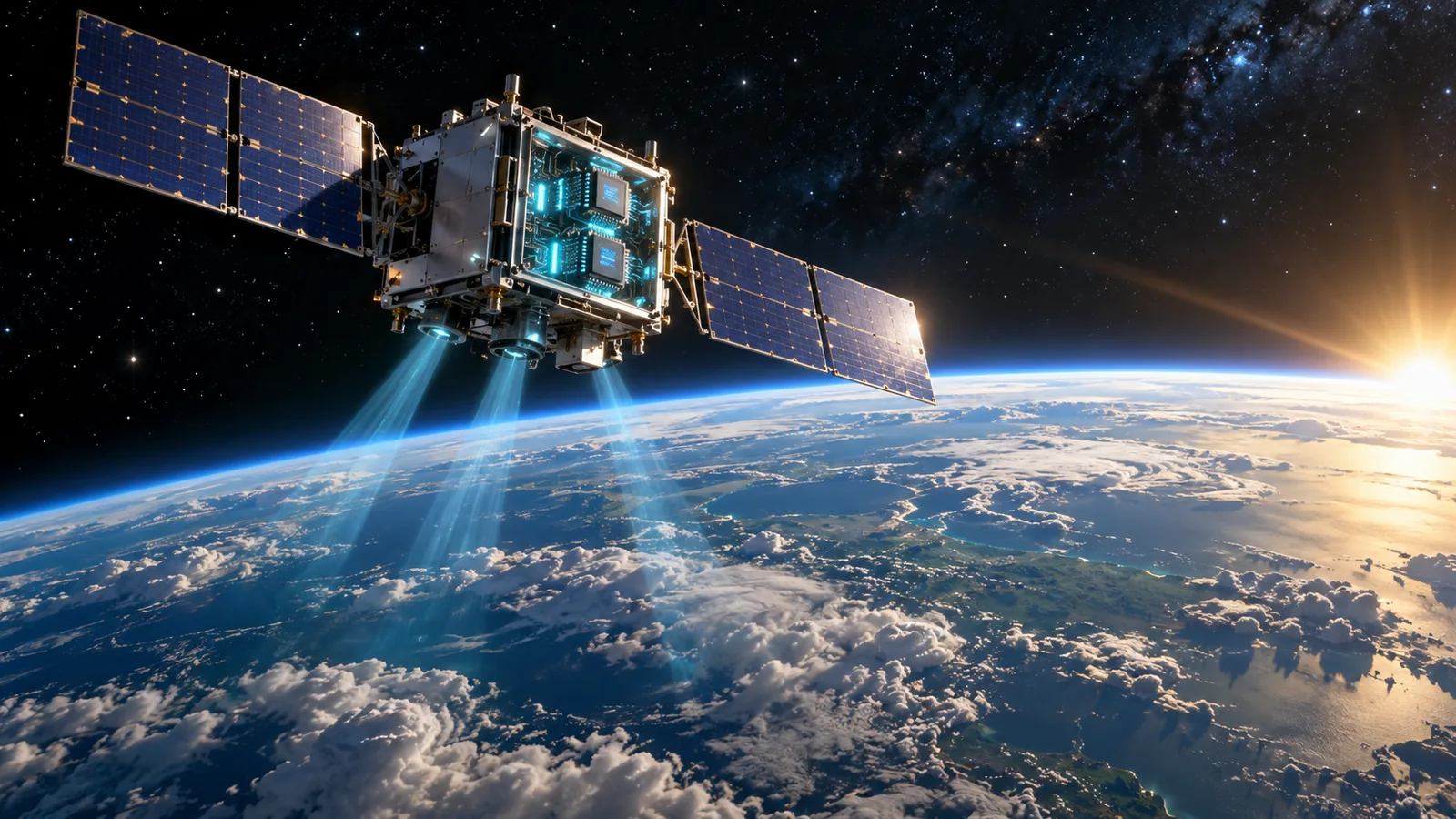
Google’s Project Suncatcher prototype satellite has sent back its first AI response from orbit. On October 30, 2026, Google said a data center class Tensor Processing Unit (TPU) on the satellite ran its open Gemma 4 model and returned a short haiku to a ground station, the first AI output Google has received from a TPU in space.
The satellite launched on October 1 aboard SpaceX’s Transporter-18 rideshare mission and was built in partnership with Planet. After about three weeks of commissioning, the team powered up the host computer and TPU trays, ran early machine learning tests and this week reached what Google calls its “Hello World” milestone.
What Project Suncatcher’s First Response Was
According to Google’s announcement, engineers uplinked a prompt asking Gemma 4 to write a haiku about being in space. As the satellite passed over Svalbard, Norway, it downlinked this reply:
Blue marble below
Data streams in silent grace
Starlight feeds my core.
Google then tested space-themed limericks and telemetry prompts in which the model reported the technical status of the payload. A Google spokesperson told TechCrunch that the satellite is operating nominally.
A ‘hello world’ milestone for Project Suncatcher 🚀
After launching our prototype satellite a few weeks ago, we’ve now successfully sent a command up to orbit, booted up the TPU, ran the prompt, and received our first complete response back on earth – a haiku!
— Sundar Pichai (@sundarpichai) October 30, 2026
Four TPUs, One at a Time
The spacecraft carries four Google TPUs and generates up to 1 kW of electricity. Power is the main constraint: TechCrunch reports that only one TPU can run at a time, and only for about 20 minutes per session, which also complicates scheduling contact with ground stations.
The next phase of testing will look at how the chips handle thermal stress and radiation. Radiation can cause “bit flips” that silently corrupt data in memory. In ground tests described in Google’s earlier research, Trillium (v6e) TPUs showed memory irregularities only after about 2 kilorads of exposure, close to three times the roughly 750 rads expected over a shielded five-year mission, with no hard failures up to 15 kilorads. Real orbital data will now show whether those lab results hold.
Why Google Wants AI Data Centers in Space
Project Suncatcher is a long-term research moonshot that Google first outlined in 2025, as we reported when Google revealed plans for a data center in space. The idea is that solar panels in the right orbit receive near-constant sunlight, which could one day power clusters of closely flying satellites that run large AI inference jobs without drawing on strained power grids on Earth.
That pressure is real. Alphabet, Meta, Microsoft, Amazon and Oracle have committed well over $3 trillion to AI infrastructure in the coming years, and the boom is already pushing up chip and memory costs, a trend we explained in why RAM is so expensive right now. Google itself keeps expanding TPU capacity, including a reported large TPU order with Intel for 2028.
What Comes Next in 2027
If the TPUs keep working reliably, Google plans to launch two more satellites in 2027. Google says the pair will test whether AI computations can be distributed across multiple satellites, while TechCrunch reports they will also support higher power generation and demonstrate inter-satellite optical links.
For now, Project Suncatcher remains an experiment, not a product. But a working Gemma 4 model on orbiting TPU hardware is the first concrete proof that Google’s space computing plan can move beyond the lab.
Your comment has been submitted,
it will be published after approval.