
Google Research Shows Artificial Intelligence Does Not Fully Automate Jobs

A recent study conducted by Google researchers has shed new light on the integration of artificial intelligence within the modern workplace, revealing that AI is not currently poised to replace human labor entirely. By analyzing extensive interaction data from the Gemini model, the research team at Google ATLAS investigated how employees utilize advanced machine learning tools to complete their daily professional responsibilities. The findings suggest that instead of executing a complete takeover of job functions, artificial intelligence acts primarily as a supportive assistant that enhances productivity. This comprehensive study highlights that the widespread fear of total automation is not supported by current operational data.
- Only 21 percent of analyzed job tasks met the minimum threshold for being classified as significant AI-supported interactions.
- Nearly 30 percent of professional occupations showed zero meaningful usage of artificial intelligence tools for their core responsibilities.
- Cognitive tasks that require analytical thinking account for 86 percent of all interactions with the Gemini model.
AI Integration Remains Limited Across Most Industries
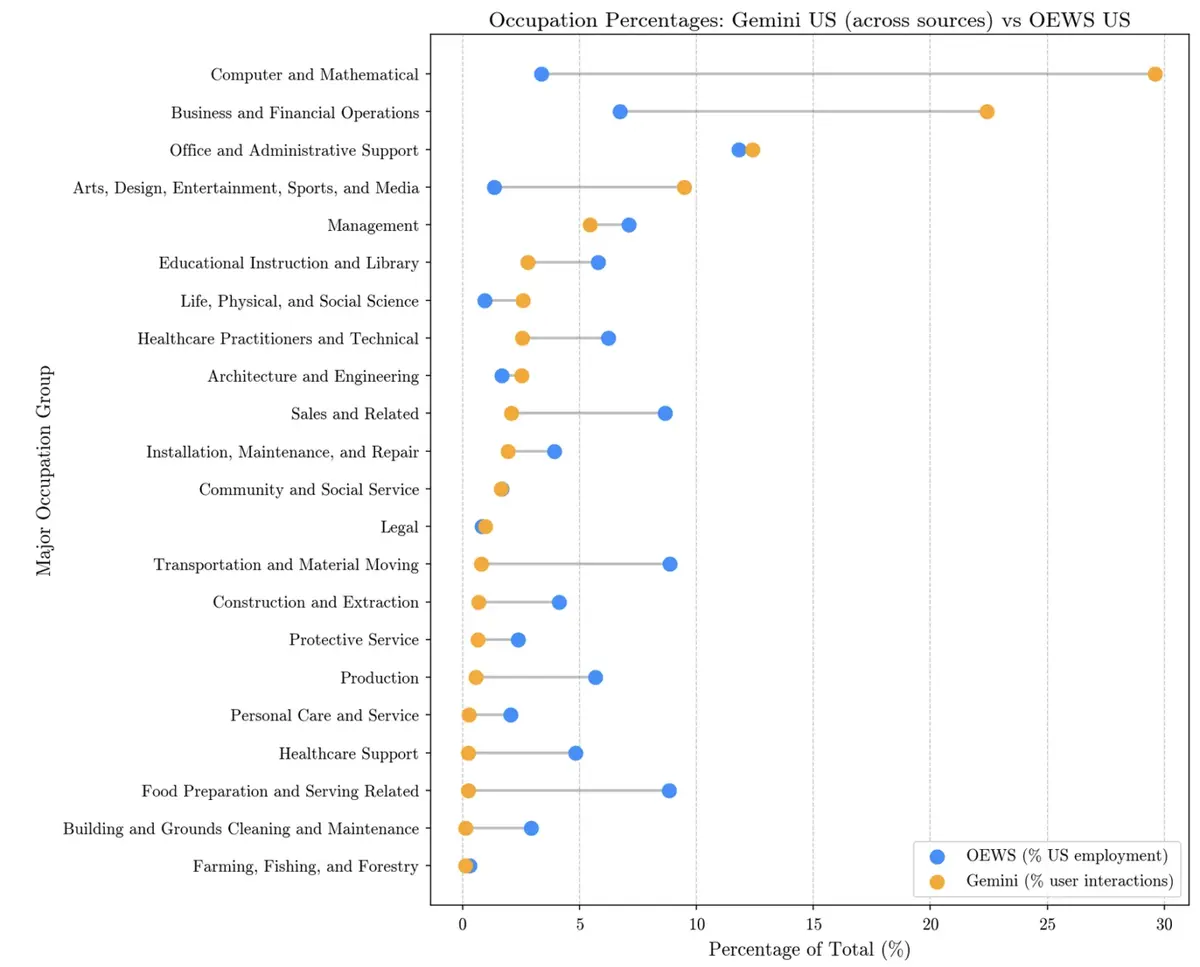
The Google ATLAS research team evaluated thousands of job duties documented in the O*NET database to determine the depth of Gemini integration. The data indicates that the adoption of artificial intelligence remains relatively shallow across the vast majority of sectors. In fact, in roughly 29 percent of all occupations surveyed, researchers found that not a single job task reached a meaningful threshold for AI utilization. This suggests that a significant portion of the workforce remains largely untouched by the ongoing automation revolution.
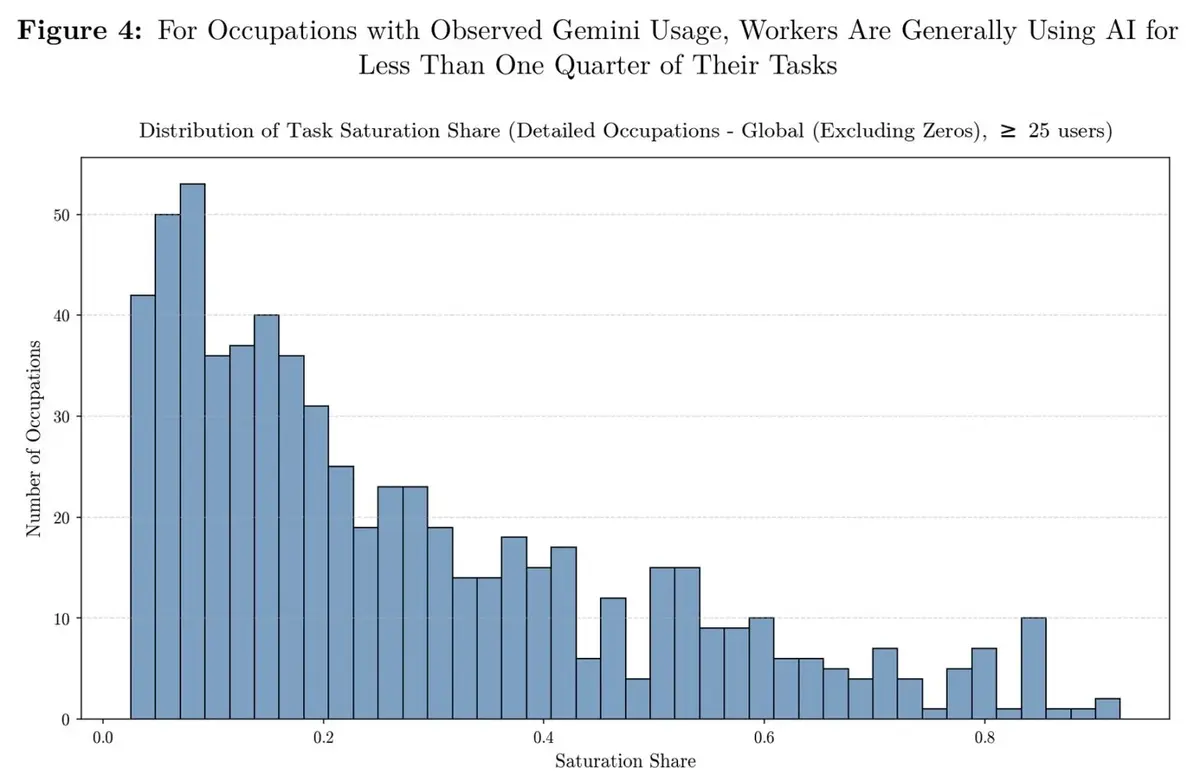
Furthermore, in another 30 percent of professional roles, less than one-quarter of the required tasks are performed with assistance from Gemini. These statistics provide strong evidence that human employees continue to handle the overwhelming majority of their duties independently. Even in high-tech environments, the role of the machine is often supplemental rather than foundational.
Only 3 percent of occupations rely on Gemini for more than 75 percent of their daily operational tasks.
Groups such as software quality assurance analysts, human resources professionals, and document management specialists represent the small minority that frequently integrates these tools into their workflows. These specialists leverage the technology to streamline complex, repetitive processes while maintaining human oversight over the final output.
Cognitive Tasks Dominate AI Interaction Patterns
The researchers also performed a detailed examination of the types of requests users submit to the Gemini platform. The analysis revealed that approximately 86 percent of all AI interactions are rooted in cognitive tasks that necessitate critical thinking and data synthesis. This demonstrates that employees generally turn to AI when they need to process information or generate logical frameworks rather than for manual labor.
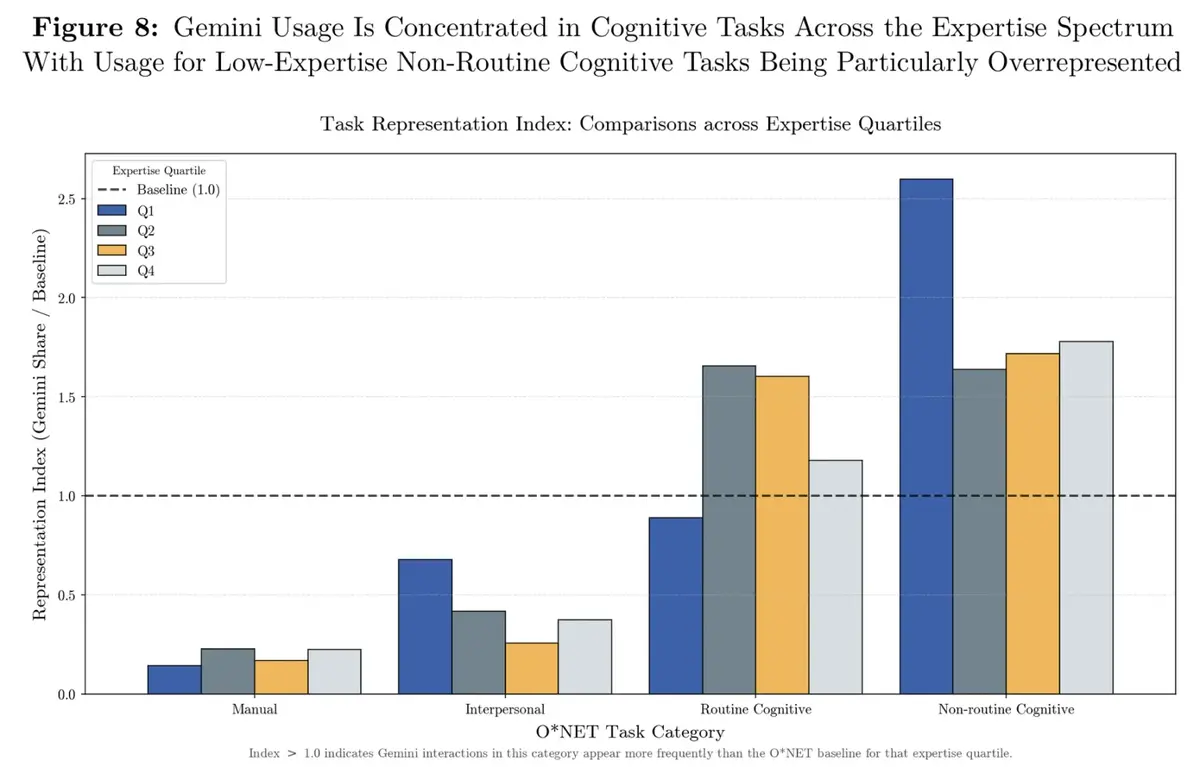
Conversely, tasks requiring complex interpersonal communication or physical labor show significantly lower rates of AI adoption compared to their prevalence in the office. It appears that artificial intelligence is currently most effective when applied to non-routine cognitive functions that require specialized knowledge but do not demand human emotional intelligence.
The future of labor may involve a persistent partnership where technology augments human capability rather than rendering it obsolete.
As AI technology continues to evolve rapidly, the landscape of the workforce will likely shift. However, current data suggests that the most successful business models will be those that foster a complementary relationship between human workers and digital systems. Whether this trend will lead to deeper integration or plateau as a specialized tool remains a primary question for industry experts.
We would love to hear your perspective on this shift in the professional landscape. Do you believe artificial intelligence will eventually become the dominant force in your specific field, or will it always remain a secondary tool for your daily tasks? Share your thoughts in the comments section below.
Your comment has been submitted,
it will be published after approval.