
Google Unveils Gboard Kurukuru: A Revolutionary Moving Keyboard Design

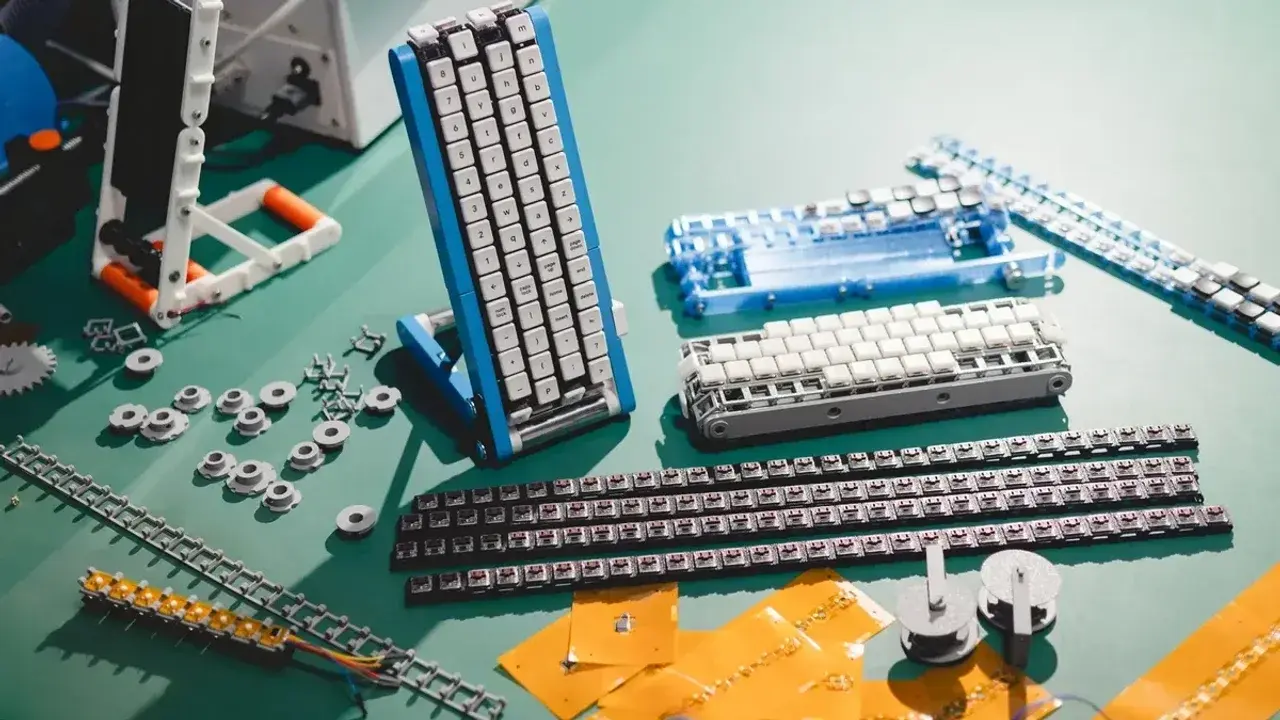
The Google Japan team has officially introduced the Gboard Kurukuru, an experimental keyboard prototype that utilizes a conveyor-belt system to position keys. Unveiled as a novel approach to hardware design, this device aims to enhance single-handed typing efficiency by bringing the keys to the user rather than requiring the user to reach across a static layout. The keyboard features a complex arrangement of 116 keys distributed across four circular loops, with each loop carrying 29 keys. This innovative Gboard Kurukuru project, while experimental in nature, demonstrates Google’s ongoing commitment to exploring unconventional human-computer interaction methods that challenge traditional peripheral ergonomics.
- The device functions through a conveyor-belt mechanism that rotates 116 keys across four circular loops to assist with single-handed operation.
- Google has released all technical documentation and CAD files under the Apache 2.0 license to allow users to construct their own units.
- This project represents the latest iteration in Google’s long-running series of experimental keyboard designs that prioritize functional hardware innovation.
The Moving Keys Mechanism Offers Unique Functionality
The primary objective behind the development of the Gboard Kurukuru is to eliminate the physical strain associated with reaching for keys during single-handed operation. By automating the movement of the key surface, the device allows for a more fluid and less physically taxing typing experience. Furthermore, the inclusion of dedicated keys for both uppercase and lowercase characters removes the necessity for a traditional Shift key, streamlining the input process into a more intuitive workflow.
The design is particularly useful in multitasking scenarios, such as typing while holding a beverage or operating a mouse with the opposite hand. For users requiring a more expansive setup, the system supports the addition of a second unit, enabling a more conventional two-handed typing experience. Despite its potential utility, Google has confirmed that there are no current plans to commercialize or mass-produce the device for the general retail market.
Open Source Files Provide Opportunities for Enthusiasts
Google has opted to make the Gboard Kurukuru an open-source project by hosting the design specifications on GitHub. By providing these resources under an Apache 2.0 license, the company empowers individuals with access to 3D printers and the necessary technical hardware to assemble their own versions of the keyboard. While the current documentation focuses primarily on the motor-driven “Moving Keys” configuration, the company has indicated that future updates will include the Bluetooth-enabled version and detailed circuit board schematics.
This initiative is the latest entry in a series of experimental projects that started in 2010. While early iterations of this series were often presented as April Fool’s Day pranks, the recent evolution of these designs reflects a shift toward serious, functional engineering. Previous entries have included wearable hat keyboards and rotary-dial input systems, proving that these experiments are increasingly grounded in viable, albeit eccentric, hardware engineering.
Technical Challenges Remain for Prospective Builders
Constructing a Gboard Kurukuru is a significant undertaking that requires a high level of technical proficiency. The complexity of the assembly, combined with the need for precise calibration of the motor components and PCB layouts, positions this project as a challenge intended for experienced hardware hobbyists and 3D printing enthusiasts. Nevertheless, the project serves as a compelling case study in accessibility and creative input design, pushing the boundaries of what is possible in modern peripheral development.
Given the complexity and the unconventional nature of this conveyor-belt design, we are curious to hear your perspective. Do you believe such a dynamic, moving keyboard could ever become a practical solution for daily computing tasks, or is it better suited as a fascinating technical experiment? Please share your thoughts in the comments section below.
Your comment has been submitted,
it will be published after approval.