
iPhone 18 Pro Facing 38 Percent Surge in Production Costs


Apple’s upcoming flagship, the iPhone 18 Pro, is currently facing a significant manufacturing challenge as production costs are projected to rise by approximately 38 percent compared to its predecessor. According to the latest industry data released by TrendForce, this sharp increase is primarily driven by the escalating cost of memory components within the global semiconductor market. As Apple prepares for its next major hardware cycle, the company must now navigate a complex financial landscape where vital hardware expenses have surged between five and seven times since the beginning of 2025, threatening to disrupt established pricing models for the tech giant.
- The iPhone 18 Pro faces a 38 percent increase in production costs due to rising global memory prices.
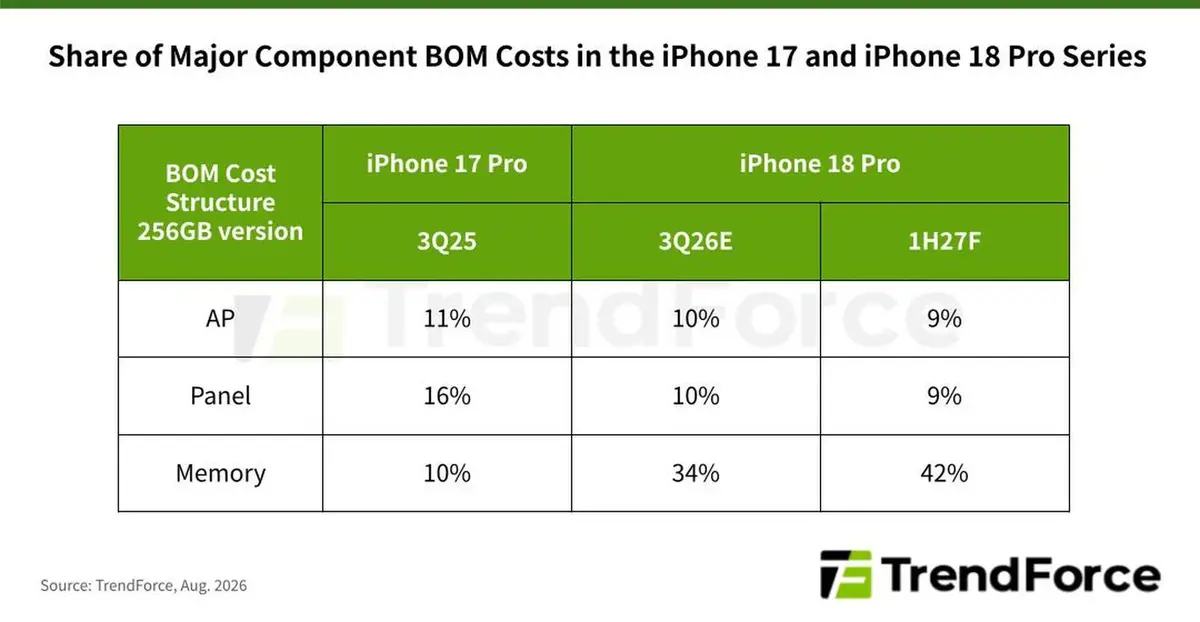
- Memory unit costs are expected to exceed 40 percent of the total component expenditure by the first half of 2027.
- Apple is currently evaluating whether to absorb these costs through lower profit margins or pass the financial burden to consumers.
- Android manufacturers may implement more aggressive price hikes or discontinue certain product lines to manage similar market pressures.
The reliance on high-capacity memory in modern smartphones has transformed these components from a secondary expenditure into a primary cost driver. While memory units accounted for a modest 10 percent of total bill-of-materials costs just last year, that figure reached 34 percent by the third quarter of 2026. Experts suggest that the continued scarcity and high demand for advanced memory modules will push this share beyond the 40 percent threshold by early 2027, creating a structural shift in how premium mobile devices are valued.
The massive surge in component pricing represents one of the most significant supply chain hurdles Apple has encountered in recent years.
Apple Decides How to Manage Rising Expenditures
Faced with these figures, Apple executives are reportedly weighing a strategy similar to the one employed during recent MacBook production cycles. By sacrificing a portion of their gross profit margins, the company may attempt to maintain current market pricing to keep the iPhone 18 Pro competitive. However, analysts remain skeptical that this strategy can be sustained indefinitely. There is growing speculation that the tech giant might eventually introduce price adjustments across its iPhone lineup to offset the extreme volatility in the memory market.
While Apple previously managed to insulate the iPhone series from memory-related price hikes—even as it updated pricing for the Mac, iPad, and Vision Pro product lines in June—the current magnitude of the cost increase makes a repeat of that insulation unlikely. The market is now closely watching the upcoming unveiling of the iPhone 18 Pro, the iPhone 18 Pro Max, and the highly anticipated foldable iPhone Ultra to see how these economic pressures manifest in final retail pricing.
Competitors Face Different Market Realities
The impact of this component crisis is not limited to Apple. TrendForce indicates that Android-based smartphone manufacturers, particularly those in the entry and mid-level segments, are in a more precarious position. Due to thinner profit margins on their hardware, these companies may be forced to implement much sharper price increases than Apple or, in more extreme scenarios, cancel specific product lines entirely to maintain financial viability. The industry-wide trend suggests that the era of inexpensive high-performance memory is coming to a close.
Given the drastic rise in production costs for the upcoming iPhone 18 Pro, do you believe Apple will maintain its current pricing structure, or should consumers prepare for an inevitable increase in retail costs? Share your thoughts in the comments section below.
Your comment has been submitted,
it will be published after approval.